
Growing ever-blooming begonias is a fascinating pastime for gardeners and plant lovers. By following care recommendations, providing optimal conditions, and exercising patience, you can achieve magnificent results growing this beautiful plant in your garden or home.
Begonia ever-blooming - description and characteristics
Begonia thrives indoors as a perennial plant, while outdoors it is an annual. Characteristics of the plant:
- The stems are fleshy, smooth, and bare, reaching approximately 40 cm in length. The shoots branch from the base, forming a lush bush.
- Begonia leaves are rounded-wedge-shaped with slightly pointed tips and small serrations along the edges. Leaf color can vary depending on the cultivar, including bronze, reddish, chocolate, and burgundy shades.
- Begonia flowers are unisexual, with male and female specimens. Male flowers have four petals, ranging in diameter from 2 to 5 cm, while female flowers can be smaller and often petalless.
- Flowers are white, pink or red, collected in loose racemose inflorescences, and there are double varieties.
- The root system is shallow and poorly developed. The bush's appearance and fullness depend directly on its growing conditions. Insufficient light can cause the shoots to stretch, while high temperatures negatively impact its appearance.
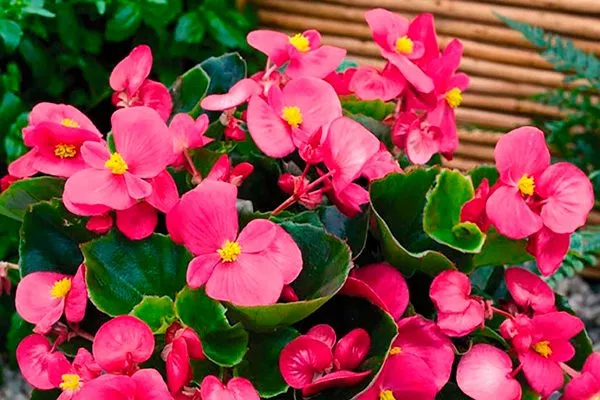
Varieties of Begonia semperflorens
Begonia semperflorens is a particularly sought-after plant for breeders. Today, there is a wide range of varieties specifically adapted to temperate climates and widely used in indoor cultivation. Below are the most popular.
| Name | Plant height | Leaf color | Flower type |
|---|---|---|---|
| Begonia Lotto | Tall | Emerald | Large, varied shades |
| Begonia Senator | Medium height | Bronze | Medium size, various colors |
| Begonia Ambassador | Medium-sized | Green with red edge | Two-color or monochrome |
| Begonia Queen | Not high | Deep green | Terry, pink, snow-white or carmine |
| Begonia Cocktail | Short stature | Red-brown | White, scarlet or pink |
Begonia Lotto
This tall plant stands out for its compact size. The emerald leaf blades are covered in short hairs. Large flowers, in a variety of shades, add a special visual charm.
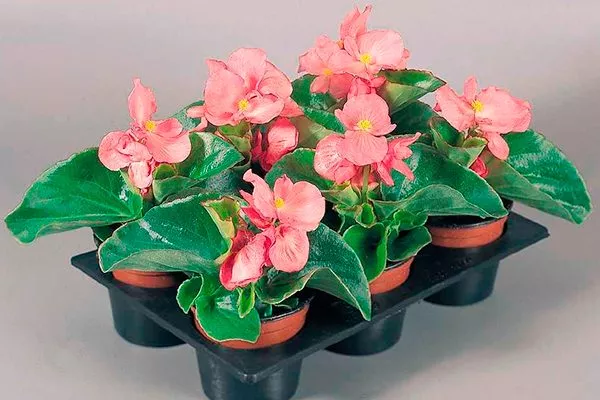
Begonia Senator
This medium-sized plant features bronze-hued foliage. The medium-sized flowers come in a variety of colors.
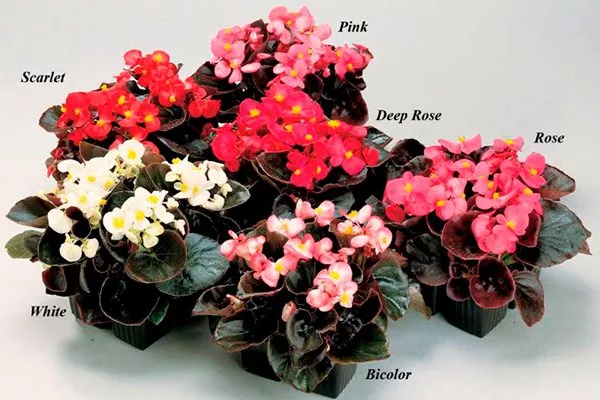
Begonia Ambassador
This medium-sized plant stands out with its deep red edges on green leaves. Flowers can be bicolor or monochromatic, in shades of red, white, or pink.
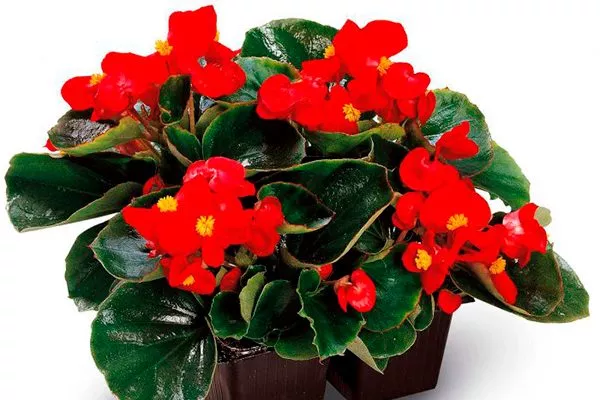
Begonia Queen
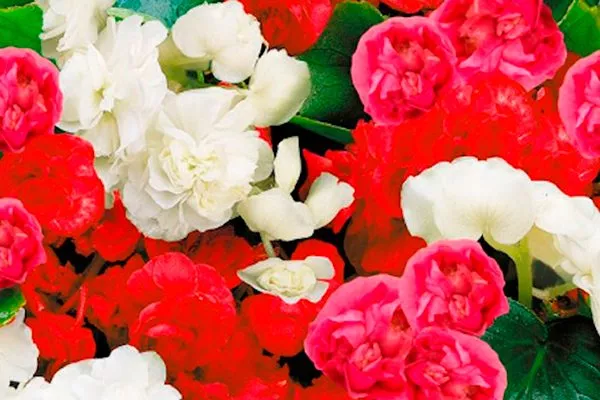
The low plant is adorned with rich green foliage and double flowers, which can be pink, snow-white or carmine in color.
Begonia Cocktail
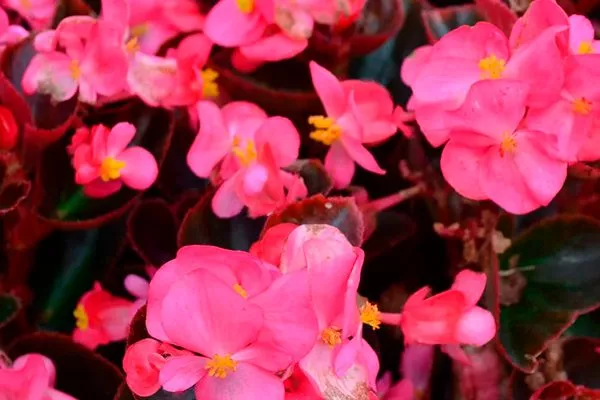
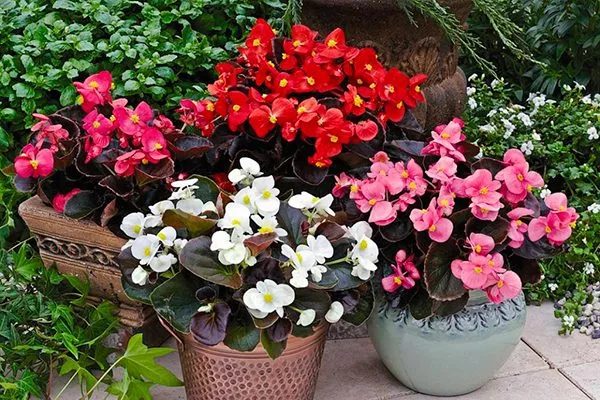
This low-growing plant blooms profusely. The leaves have a reddish-brown hue. The bush is adorned with white, scarlet, or pink flowers.
Actions with the plant immediately after purchase
The plant is grown in industrial greenhouses, where ideal conditions are created for its maintenance. It then undergoes stress during transportation and storage in stores.
When placed in an apartment, where the air can be dry and lighting and temperature conditions are not always optimal, begonias often experience discomfort and adapt poorly to the new conditions. Some care considerations include the following:
- Immediately after purchasing the plant, choose a suitable location on your windowsill, focusing on a north-facing window in summer and an east-west window in winter. Ideally, the location should receive moderate light and not be overcrowded with other plants.
- After purchasing a begonia, inspect the plant, remove all damaged parts and treat the cuts with Epin.
- The plant requires a period of adaptation to new conditions, which can take up to a month, especially if it is a flowering variety.
- For the first 5 days after purchase, do not water or move the plant, and protect it from drafts. To prevent the soil from drying out, place a container of water nearby.
After the begonia has adapted, repot it. If it's in the flowering stage, it's best to wait until the end of this period.
Caring for Begonia semperflorens at home
Begonia semperflorens thrives in indoor conditions. Caring for it isn't particularly difficult, especially if you consider a few key points.
Temperature
Temperature control is especially important when growing begonias. Flower buds form during winter, so make sure the room is warm during this time.
During the winter months, temperatures should not fall below 16°C. However, the optimal temperature for plant development during the warmer months is between 23°C and 25°C. Sudden temperature changes may cause the plant to drop its buds.
Air humidity
This plant thrives and develops best in high humidity. Avoid misting the plant with a spray bottle, as water droplets on the foliage can cause streaks.
Humidify the air around the bush using a mister. You can place the pot on a deep tray filled with wet pebbles, or use a household humidifier.
Illumination
This plant requires abundant but indirect light. With optimal lighting, the ever-blooming begonia will delight you with abundant blooms and healthy growth. Ideally, place the plant on a windowsill facing southeast or southwest.
If planting in a south-facing window, protect the plant from direct sunlight to prevent possible foliage burns. Provide the plant with approximately 15 hours of daylight per day. During the fall and winter, use supplemental artificial lighting to maintain optimal conditions.
Watering
Pay special attention to watering your Begonia semperflorens. Maintain moderate moisture in the potting soil, avoiding both waterlogging and water deprivation, as the plant reacts negatively to both conditions.
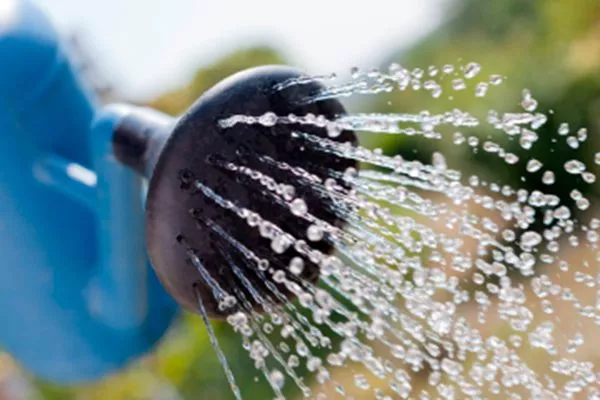
When watering, carefully pour water along the rim of the pot, avoiding contact with flowers and foliage. Water once a week during the summer and every 1.5 weeks during the winter.
Stagnant water in the roots can have serious consequences for the plant. Therefore, when planting, it's important to ensure a thick layer of drainage at the bottom of the pot. The water should be settled and slightly warmer than room temperature.
Choosing a pot
The flower is characterized by a poorly developed root system, which is located superficially. For planting, use a low, wide container. This type of pot is especially suitable for young bushes whose roots are just beginning to form.
Initially, they are planted in small containers no larger than 6 cm in diameter. Expanding the pot beyond these dimensions can lead to root rot and waterlogging, as well as affect the plant's ability to flower. To prevent water retention, ensure the pot has several drainage holes in the bottom.
Substrate
The soil should be well-drained and well-ventilated. It should be light, nutritious, and slightly acidic. If necessary, you can create your own substrate by combining peat, leaf mold, and perlite in a 2:2:1 ratio.
Transplanting Begonia semperflorens
Repot semperflorens begonias in early spring only if necessary, for example, if the root system has become crowded in its current pot. Repot mature plants less frequently than young ones. For mature plants, it's beneficial to periodically replenish the top layer of soil with fresh soil.
The repotting procedure involves transshipment. After removing the plant from the pot, carefully inspect the roots. Remove any rotted roots if necessary. Then, briefly soak the root system in a potassium permanganate solution. After the roots have dried, transplant the bush into a new pot and place it in a shaded area for several days. Resume watering seven days after repotting, and resume fertilizing after 20 days.
Bloom
Begonia semperflorens blooms in early May and continues until the autumn frosts, giving this plant a stunning appearance. The spectacular blooms are set against a backdrop of glossy foliage covered with a light pubescence, creating a contrast with the vibrant single and double flowers.
Flowers come in a variety of shades, including yellow, white, and red, as well as various combinations thereof. The duration and abundance of blooms depend on temperature, humidity, and light. To ensure maximum and long-lasting blooms, promptly remove spent blooms and leaves.
Rest period
This beautifully flowering perennial enters a dormant period during the winter. This is due to shorter daylight hours and lower air temperatures, which significantly deviate from the optimal conditions for this plant.
If the room temperature exceeds 27°C in summer, the plant will stop growing and developing. During the dormant period, flowering and growth slow down, and all nutrients are directed to the roots. Therefore, pruning green and firm stems is not recommended during this period.
Landing on the street
Planting ever-blooming begonias in the ground doesn't require any special skills or experience. Even a novice gardener can handle the task.
Site and soil preparation
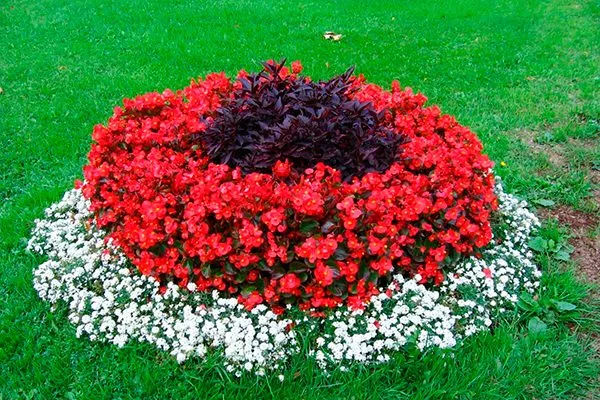
It's recommended to place begonias at the front of the flowerbed to add a special touch. The appearance of the flower halos will be especially striking if you plant them in large groups. Another interesting way to create a unique flowerbed is to create patterns by alternating different begonia varieties.
Open ground planting scheme
Instructions for planting begonia seedlings in a flowerbed suggest placing the plants in pre-dug holes dug shallowly, approximately 2 cm deep. It's important to leave a minimum distance of 10 cm between the seedlings to prevent the growing bushes from crowding each other.
After planting the seedlings, firmly compact the soil around the holes and water the plants. Apply the first fertilizer after 7 days, adding nitrogen-rich fertilizer. Repeat after another 10 days. Add fertilizer during watering.
General rules of maintenance
Begonias require bright, indirect light, moderate temperatures, high humidity, and watering with good drainage. Regular pruning of faded parts and repotting when necessary will help maintain the plant's health and beauty.
When growing at home
The rules for growing begonias indoors are not much different from those for plant care. It's important to provide the plant with basic agricultural practices.
Watering
Begonias prefer moderate watering. The soil in the pot should be relatively moist, but not waterlogged. Use soft water, avoiding contact with the leaves. Water the plant when the top layer of soil becomes dry. During the winter months, reduce the frequency of watering, but do not allow the soil to dry out completely.
Top dressing
Feed your begonias with a moderate amount of flowering plant fertilizer during the active growth period (spring and summer). Apply fertilizer every 2-4 weeks, following the package directions. Avoid overfeeding, as this can lead to nutrient overload.
Trimming
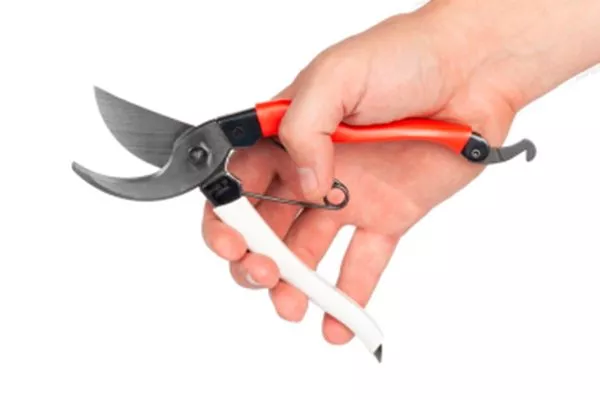
Regularly remove faded flowers and leaves to encourage new blooms. Prune the bush in spring to maintain a compact shape and promote better branching. Avoid heavy pruning, especially in winter, to avoid stimulating unwanted growth during this time.
How to preserve in winter?
Maintain begonias at temperatures no lower than 16°C (61°F) during the winter. Provide adequate light, preferably bright but indirect. Reduce watering frequency during the winter, but check the soil to ensure it's not too dry. Avoid cold drafts, which can negatively impact begonias during the winter.
- Reduce watering a month before the onset of cold weather.
- Apply the final fertilizer with potassium-phosphorus at the beginning of autumn.
- Provide supplemental lighting during periods of reduced daylight hours.
On the street
General guidelines for caring for begonias when grown outdoors include minimum requirements. The main ones are described below.
Watering
Outdoor begonias require moderate watering. Ensure the soil is moist, but avoid overwatering. Consider the climate and adjust the watering schedule accordingly. Mulching the soil helps retain moisture and maintains a consistent humidity level.
Trimming
Regularly remove faded flowers and dried leaves to encourage new blooms. Train the bush by trimming shoot tips to encourage branching. Maintain the bush's shape to prevent it from becoming too dense, ensuring good air circulation.
Top dressing
Feed begonias with flowering plant fertilizer every 2-3 weeks during the active growth period (spring and summer). Use a fertilizer with a balanced content of nutrients, including nitrogen, phosphorus, and potassium. Avoid overfertilizing to prevent overloading the plants.
Preparing for winter
Gradually reduce watering as winter approaches, keeping in mind that begonias require less moisture during their dormant period. In case of severe frost, provide plants with cover or move them to a protected location. In the fall, remove wilted plant parts to prevent the spread of diseases during the winter.
Pests and diseases
Before planting begonias in soil, check the seeds for mites, which can carry various infections. Chemicals such as Antikleshch or Fufanon are commonly used to control mites.
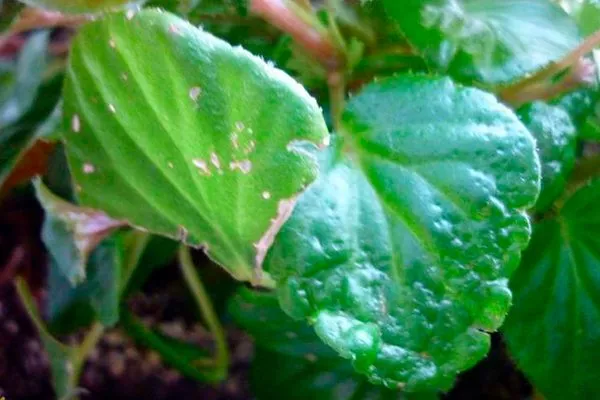
Begonias can be susceptible to fungal diseases. In these cases, it's recommended to treat the soil with special products available at hardware stores. Powdery mildew, which appears as a coating on the plant, poses the greatest threat to begonias. This disease can be caused by excess humidity. Using fungicides helps eliminate powdery mildew.
Reproduction
Begonia semperflorens can be propagated in a variety of ways. Gardeners increase the number of plants by sowing seeds, taking stem cuttings, and using leaf cuttings.
By cutting stems
Carry out the procedure in spring or summer. Root stem cuttings approximately 10 cm long with three pairs of leaf blades in the substrate. Plant the cuttings deep to the first bud, cover with plastic wrap, and place in a warm room.
- ✓ Optimum temperature for rooting: +22-25°C.
- ✓ Substrate humidity should be maintained at 70-80%.
- ✓ The use of root formation stimulants increases the chances of successful rooting by 40%.
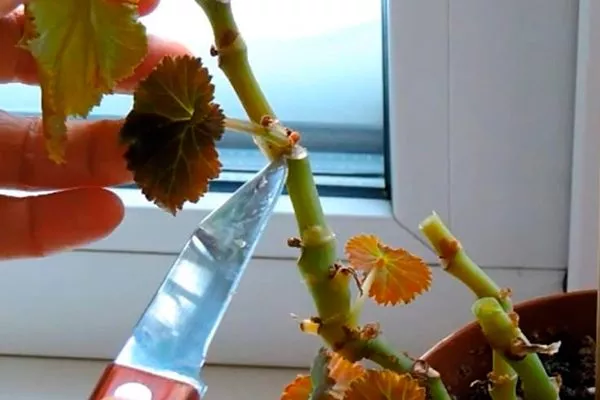
Ventilate and water the plantings regularly. After 30 days, transplant the rooted cuttings into small pots.
Leaf cuttings
Tear off a leaf blade and plant it in moistened soil. Cover the pot with plastic wrap and provide bottom heat. Water the plant regularly and remove the cover to ensure uniform rooting. Once roots appear, repot the plant into a smaller pot.
Seeds
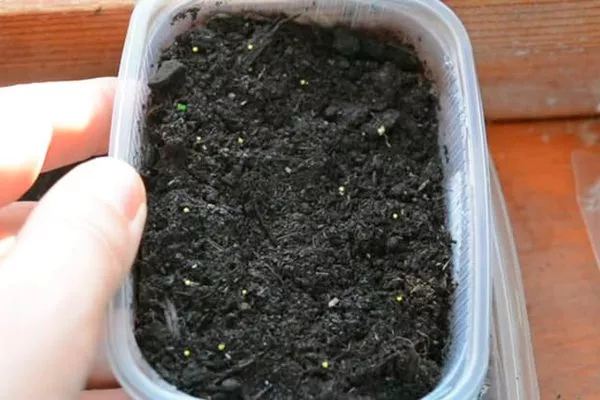
Sow during the last days of winter. Spread the seeds evenly over the surface of the substrate and moisten with a spray bottle. Cover the seedlings with plastic wrap, removing it periodically for ventilation and moisture.
Begonia semperflorens is a popular ornamental plant, whose diversity is evident in its various species, cultivars, and hybrids. It attracts gardeners with its diverse color palette and long blooming period. Growing and caring for it are easy, but certain guidelines do require adherence.