
Growing and caring for the rex begonia (Rex) is a fascinating pastime for gardeners of all skill levels. This beautiful and elegant plant impresses with its unique foliage and wide variety of varieties. Every gardener can learn how to care for the rex begonia, creating favorable conditions for its growth and development.
Botanical description of the species
This ornamental perennial herbaceous plant reaches a height of 30 to 50 cm. It has an elongated fibrous rhizome from which small roots extend. The plant's stem is usually thick, knobby, and spreads above the soil surface.
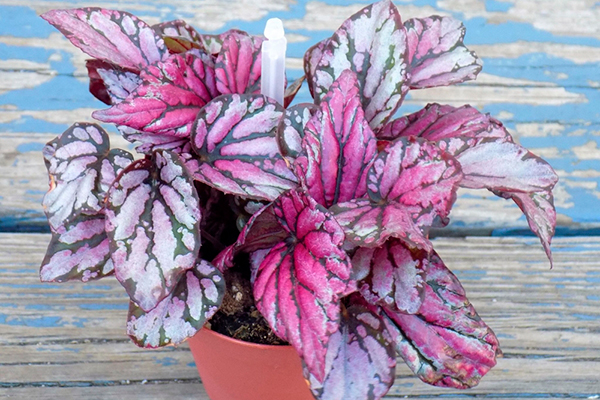
Features of begonia:
- The leaves grow from the stem on long, succulent, densely pubescent petioles, reaching lengths of 20 to 35 cm. The charming leaves with an oblique cordate base are penetrated by 6-7 veins and can have a variety of shapes: oval, heart-shaped, wedge-shaped, rounded, elongated, carved, or snail-shaped.
- The leaf surface is lightly hairy and, depending on the variety, can have various shades and color combinations: green, brown, yellow, red, burgundy, with silvery streaks and spots of various shapes. These are most often large leaves, with an average diameter of 10 to 15 cm.
- The plant produces long, 10-13 cm tall flower stalks, topped with panicles bearing small flowers ranging from pale pink to bright pink. The flowers are either staminate or pistillate, each consisting of 4-5 petals and ranging in size from 2 to 3 cm.
The flowering period begins in February and continues until summer.
Characteristics of Rex begonia
Royal begonias are perennial herbaceous plants with fibrous roots and thick, creeping stems. These plants originate from subtropical regions and prefer warm, humid conditions.
They don't tolerate drafts or direct sunlight. With proper care, regal begonias are rarely susceptible to disease and pests.
Varieties
The diversity of begonia varieties offers an exciting choice for gardeners. Each begonia boasts its own unique beauty and characteristics, featuring colorful leaves, intricate shapes, and a variety of shades. Let's look at the most sought-after and popular varieties of this plant.
| Variety | Height (cm) | Leaf color | Peculiarities |
|---|---|---|---|
| Red Leaf Begonia Fista | 25 | Shiny, glossy color, the back side is reddish | Compact bush, low maintenance requirements |
| Cuff | 30-40 | Bright green with red veins | Large leaves similar to maple leaves |
| Heracleum spp. | 40 | Dark green with light veins, underside reddish | The leaves resemble those of hogweed. |
| Mini Merry Christmas | 30 | Changes from brown to red-crimson and white-green | The most colorful and variegated variety |
| Escargot | 30 | Green with silver stripes | The leaves grow in a spiral, the shape reminiscent of a snail's nest |
Red Leaf Begonia Fista
The Fist's begonia leaves are shiny and glossy, while the undersides have a reddish or burgundy hue. This plant grows into a lush yet compact bush and looks great in small pots.
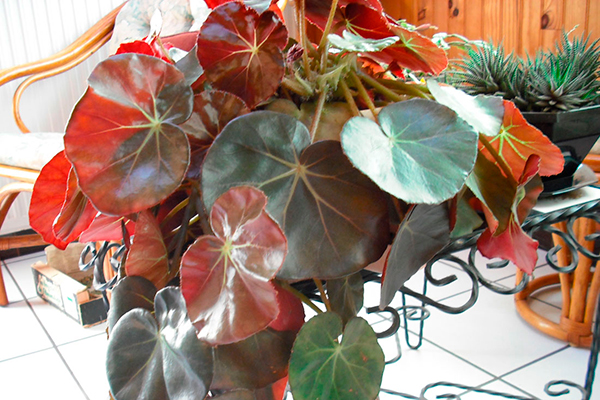
Mature specimens don't exceed 25 cm in height. This begonia is characterized by low maintenance requirements, its ability to thrive under artificial light, and its compact size. It is particularly prized for the rare appearance of its leaves. During flowering, it delights with small pink inflorescences.
Cuff
This plant, reaching a height of 30 to 40 cm, features a remarkable combination of large, maple-like leaves. The leaves are borne on tall, hairy petioles attached to a thick, creeping stem.
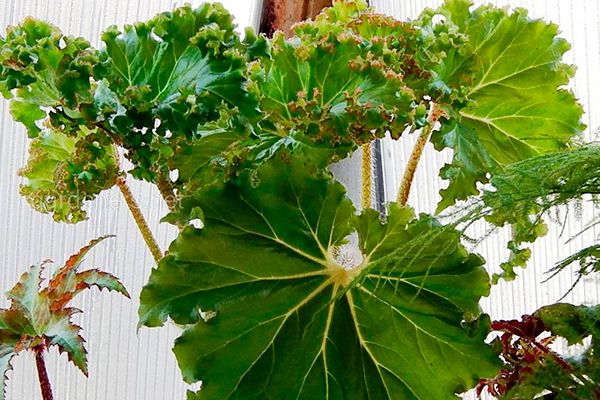
As the leaves die, the stem becomes bare. The bright green leaves are covered with hairs, and the veins on the underside are tinged red. A hairy cuff is located at the base of the leaf. The plant's flowers are small, pale pink, and borne on tall stems.
Heracleum spp.
This begonia, up to 40 cm tall, has a leaf blade reminiscent of a hogweed leaf or a palm with outstretched fingers. The leaf has a carved pattern with 5-7 elongated, pointed ends.
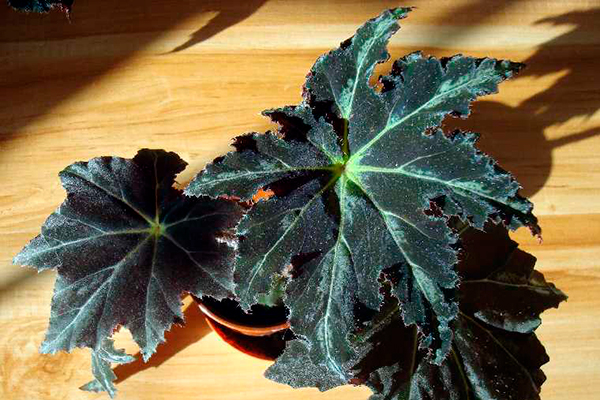
The upper side of the leaf is dark green with light veins, while the underside is pubescent and takes on a reddish tint. The leaves grow on a long, succulent, hairy, red petiole.
During flowering, pale pink, inconspicuous flowers open at the top of a long stem. There is an attractive cultivar of this plant with dark greenish-black leaves.
Mini Merry Christmas
This hybrid is a medium-sized plant, reaching a height of 30 cm. The foliage is characterized by a velvety upper surface, and the underside of the blade is cut with large veins.
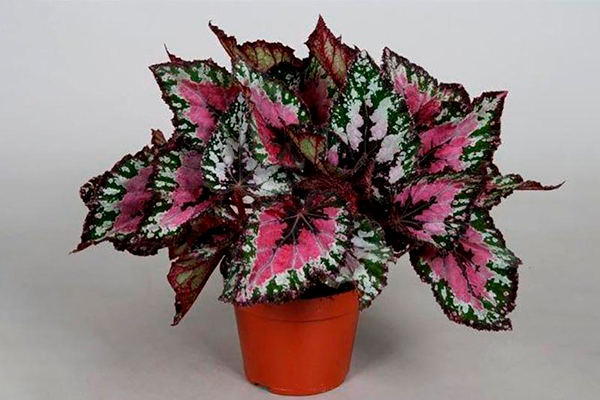
This variety is interesting because the leaf color changes from the center to the periphery: from brown in the middle, to crimson red and white-green at the edges. This begonia variety is the most colorful and variegated.
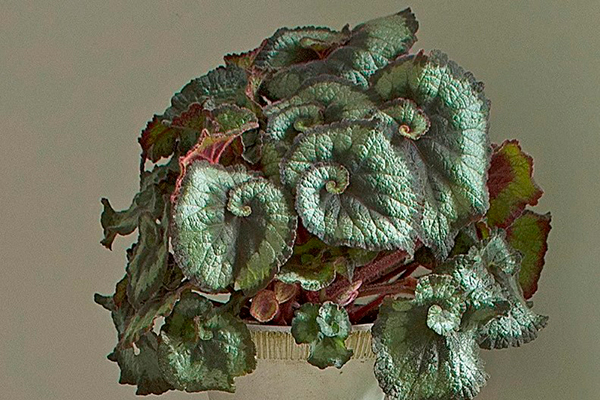
Escargot
The leaves of this variety grow spirally from the petiole, forming a shape reminiscent of a snail's nest, giving this begonia the nickname "Royal Snail." The leaf blades are green with silver stripes. The plant reaches a height of up to 30 cm and blooms with small white flowers.
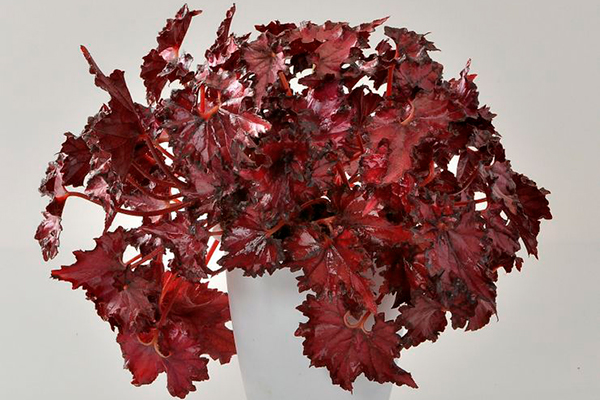
Dollar Down
The exquisitely carved leaf blades in an unusual cherry hue give this plant a stunning effect. The leaves have a pointed tip and a black border along the edges, making this plant a potential focal point in any room.
This hybrid is distinguished by its impressive size compared to other species. The plant can reach almost 40 cm in height. The leaf blades are distinctly shaped, and their tips are pointed. The leaves are pale green with large areas of white.
Griffon
This is a luxurious flower with large, surprisingly original leaves, reaching up to 40 cm in size. The shape of this plant's leaves resembles the open paw of a griffin, growing at the end of a tall petiole, creating the impression of a palm tree.
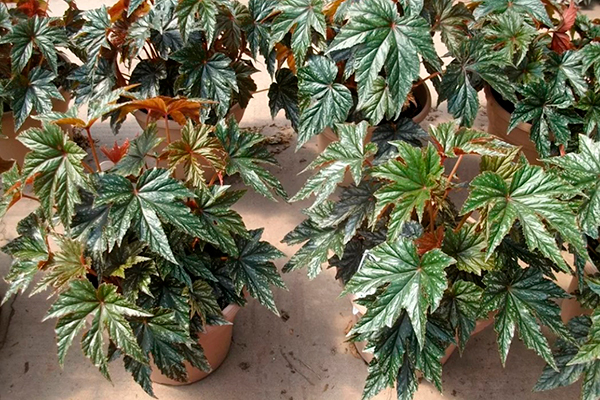
The leaves are a rich dark green with a silvery tint between the veins. The undersides of the leaves have a reddish tint.
Dark Mambo
This exceptionally beautiful begonia stands out for its unusual appearance, characterized by striking foliage colored a rich, dark green, almost black. Yellow veins run across the entire leaf surface, adding contrast and sophistication.
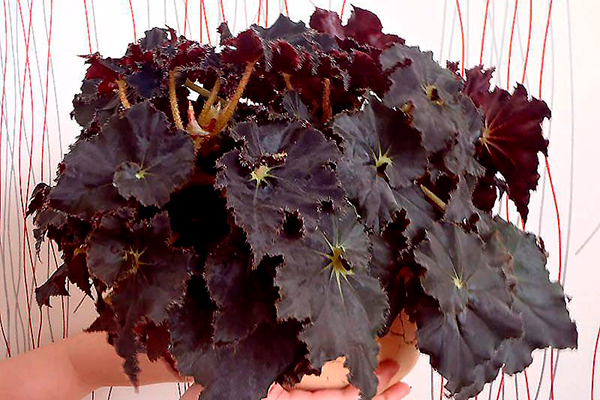
The leaf shape is a spiral structure with fine teeth and hairs. This configuration creates an interesting and unique appearance.
Indian Summer
This compact, bushy plant boasts large, attractive leaves that completely encircle the stem. The leaves stand out with their distinctive burgundy, pink, and green color palette.
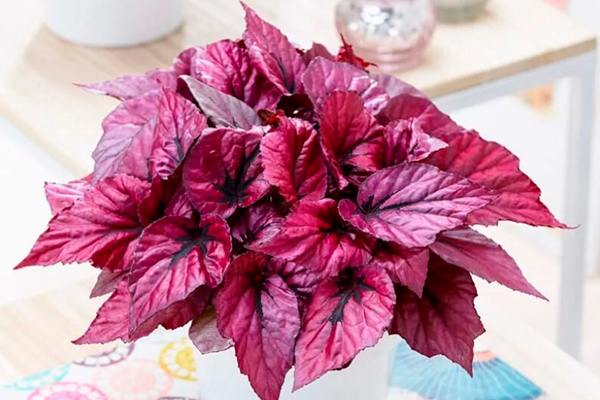
The center of the leaf is burgundy, blending into light, fine green spots toward the edges. The leaf margins are a rich, velvety burgundy, almost black. The leaf shape is unusually heart-shaped, with elongated teeth along the edge. The petiole is bright red.
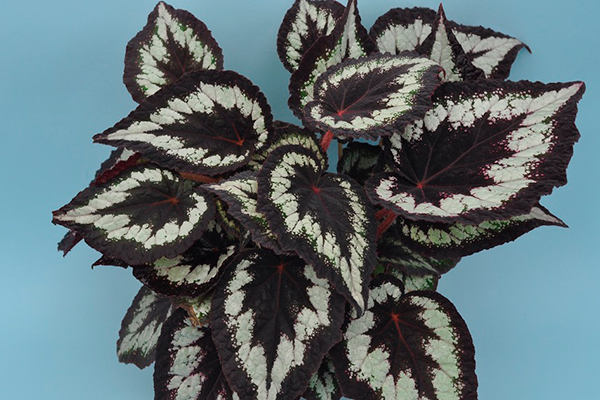
Helen Lewis
The attractive velvety texture of the leaves evokes a desire to touch them. The striking black-plum background is highlighted by a greenish-silver pattern that follows the contours of the foliage. This variety is extremely popular among gardeners.
Fireworks
Begonia 'Fireworks' is a moderate-height plant with impressive large leaves of varied textures. This perennial has an evergreen rhizome and an upright stem, captivating with its distinctive foliage.
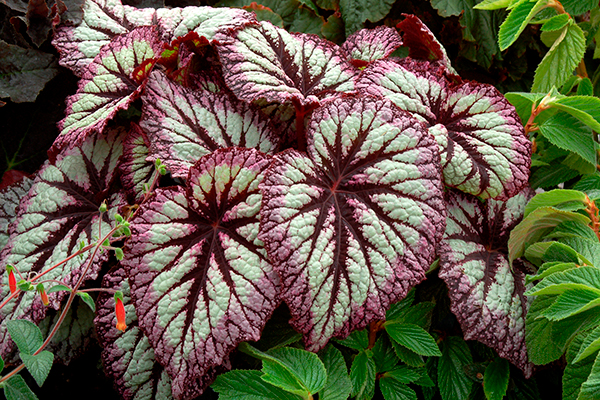
The plant ranges in size from 25 to 40 cm in height and 45 cm in width. The leaves reach up to 15 cm in length and have a silvery hue, with a center and dark purple veins. The leaf margins are decorated with the same border and silvery spots. Veins are visible on the underside, and the red petioles are covered with pubescence.
Beleaf Inca Flame
Despite the uniform color of the leaves and the absence of contrasting veins, this variety stands out for its high decorative value, brought about by the beautiful and bright red shade of the foliage.
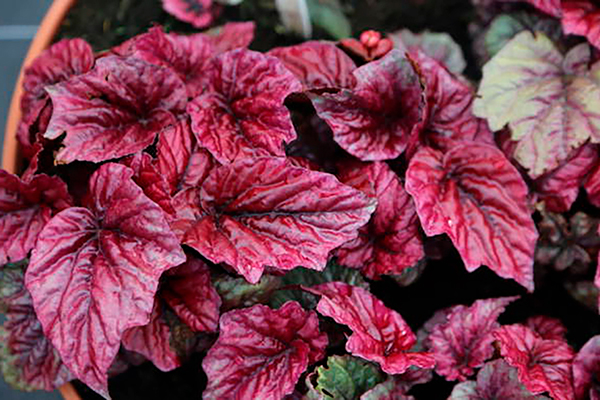
Bilif Inca flame
This compact plant grows 30 cm tall and 12 cm in diameter. Its elegant leaves boast vibrant orange and red hues. It prefers bright light and is ideal for home decoration. Moderate watering makes it easy to care for. It's the perfect plant for those who appreciate colorful details and a cozy interior.
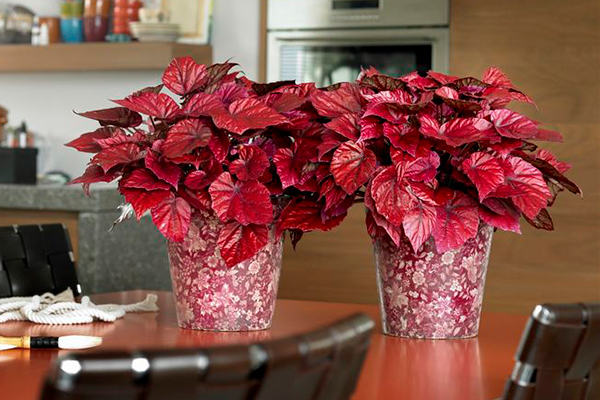
Evening Glow
This hybrid variety is a compact plant with a short stem and medium-sized leaves. The central part of the leaf blade is striking with a bright crimson hue, further accented by greenish-brown veins. A burgundy border extends along the leaf edge.
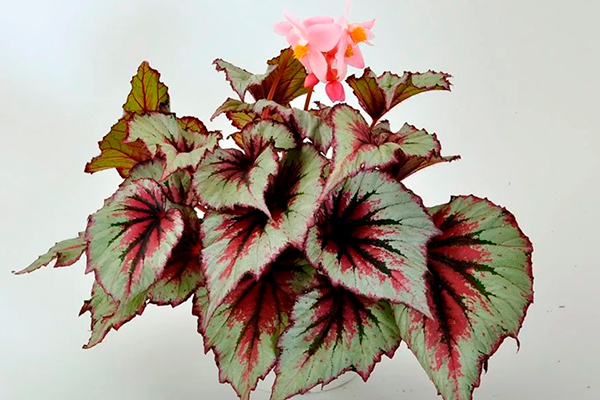
Bilif African Jungle
An outstanding variety with rich green foliage adorned with a large, dark, inky spot and a thin, dark border. This begonia variety impresses with its pattern, featuring vibrant, sparse splashes of white and pink, giving the plant a striking appearance.
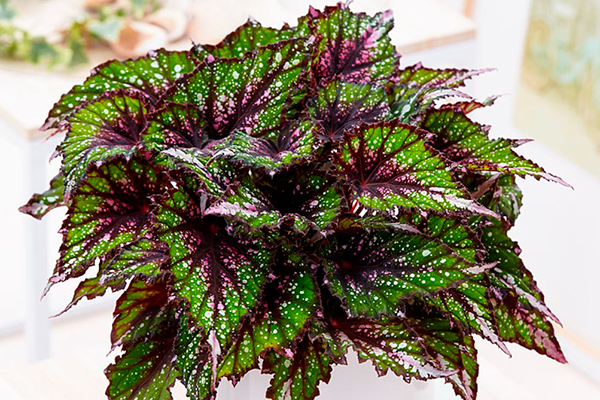
Rockhart
This is a stunning variety with a speckled pattern and dark, almost chocolate-colored leaves. They are adorned with a cherry-colored heart-shaped spot and border, which are harmoniously sprinkled with small white specks, creating an attractive and unique appearance.
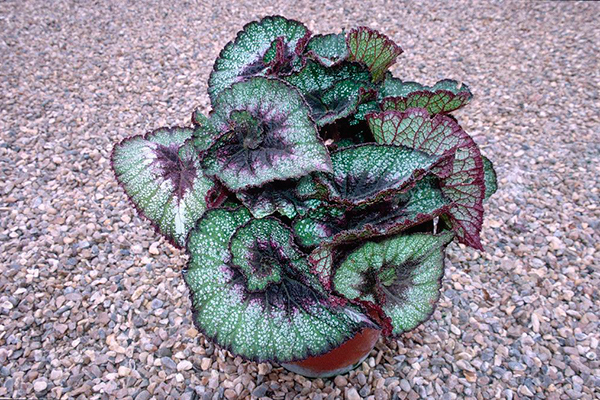
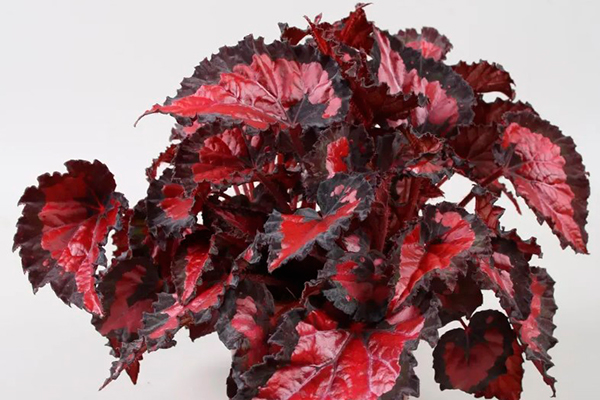
Red Robin
This variety is distinguished by its reddish-brown hue, wide margins, and large teeth along the leaf edges. Its distinctive feature is its very compact and lush growth habit, making it an attractive addition to other plants.
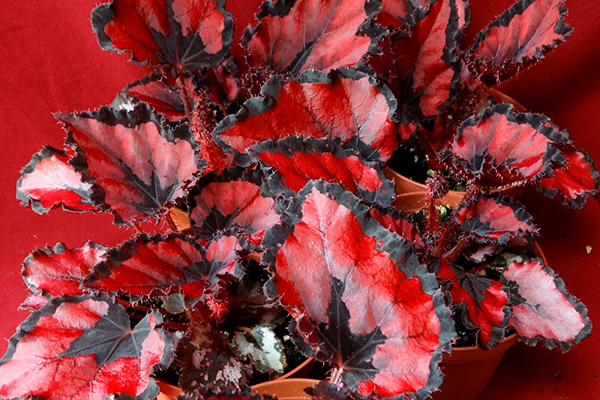
Inka Knight
An attractive variety with perfectly heart-shaped leaves, characterized by a distinctly pointed tip and finely wavy margins. The leaves are bicolored, with a dark pink heart and a wide dark brown margin, adding a special charm and sophistication.
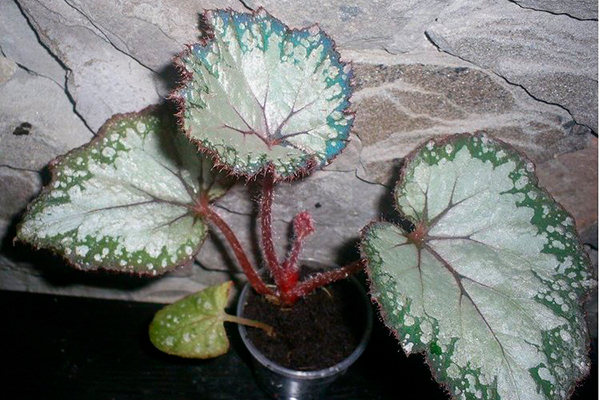
My Best Friend
This is a nearly white variety with fine, blood-red veins on the leaves. Small white specks sparkle on the dark green margins of this plant, giving it a festive and delightful appearance.
Pros and cons
Regal begonias are distinguished by their beautiful and unusual leaves, varied colors, and plant shape, making them a wonderful addition to any interior. The plant offers numerous benefits:
- variety of varieties;
- unpretentiousness;
- accent in the interior.
Growing conditions for indoor begonia rex
All types of begonias require special, protected conditions. Provide them with adequate light and temperature, and they will delight you with vibrant blooms.
Lighting and placement
For the plant to produce vibrant foliage, it needs access to sunlight. Otherwise, the begonia may lose its rich color. Direct sunlight can damage the plant, causing brown spots and deformations on the leaves. In summer, the plant prefers partial shade.
Temperature and ventilation conditions
This flower has tropical roots and therefore prefers warmth and fresh air. Its optimal temperature ranges from 16°C to 22°C. Avoid exposing the plant to excessive heat and drafts. During the warmer months, move the begonia outdoors, but avoid freezing temperatures.
Soil
Begonias prefer nutritious soil with moderate acidity. Ready-to-use soil specifically designed for begonias is available at specialty stores. You can also prepare your own soil by mixing the following ingredients: peat, sand, leaf mold, and humus (1:1:2:2).
Choosing a pot for begonias
When planting a regal begonia, consider certain potting requirements. Choose wide containers that allow for the plant's natural root system development, as well as drainage holes and a tray. Pot height isn't critical, as begonias don't grow very deep.
Caring for the regal begonia at home
To ensure beautiful and vibrant blooms, begonias need proper care. Take care of important gardening practices to protect the plant from potential problems.
Watering and air humidity
Regina begonias, prone to rapid rot and drying out, require constant attention. Water plants sparingly and carefully, avoiding excessive soil drying out or excessive moisture. During winter, reduce watering by about half.
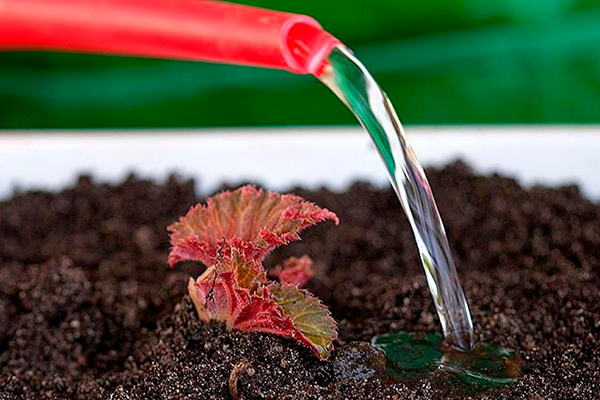
Begonias prefer moderate conditions, not too dry, but not too humid. When heating is on, increase the humidity slightly by adding trays, mulching the soil with damp sphagnum moss, and placing them near a fountain or water container.
Fertilizers and fertilizer composition
Fertilize regal begonias only during their active growing season—spring and summer—every two weeks, preferably in liquid form. For best results, use specialized fertilizers for begonias or foliage plants.
Pruning and shaping royal begonia
To ensure uniform growth, fullness, and prevent deformation of regal begonia bushes, pinch shoots throughout the active growing season. Remove damaged or dying leaves and inflorescences promptly.
Begonias can lose their decorative appeal, shed leaves, and become less compact when they need rejuvenation. Often, the plants themselves signal the need for renewal by growing new shoots and shedding old ones.
Transfer
Due to their vigorous growth, regal begonias typically require annual repotting. If the plant doesn't completely fill the pot, repotting can be postponed for one year, limiting the repotting to replacing the top layer of soil.
It's recommended to repot regal begonias throughout the spring, during the first half of the active growing season. To avoid repotting mistakes, remember just one rule: handle begonias with extreme care.
Do not disturb the root ball, turn the plant carefully, and try not to damage either the above-ground or underground parts. Avoid burying the shoots or the root collar of regal begonias too deeply.
Methods of reproduction
Begonias are considered a versatile plant, so almost all propagation methods are applicable. Each method has its own advantages and disadvantages, as well as unique characteristics that are important to consider for successful propagation and care.
Leaves and cuttings
To ensure optimal growth and survival of your begonia, avoid taking cuttings during the active flowering period. If propagation is necessary in the spring, experts recommend pruning all flowers, buds, and inflorescences beforehand.
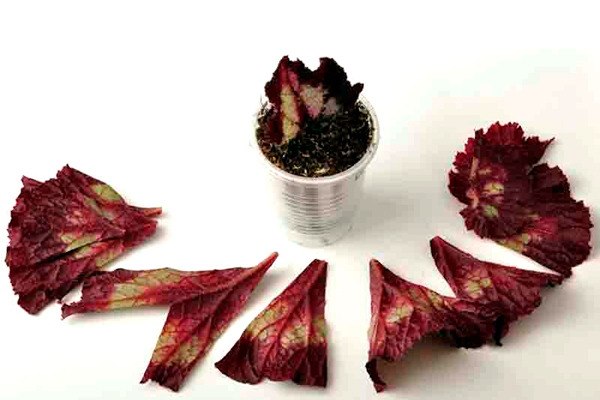
In other cases, it's sufficient to remove only the lower leaves from the cutting and trim the middle leaves by half. This method offers a unique opportunity to preserve varietal characteristics.
Steps for preparing planting material:
- Make sure the cutting has at least three leaves. The optimal length of the cutting is 10-15 cm.
- Give preference to the apical stem, preserving the middle and upper parts of the stem.
- Make the cut with a sharp knife.
- Treat the cut area with wood ash.
- Leave the cuttings to dry for several hours.
Water method:
- Prepare a dark container, such as a dark glass jar or one wrapped in dark paper.
- Use settled or filtered water at room temperature.
- Add 1-2 tablets of activated charcoal to 500-900 ml of water and mix well.
- To speed up rooting, add a rooting stimulator or 10 drops of fresh aloe juice per 500 ml of water.
- Place the prepared cutting in a jar with liquid.
- Do not change the water until roots form.
Soil method:
- Prepare a pot with a drainage layer and substrate.
- Select a cutting, cut it at an acute angle, and treat it with a growth stimulator.
- Dip the end of the cutting first in water, then in rooting powder.
- Place the cutting into the pot, make a depression and compact the soil.
- Cover the pot with a transparent container to create greenhouse conditions.
- Ventilate daily and provide partial shade until transplanting to a permanent location.
By following these recommendations, you will ensure successful propagation of begonia and the preservation of its varietal characteristics.
Propagation by tubers and roots
The main advantage of this method is the use of the tuber, which contains an abundance of nutrients and energy. The key points of this technique include repotting the tuber plants into new pots every 2-3 years to ensure sufficient space for the tuber to grow and develop.
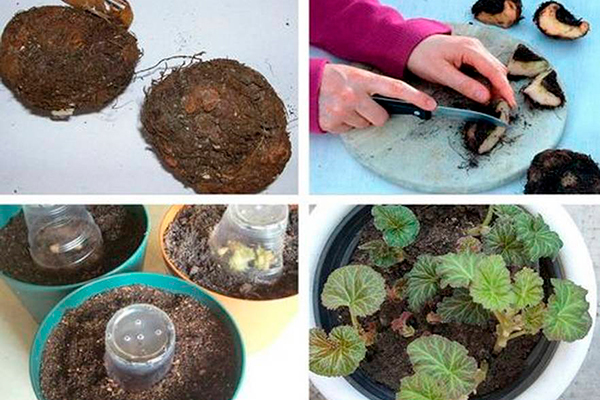
The tubers should have buds, with at least one to two eyes on each planted unit. Dividing can be done not only into two parts but also into more. The mother plant should be three years old or older. The best time for propagation is spring, immediately after the primary shoots have formed.
The main stages of propagation of tuberous begonias:
- Remove the tuber from the pot.
- Inspect it carefully for defects and growth points (buds).
- Prepare pots, taking into account the characteristics of the soil mixture for tuberous plants.
- Cut the tubers into the required number of pieces and let them dry in the fresh air for about 10-15 hours.
- Treat all cuts with charcoal or activated charcoal.
- Allow the tubers to dry, which takes about 1-2 hours.
- Place the tubers in the potting mix, making sure that one-third is submerged and the rest is above the surface of the substrate.
- Moisten the soil with a liquid of Fitosporin diluted according to the instructions.
- Finish the process by covering the pot with a plastic bag, creating a mini greenhouse.
When a 7-10 cm long stem appears on the tuber, sprinkle it with substrate along with the shoot, covering the latter by 1-2 cm.
Growing from seeds
Growing reginae begonias from seed is a fascinating process that requires attention to detail and patience. Here are the step-by-step instructions:
- Purchase Begonia reginae seeds from a reputable supplier or use collected mature seeds from mature plants.
- Use a light, well-drained substrate for sowing seeds. You can use a ready-made potting soil or prepare your own mixture of peat, perlite, and vermiculite.
- Spread the seeds over the surface of the substrate, pressing them lightly but not covering them. Begonias are sun-loving, so light must reach the seeds.
- Place the container with the sown seeds in a warm location with a temperature of approximately 21-24°C. Cover the container with film or glass to create a greenhouse effect and maintain high humidity.
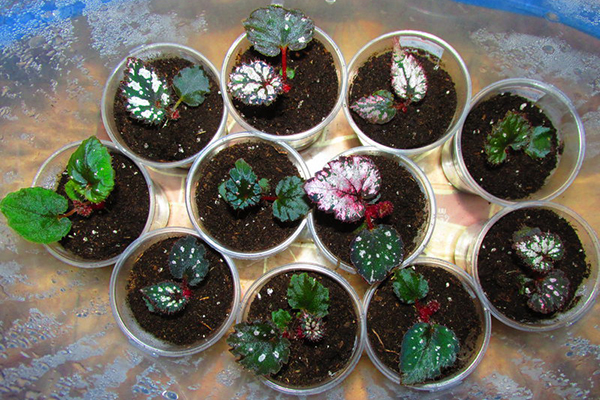
As soon as the first true leaves appear, thin out the plants, leaving the best and strongest ones. Transplant the young plants into individual pots.
Pests and diseases
Royal begonias are relatively easy-to-grow plants, but careful care is essential to prevent them from developing diseases. These are most often caused by overwatering and insufficient fertilization. Common diseases include:
- Gray rot. It may appear due to excessive soil and air moisture, especially if the soil in the pot does not dry out for a long time, especially in cool rooms.
With this disease, the stem can soften and bend, affecting the lower parts of the leaf petioles, with the formation of a light fungal coating. - Downy mildew. This is a fungal disease that affects some varieties of regal begonias. It can be caused by poor ventilation and high humidity. Signs include dirty gray or yellow spots on the undersides of the leaves.
- Bacterial rot. It is characterized by the absence of fungal mycelium. It manifests itself as damp spots on stems, petioles, and leaves. It is caused by excess moisture, lack of fresh air, and overfertilization.
To combat diseases, use copper-containing fungicides such as Oxyhom and Hom. Create optimal growing conditions for begonias: light soil, moderate humidity and temperature, good lighting, ventilation, and proper watering.
In addition to diseases, the Royal Begonia can be attacked by pests such as thrips, mealybugs, and aphids. Control involves the use of insecticides and careful plant care.
How to make it bloom?
Begonias stop flowering for several reasons: lack of light, too much or too little moisture, lack of nutrients, stress and changes in plants, and aging.
Recommendations for stimulating begonia flowering:
- Provide bright but indirect light. Place the plant in a west- or east-facing window.
- Use fertilizers high in phosphorus to promote bud formation.
- Maintain a regular watering regime, maintaining moderate soil moisture. Avoid over-watering and over-drying.
- Ensure stable temperature conditions, avoid sudden changes.
Among the many types of begonias, the regal varieties deserve special recognition and are rightly considered the most exquisite. All of them are distinguished by the varied, beautiful shape and color of their leaves. Although these plants are capable of flowering, their popularity is primarily due to the splendor and variety of their foliage.