
When growing indoor begonias, gardeners often have to repot (or transplant) them into a new pot. If this procedure is performed correctly and carefully, the plant will quickly take root and grow. Learn how in this article.
How to grow indoor begonia yourself?
If you want to decorate your home with a begonia pot, you don't have to buy a mature plant from a flower shop. You can grow it yourself. All you need is high-quality seed and a thorough understanding of the intricacies of potting.
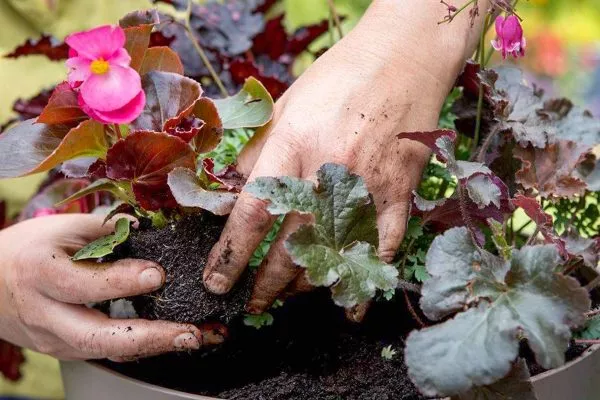
Features and subtleties of the process
| Name | Root system type | Method of reproduction | Optimal planting time |
|---|---|---|---|
| Deciduous begonia | Branched | Cuttings, seeds | The first half of spring |
| Bush begonia | Rhizome | By cuttings, dividing the bush | The first half of spring |
| Tuberous begonia | Tuberous | Tubers, seeds | The first half of spring |
Begonia is an ornamental plant that gardeners successfully grow not only as a garden plant but also as a houseplant. It comes in three varieties:
- deciduous;
- bush;
- tuberous.
The most important feature of this flower is the structure of its root system. This depends on the begonia variety and comes in three types:
- tuberous (characterized by the formation of a round or flat tuber);
- rhizome (characterized by a thick rhizome located in a horizontal plane);
- branched (without modifications).
Regardless of the structure of begonia roots, they never grow deep, but rather remain in the surface soil layer. This is an important consideration for gardeners when planting or replanting begonias. This determines the choice of container and soil mixture for growing begonias.
There are several popular ways to plant begonias:
- seeds;
- cuttings (this could be either a stem or a leaf);
- tubers.
Florists also propagate this flower by dividing the bush.
This ornamental plant is characterized by rapid growth rates when in favorable conditions:
- after sowing seeds, seedlings appear in 2 weeks;
- the planted cutting blooms 4 weeks after it has taken root;
- A plant that has reached the age of 12 months looks like an adult.
When is the best time to plant?
The optimal time for planting (replanting) this ornamental plant is the first half of spring. At this time of year, begonias emerge from dormancy and begin growing vigorously. Replanted in the spring, begonias quickly adapt to their new conditions.
If you plan to grow the flower from seeds, plant them as seedlings earlier—in January. Once the first shoots appear, cover them with glass. Open the glass daily to allow air to circulate.

Choosing soil for begonias
For planting begonias, choose soil that has the following characteristics:
- easy;
- loose;
- slightly acidic;
- air- and water-permeable;
- with a high content of nutrients.
It's also possible to grow the flower in a homemade soil mixture. Make it using one of the recipes below:
- combine 2 parts of leaf soil and sand with 1 part of turf soil (this mixture is suitable if you are going to grow tuberous begonia);
- mix turf soil with peat, humus and leaf soil in a ratio of 1:2:2:2 (this composition is good for Royal Begonia);
- add humus, peat and leaf soil to the sand, maintaining the proportion 1:1:2:2 (use the resulting soil mixture for planting Royal Begonia);
- Combine humus soil (3 parts) with acidic high-moor peat (1 part) and coarse sand (1 part) - a universal composition that is suitable for growing any type of begonia.
Be sure to disinfect any homemade substrate by heating it in a frying pan or oven, or by pouring boiling water over it. This will prevent the plant from becoming infected with pathogenic microorganisms.
Which pot is suitable?
If you're planning to grow begonias at home, choose a container with the following characteristics:
- wide;
- low.
A pot with a diameter several centimeters greater than its height is best for a plant with a shallow root system that spreads outward. It provides good aeration for the substrate and ensures the roots receive the oxygen they need.
For young and mature plants, the sizes of the planting container vary:
- diameter 5-6 cm - the first pot for begonia, if you are growing it from a cutting;
- diameter 19-12 cm - a container for transplanting a rooted young plant, which is 6 months old;
- 1/3 larger in diameter - a container for each subsequent transplant of an adult flower, carried out once every 2-3 years.
To plant begonias from seeds, you can use peat tablets, shallow trays, silicone containers, or a common container.
The material from which the planting container is made also matters:
- ceramics are the best option for growing an adult flower;
- plastic - for seedlings and young plants that will need to be replanted in less than a year.
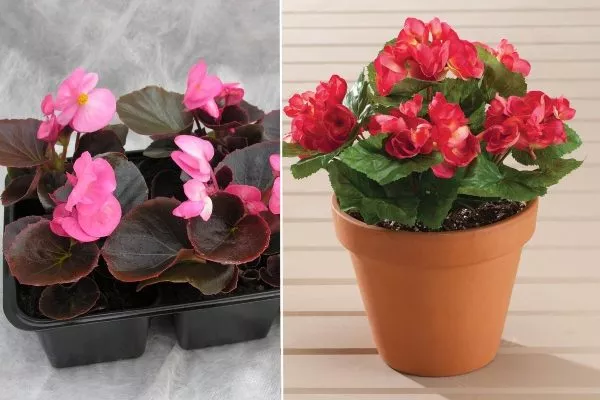
Prepare a suitable pot for planting begonia as follows:
- wash it thoroughly;
- disinfect with potassium permanganate solution;
- Fill 1/4 with expanded clay, forming a drainage layer from this material to prevent moisture stagnation and rotting of the flower roots.
Choosing a location in the apartment, humidity and lighting
This ornamental plant requires a permanent location for its pot. Begonias don't like being moved around the house frequently.
Set aside a place in your home for this flower that meets the following requirements:
- well lit, but protected from direct sunlight;
- ventilated;
- with a stable and comfortable temperature;
- with sufficiently humidified air;
- located away from radiators and other heat sources.
Begonias are sun-loving plants, requiring long hours of daylight. They do not grow well in the shade. However, direct sunlight on their foliage should be avoided. This can cause sunburn and damage to the plant's decorative appearance.
This houseplant thrives in a room with high humidity (60-70%). Dry conditions can cause the following consequences for begonias:
- drying of leaf tips;
- falling of buds;
- loss of decorative effect.
The optimal temperature for the room where the flower is kept is 18ºC. However, slight variations are possible at different times of the year:
- +20-24°C — in the summer months;
- +16-18°С — during the cold season.
In what cases is a transplant required?
Experienced gardeners replant begonias as they grow, with the following frequency:
- 1-2 times a year - for a young plant;
- Once every 2-3 years – for adults.
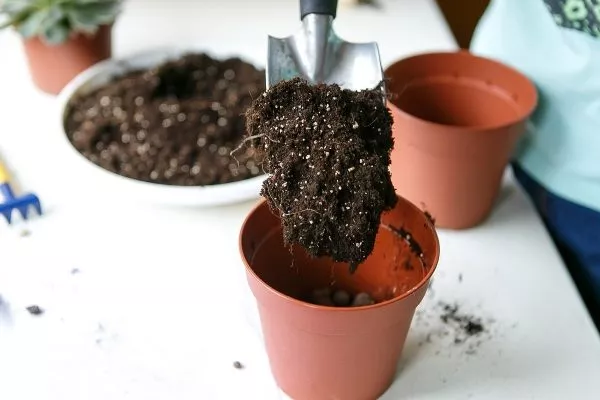
This type of transplant is called planned. It is carried out in the spring or early summer to allow the plant time to strengthen by autumn.
The need for a planned transplant is determined by the following factors:
- growth of the root system;
- tightness of the pot;
- soil depletion.
Sometimes begonias require unscheduled repotting. Florists perform this procedure in the following cases:
- after purchasing an ornamental plant, to replace the store-bought soil with fresh and fertile soil;
- when the begonia grows rapidly, when the roots appear above the surface of the soil in the pot or are visible through its drainage holes;
- if the plant is affected by a fungal infection or parasites;
- in case of root rot due to non-compliance with the recommended watering regime for the flower;
- if after transplantation the begonia gets sick, withers, and fades;
- when transplanting a flower into an unsuitable container or into an incorrectly selected soil mixture;
- if the plant pot was damaged or broken;
- if it is necessary to replace the soil (in case of overuse of fertilizers);
- in order to propagate begonia by dividing the bush.
Preparation of planting material
Before planting begonias, prepare the seed material:
- seeds;
- cuttings (leaf and stem);
- tubers.
There are 2 types of flower seeds on sale:
- ordinary;
- granulated.
The first ones are very small. They are difficult to disinfect. You can increase the germination rate of these seeds by soaking them in Agromix Epin Maxi germination stimulator for two hours before planting.
Before planting the stem cuttings in the soil, prepare them as follows:
- Using a knife, cut off the top part of the plant shoot with 2-3 nodes (approximately 10 cm).
- Remove the lower leaves, leaving 4-5 apical ones.
- Dry the cut area.
It's a good idea to treat the end of the cutting with a rooting agent before planting. Instead of a store-bought rooting stimulant, you can use a homemade solution: a solution of aloe juice (1/2 teaspoon per 100 ml of water) with honey (1/2 teaspoon) added.
If you plan to grow a begonia from a leaf cutting, take a leaf from an adult plant that meets the following requirements:
- large;
- Beautiful;
- without damage;
- without signs of infectious lesion.
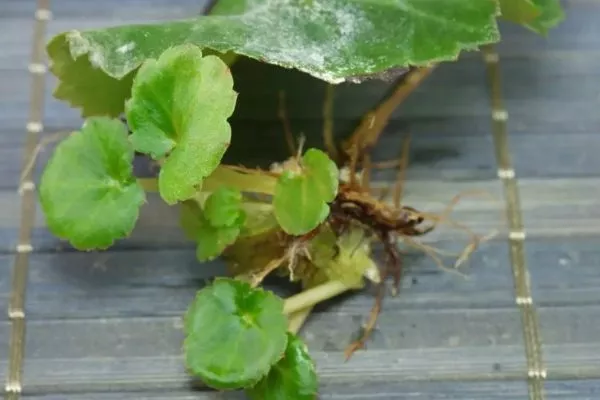
Carefully inspect the tubers you purchase for planting. High-quality specimens have the following characteristics:
- they are dense;
- smooth;
- without signs of damage by diseases and pests.
Before potting, treat selected begonia tubers with a fungicide solution (Vitaros, Maxim). Hydrogen peroxide (1%) and a weak solution of potassium permanganate can also be used to disinfect the seedlings.
Proper home planting with step-by-step instructions
Properly planted begonias are the key to their continued successful growth and development, abundant flowering, and maintaining their decorative qualities.
Follow the procedure step by step:
- Partially fill the pot with expanded clay, creating a drainage layer. Sprinkle it with charcoal to protect the plant's roots from overwatering.
- Add the prepared soil mixture to the container. Make a hole in it for the cutting. For planting tubers and seeds, there's no need to dig a hole in the soil.
- If you're planting a cutting, carefully inspect its roots. Remove any rotted or damaged roots, and treat the cut areas with a fungicide. Then, place the cutting in the hole, straighten the roots, and cover them with soil. Compacting the soil is not necessary.
When planting the tuber, press it into the soil with the rounded side down. Only plant it halfway. Don't cover the top of the tuber with soil; leave it above the soil surface. If you plant it too deeply, the begonia will bloom sparsely.
When planting seeds, simply scatter them over the surface of the soil in the box and then lightly press them into the soil with your fingers. - Water the begonia's potted soil thoroughly to ensure it's well-moistened. Don't forget to drain the water from the tray.
- Add a little soil to the pot containing the cutting. Make sure the roots of the cutting are completely covered with soil. However, the growing tip should remain above the soil surface. Otherwise, there's a high risk of rot and death.
- ✓ Soil temperature should be at least +18°C for optimal rooting.
- ✓ Use only settled water at room temperature for watering to avoid shocking the plant.
Transplantation to a permanent location
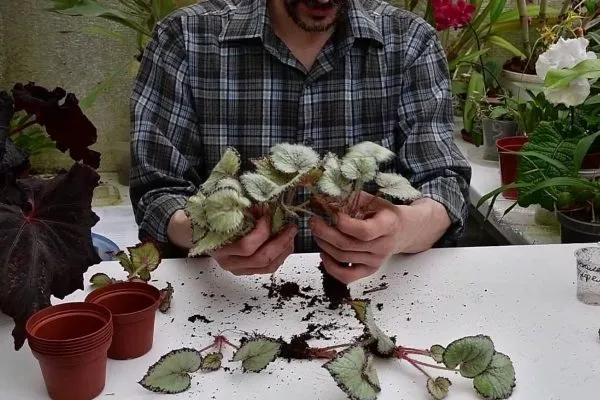
Transplant the begonia into a larger pot using the transshipment method. Use a container that is proportionate to the volume of the plant's root mass. The roots should completely fill the pot.
Transplant the flower to a permanent location step by step:
- Moderately moisten the soil in the begonia container. Do not allow it to become soggy.
- Carefully remove the plant from the pot along with the root ball, being careful not to damage the latter.
- Place the root ball in a new pot, already partially filled with a drainage layer and fresh soil mixture.
- Add soil to the begonia pot. Lightly compact the soil around the stem.
Care instructions
During the first four weeks after repotting, the begonia adapts to the new conditions and restores its roots. During this period, fertilizing the plant is strictly prohibited. Otherwise, there is a risk of burning its root system. Fertilizing is only permissible after it has established roots and new leaves and shoots begin to emerge.
Caring for a flower that has undergone transplantation includes the following procedures:
- watering is carried out 2-3 times a week;
- protection from direct sunlight;
- supplementary lighting with phytolamps (for seedlings, if necessary);
- maintaining the room temperature at +20-24⁰С;
- draft protection;
- maintaining air humidity at 60-80% by placing the pot on a tray with wet expanded clay (spraying the begonia foliage is contraindicated);
- regular fertilization after the flower has taken root.
Repotting a begonia in a new (larger) pot is an essential part of caring for this houseplant, as it allows for its propagation. The procedure isn't difficult, but it does require careful execution and attention from the grower. Proper planting will allow you to grow a beautiful and healthy plant that will delight you with its magnificent blooms.