
Coral Begonia (Begonia corallina) is a houseplant with vibrant flowers and decorative foliage. It's easy to care for, and under optimal conditions, it can bloom year-round. It's a great addition to rooms, public spaces, and offices.
Description and botanical characteristics
Coral begonia is native to Brazil, Central, and South America. It is also known as Corallina. In its natural habitat, it can reach 2 meters in height and grow as a branched perennial shrub.
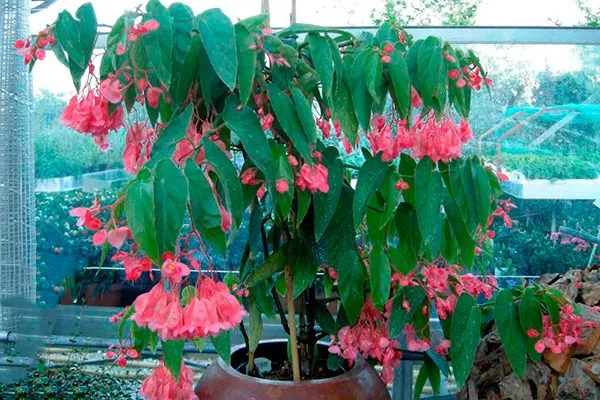
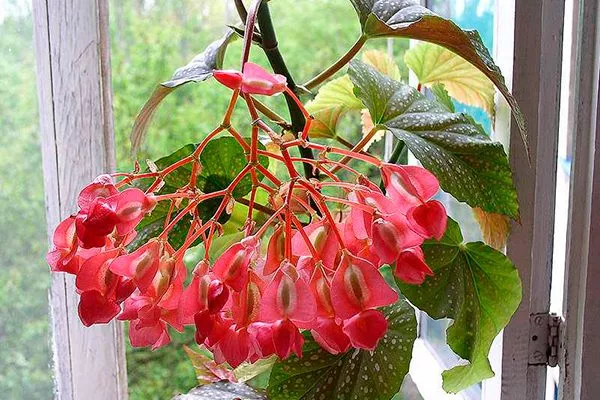
It has distinctive succulent, serrated leaves with red or orange undersides. Coral begonia flowers are clustered in bright red or red-orange inflorescences.
Features of coral begonia:
- When grown indoors, coral begonia forms a bush up to 80 cm tall. With regular pruning, the plant develops straight stems and a compact crown no more than 40-50 cm wide.
- Begonia roots are thick and fleshy. They cannot be propagated by division, like tuberous varieties.
- The stems are straight and bare, resembling bamboo due to the presence of internodes.
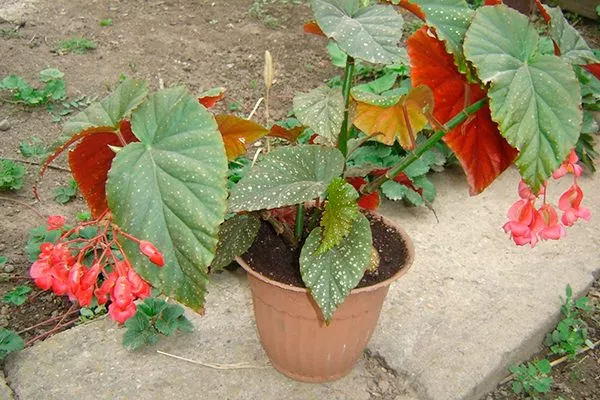
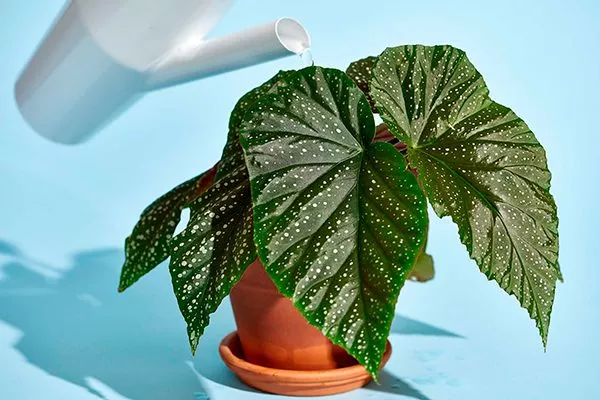
- The leaves are heart-shaped, asymmetrical at the base, and taper evenly to a pointed tip. They are slightly corrugated, with slight wavy and serrated edges. They are light green with dark spots or veins. They grow in pairs on long petioles. The leaf size is up to 20 cm from petiole to tip.
- The flowers are large, up to 5 cm in diameter, and bell-shaped. They can be white, pink, orange, or red. They consist of fused, round, pinkish petals that, individually, are not particularly decorative. However, the abundant inflorescences, resembling clusters of coral berries, delight with their exquisite fragrance and beauty.
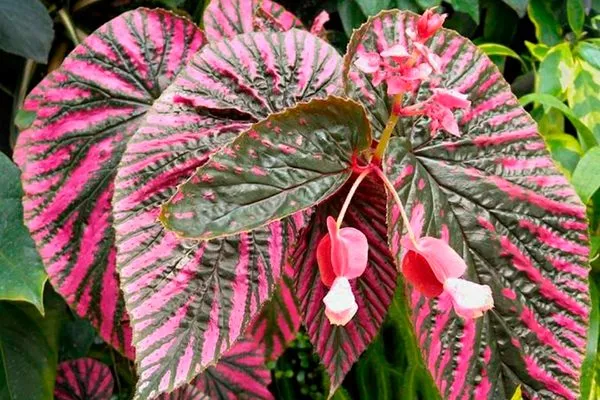
The coral begonia has earned the nickname "chameleon" due to its striking coloration. In the shade, the leaves are a rich green, accented by contrasting silvery-white spots. But in daylight, the bush takes on reddish hues: the veins, undersides of the leaves, and stems turn pink, while the outer surfaces of the leaves develop a vibrant coral hue.
Planting Basics
When planting, it's important to select suitable soil, which should be light and well-drained. A mixture of humus-rich, fertile soil and sand is recommended to ensure good aeration and drainage.
- ✓ Soil pH should be between 5.5-6.5 for optimal nutrient absorption.
- ✓ The soil must contain at least 30% organic matter to ensure the necessary structure and water-holding capacity.
Flower care rules
Coral begonia is a special and unique houseplant; it can grow beautifully without constant feeding, repotting, or even with inconsistent watering.
The best locations for it are southeast or southwest-facing windowsills. Begonias need good light but don't tolerate direct sunlight. If placed on the north side, they won't receive enough sunlight, and on the south side, they'll need additional shade. Begonias thrive in bright rooms, on shelves, or on stands.
This flower shouldn't be placed outdoors, especially during hot summers. The plant is very sensitive to drafts and sudden temperature changes. In winter, when the heating is on, it's recommended to remove the plant from heating devices.
Soil and fertilizer
Begonias prefer acidic or neutral soil rich in nutrients. Regular fertilization with organic or mineral fertilizers promotes healthy growth and abundant flowering.
It is necessary to feed it only when it begins to bloom, once every 2-3 weeks during the period of active growth.
It is recommended to use complex fertilizers for indoor flowering plants and pay special attention to the potassium and phosphorus content in the soil.
Lighting
Begonias prefer bright but indirect light. Direct sunlight is not recommended, as it can cause leaf burn.
Thermal conditions
The optimal temperature for coral begonia is 18-22 °C in summer and 15-18 °C in winter.
Watering mode
Proper watering is important. The plant has a massive root system that can store enough moisture to withstand mild drought. A balanced watering regime is recommended:
- The soil should not dry out more than 2 cm deep, but should also not be flooded with excess moisture to avoid root rot.
- In summer, more moisture is required, and in winter, watering will have to be reduced.
- The water should be clean, free of chlorine and excess salts. Filtered water at room temperature is ideal.
- To maintain their decorative appearance and glossy appearance, it's not recommended to mist coral begonia leaves. Instead, you can maintain humidity in other ways, such as placing a container of water next to the pot or using a humidifier.
Tying up
If necessary, bushes may require support or staking, especially if branches stretch due to insufficient light. To maintain the bush's shape, use supports or tie up individual shoots.
Trimming
Pruning is an important procedure for begonias, allowing them to take on a variety of shapes. It can be used to maintain compactness, shape the plant, and remove damaged or diseased parts.
Periodically remove faded flowers and wilted leaves. Pruning promotes rejuvenation of the plant and annual flowering.
Subtleties of flowering
Flowering begins in spring and continues for over a month, sometimes repeating several times throughout the year. The plant delights with numerous coral-colored buds, gathered in luxurious drooping clusters.
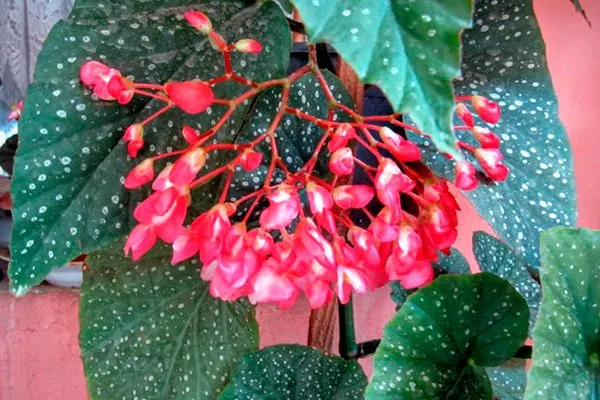
To encourage abundant flowering, regularly remove faded flowers and provide optimal lighting and care. The right conditions will allow it to bloom in all its glory.
Transfer
When replanting, it is recommended to use fresh soil and a slightly larger container. Recommendations:
- Young plants require repotting approximately once a year, while mature plants require repotting every 2-3 years. It is recommended to repot in the spring, when the plant is actively growing.
- The new pot should be slightly larger than the previous one to give the plant room to grow.
If you decide to prepare your own soil mixture, use loose and light components such as leaf compost, coarse sand, sphagnum moss and peat:
- Mix all ingredients with an equal amount of garden soil.
- Heat the soil mixture in the oven for about 30 minutes at +90 °C.
- Then let the soil cool and fertilize it with humates to restore fertility.
- Gravel, small pebbles, or brick fragments can be used for drainage. Disinfect all materials before adding them to the pot.

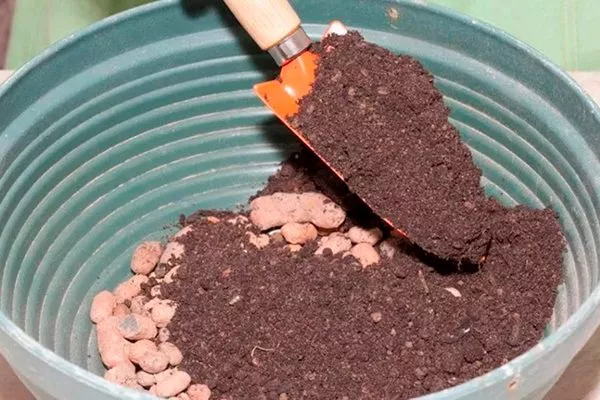
The first pot for a coral begonia should be approximately 15 cm in diameter. This pot promotes faster flowering and prevents the soil from retaining excess moisture. The pot can be made of any material, but clay is preferable. This will ensure good root aeration and prevent the soil from overheating in hot weather.
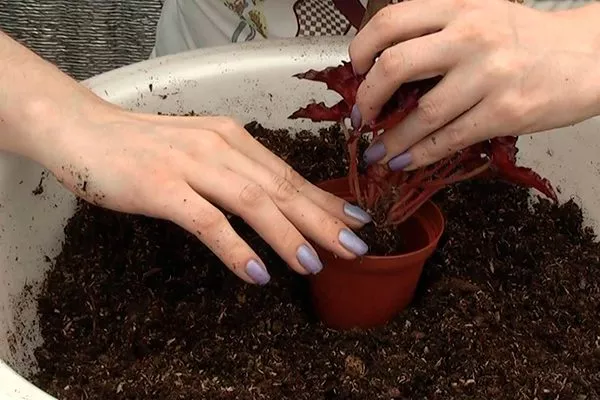
When planting begonias from cuttings, leaves or seedlings, they should be transplanted into permanent pots only after the third young leaf appears.
The planting process is as follows:
- Place a drainage layer at least 1.5 cm thick in the prepared pots.
- Then add moist soil and create a hole in the center to fit the begonia roots.
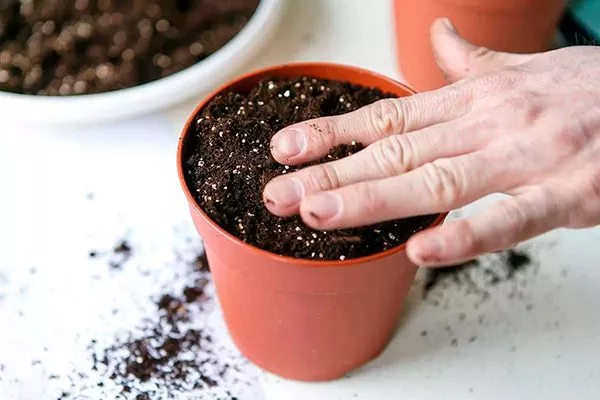
- Place the seedling in the hole, fill the remaining space with the missing soil and gently compact it with your palm.
- Water the plant with warm, settled water.
- For a few days after planting, avoid exposing the plant to direct sunlight. Then, move the pot to its permanent location and resume normal care.
- At the beginning, the soil should be kept constantly moist.
- It is recommended to fertilize the plant no earlier than after 2 weeks.
Reproduction
All parts of the begonia root easily and quickly produce new shoots. Begonias can be propagated by seeds, cuttings, leaves, and even leaf fragments, producing many new plants from a single large leaf. The simplest and most practical method is cuttings.
Propagation by cuttings
It is recommended to propagate coral begonias by cuttings in the spring, from early spring to mid-summer, when the plant is actively growing foliage. To propagate coral begonias, use a sharp tool with a disinfected blade.
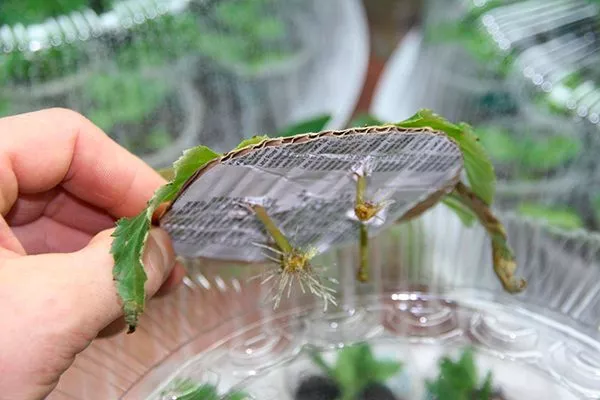
Preparation and rooting of cuttings:
- Select a healthy, large branch and cut off a section approximately 10 cm long. For plants older than 3 years, stems up to 15 cm long can be used.
- Remove leaves from the bottom of the cutting and flowers from the top. If you allow the buds to develop, the shoot will not have enough strength to form roots.
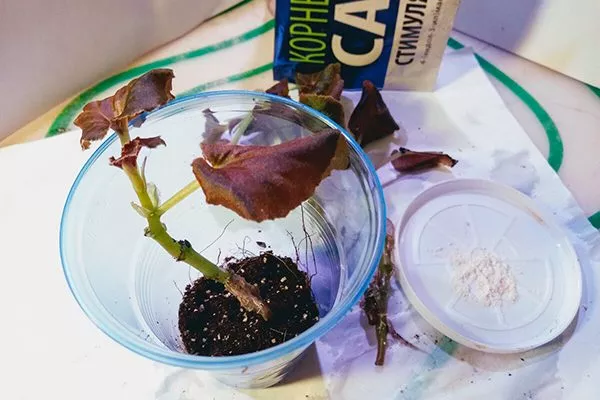
- Place the lower end of the cutting in water or a moist, loose substrate such as perlite, sand, peat or hydrogel.
- Additional greenhouse conditions or stimulants are not necessary. Coral begonias root easily without any special requirements.
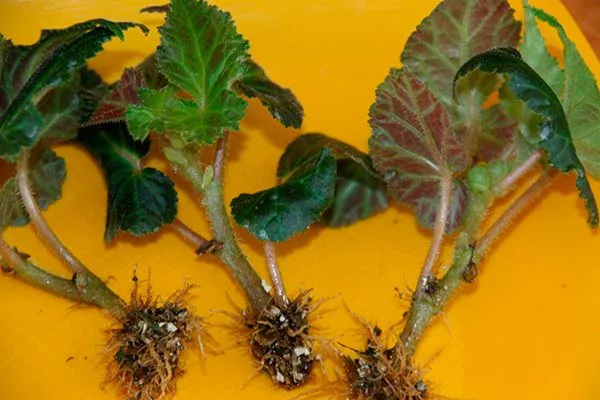
- When root shoots approximately 1 cm long appear, the cutting is ready for planting in the ground.
Leaf propagation
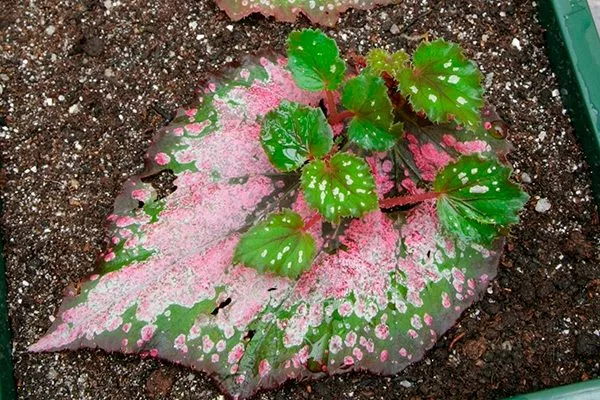
Coral begonia leaves can be rooted whole, removed from the branch, or even in pieces. To do this, you can split a leaf into pieces along the veins and insert them into moist soil.
Propagation by seeds
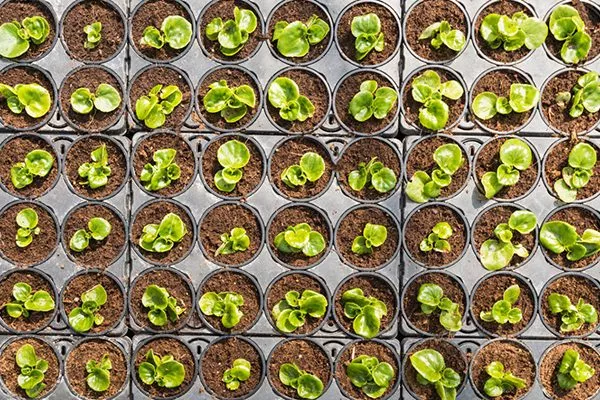
Fully ripened coral begonia seeds can be sown from December to mid-March. Sprouts will appear within two weeks, and the first flowers can be expected as early as July.
Store-bought seeds are often processed or coated, so they don't require any special preparation or pre-moistening.
If you are using seeds you have collected yourself, it is recommended to disinfect them in a weak solution of potassium permanganate, and then stimulate growth in a solution of Epin or Zircon.
Subsequence:
- Pour moist soil into the container and spread the seeds evenly over the surface. Don't cover them with soil; simply press them lightly into the loose soil.
- If you're using pots or cups, cover them with plastic wrap. If you're using peat pellets, place them in a transparent container with a lid.
- Ventilate the mini-greenhouse regularly and spray the top layer of soil when it dries out.
- Once the sprouts emerge, gradually acclimate them to dry indoor air. Remove the film for 1 hour, then gradually increase the time each day.
- Picking can be done when the seedlings have grown 3 leaves.
Propagation by cuttings is the fastest way to obtain new begonias. Plants grown from seeds are more delicate and require good light during cultivation.
Diseases and pests
Although considered an easy-to-grow plant, coral begonia can lose its decorative appeal under the wrong conditions and become a victim of infections if not properly cared for.
It can be susceptible to attacks from aphids, spider mites, and diseases such as powdery mildew and gray mold. Regular inspection of the plant and measures to prevent and control pests and diseases will help keep your begonia healthy and beautiful.
If diseases or pests are detected, it is recommended to use appropriate preparations for their treatment and protection.
Here are the main symptoms of begonia problems and how to solve them:
- Drying and curling of leaf edges:This can be caused by dry air or overheating. Move the begonia to a cooler location and provide high humidity.
- Drying and falling of leaves: The cause may be a cold location or the plant being in a draft. Move the plant to a more protected area.
- Drooping and wilting of leaves: The cause may be dry soil or polluted indoor air. Ventilate the room more frequently and adjust watering.
- Small leaves and no blooms: This may be due to insufficient plant nutrition. It is recommended to apply fertilizer and, after 10 days, apply humates.
- Leaf fall: This may be due to a lack of micronutrients, sudden temperature changes, dry soil, or irregular watering. Adjust your plant care.
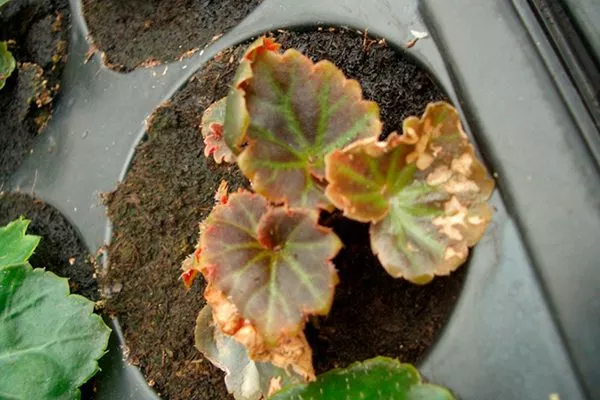
- Spotting on leaves and petals: Such spots can occur due to overwatering and an accompanying infection. If cucumber mosaic (yellow spots and deformation) develops, the plant may be beyond saving.
- Leaf discoloration and sticky webbing: This may be caused by spider mites. Wipe the leaves with rubbing alcohol and then treat the plant with a special spider mite treatment.
- Silvery spots, blackening and dying of leaves: This may be due to fungal infections caused by damp air. Remove affected areas of the plant and treat with specific preparations. Water sparingly.
- Stickiness of leaves and the appearance of small pests such as scale insects: Remove insects manually and then treat the plant with insecticides.
- ✓ The appearance of new leaves with uniform color indicates good health of the plant.
- ✓ Lack of flowering throughout the year may indicate a lack of light or nutrients.
There are several infections that cannot be cured, and the plant should be destroyed completely. These include bacterial spot and nematode infestation. Nematode infestation can manifest itself as yellowing and leaf drop. In both cases, the plant should be discarded along with the soil, and the pots should be disinfected or boiled several times.
Coral begonia is a wonderful plant for any home or office. By following simple care instructions and carefully maintaining your coral begonia, you'll enjoy its beauty and vibrancy for many years to come.