
The Elatior begonia is a hybrid plant. Its Latin name is Elatior, and its common name is winter begonia. It blooms year-round and is very easy to grow, so potted Elatior plants can easily be moved outdoors in summer and kept on a windowsill in winter.
Features of the hybrid species
This variety is characterized by a compact bush and relatively large flowers. Elatior is the general name for a group of begonias that were developed by breeders by crossing two species of this plant—Socotran and tuberous.
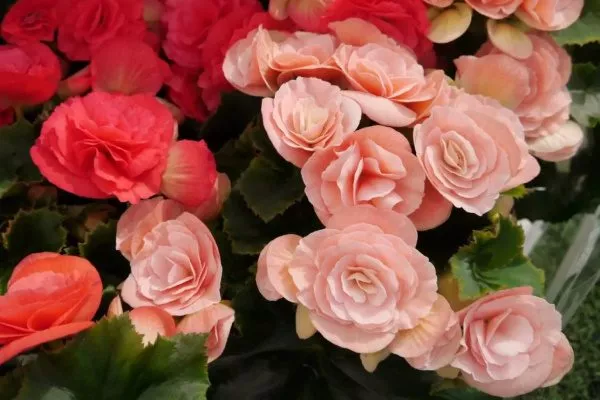
Other interesting features:
- Flowering is considered numerous - about 9-10 buds are formed on one shoot.
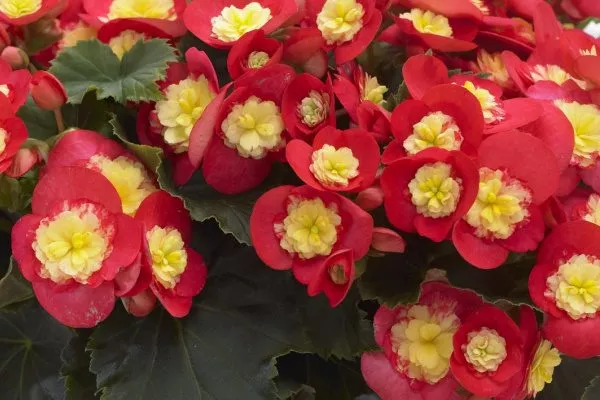
- The petals range in color from snow-white to deep red. The flowers form in clusters.
- The bush reaches a maximum height of 40 cm, making it a medium-sized species. However, the Japanese variety can grow to over 50 cm. Its stems are fleshy, usually light green (with dark green leaves). A pinkish tint often appears on the surface of the shoots.
- The leaves often have a glossy surface and uneven edges.
Review of varieties
There are over a hundred varieties of Elatior begonias, but among them there are those that are especially loved by gardeners in our country for completely different reasons.
| Name | Bush height (cm) | Flower type | Petal color |
|---|---|---|---|
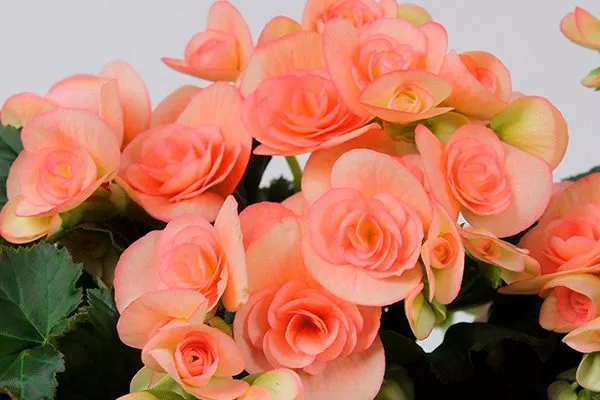
| Borias | 30-40 | Terry/regular | Coral/light pink |
| Baladin | 25-30 | Terry | Red-carmine |
| Pickles | 25-40 | Terry | Orange/yellow/red/pink/chocolate |
| Berseba | 30 | Terry | Pink/light pink/red |
| Carnival | 35 | Densely terry | Orange-yellow/red |
| Dragon | 25-30 | Terry | Pink/orange/peach |
Borias
It is highly popular due to its excellent external characteristics and minimal demands.
Features of the Borias variety:
- the height of an adult plant bush is from 30 to 40 cm;
- stem – thickened;
- leaves are heart-shaped but asymmetrical;
- the underside of the leaves is lighter than the top;
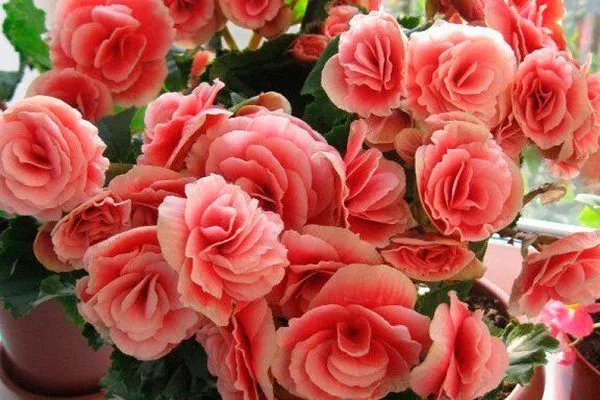
- petals are most often double, but there are also subtypes with regular ones;
- the color of the flowers is either coral or light pink;
- buds - large size;
- flowering – twice a year.
Borias, a flower bred in England, is often mistaken for roses based on its appearance. This is largely due to the multi-tiered flower stalks.
Baladin
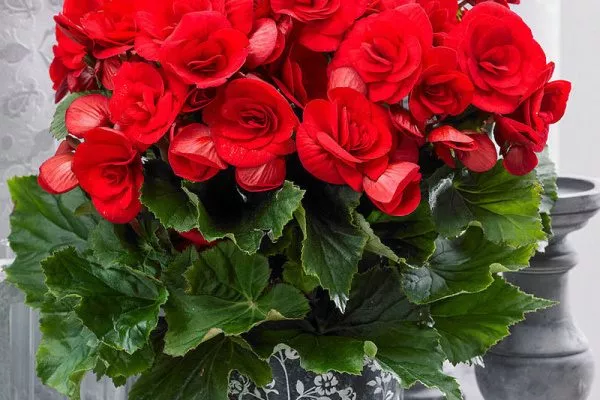
This begonia-loving plant attracts the attention of begonia lovers with its enormous number of blooms per bush – approximately 70 (plus or minus 5-10). This is a true gift bouquet, as in addition to the large number of buds, the petals are strikingly rich in color, a crimson hue.
Other characteristics:
- the average height of the bush is 25-30 cm;
- the length of the peduncle stem on one plant varies, which creates a bouquet effect;
- flowering depends on the quality of care - under favorable conditions it occurs three times a year;
- the shape of the shoots is exclusively upright, which gives reason to talk about the tree-like nature of the bush;
- Flowering is possible only in warm conditions and fertile soil.
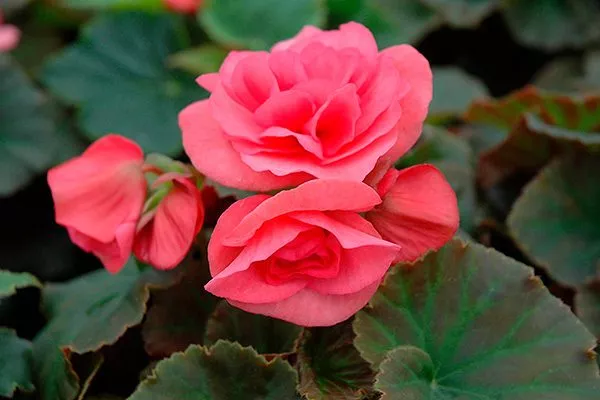
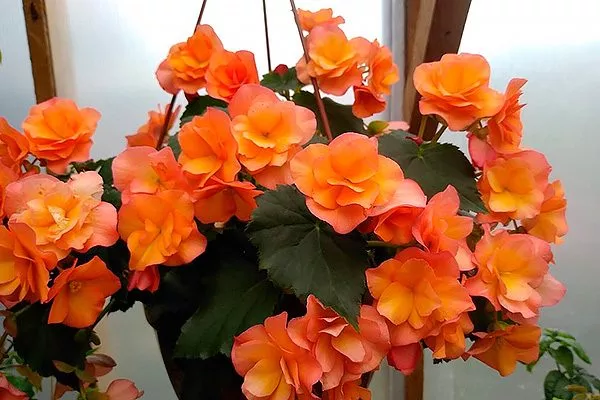
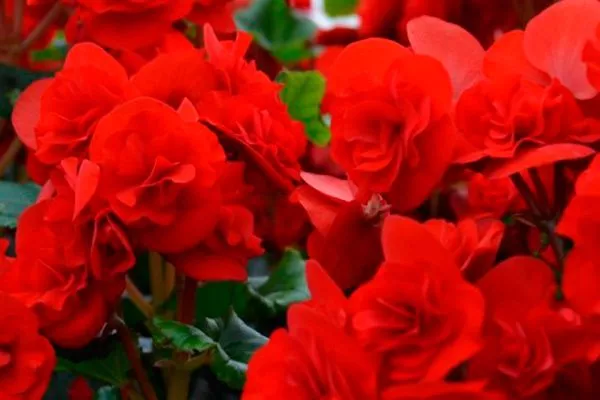
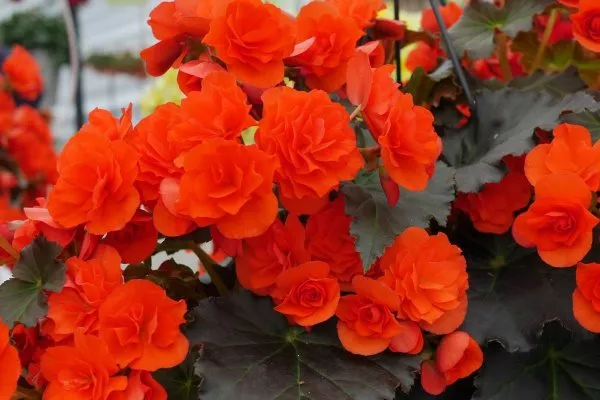
Pickles (Solenia)
This is a multi-flowered shrub plant from Schneider Nursery. Solena includes a series of nine varieties, each differing in color and growth type (upright and trailing). General characteristics:
- stems are powerful;
- petal type – double;
- flower diameter – 6-8 cm;
- flowering is abundant and long-lasting, from spring until the first frost;
- propagation type – only by cuttings.
The variety series is characterized by cultivation both indoors and outdoors, because the plant is not afraid of unfavorable factors and the main begonias diseases and pests.
Nine varieties of Pickles:
- Orange. Bush type – erect, color – orange.

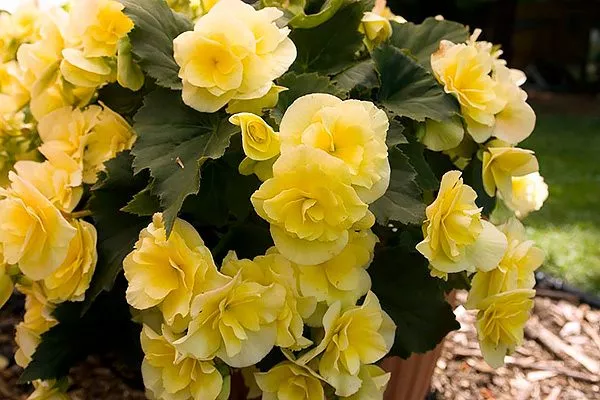
- Yellow. The variety is semi-trailing, the color is yellow, very rich.
- Red Orange. The shape of the bush is erect, the color is orange-red.
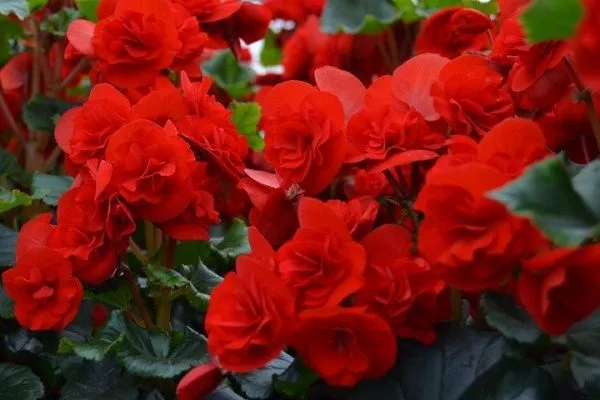
- Scarlet. It is considered an upright plant with reddish flowers.
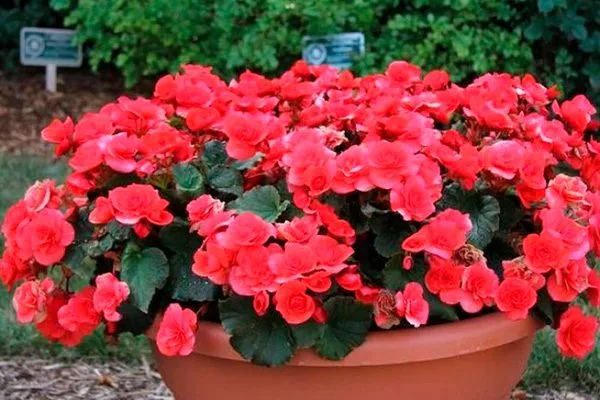
- Dark Pink. It belongs to the semi-ampelous variety, which has large, rich pink flowers.
- Light Pink. Another semi-trailing variety, but the petals are a soft pink.
- Apricot. Also a semi-ampelous begonia, yellow-coral-pink in color.
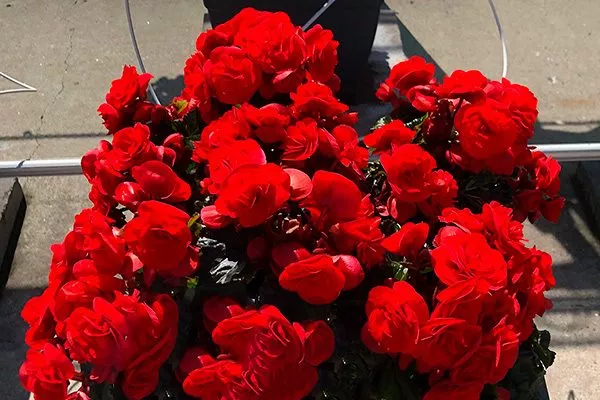
- Red. Another semi-trailing begonia with exclusively red petals.
- Chocolate Orange. This semi-ampel has chocolate-colored foliage and orange flowers.
Berseba
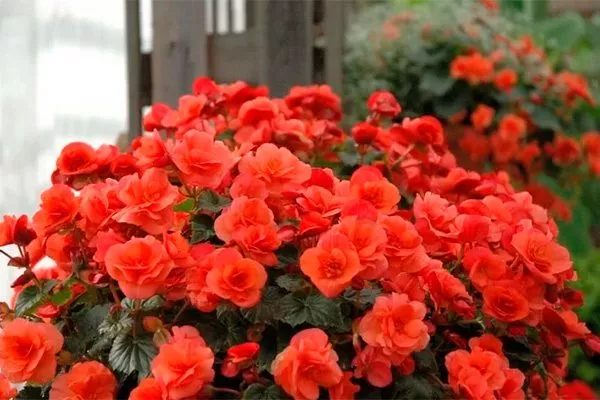
There are subvarieties: Berseba Pink, Berseba Light Pink, and Berseba Red. They vary in shades: pink, light pink, and red (the latter more closely resembles a bright crimson). These flowers grow up to 30 cm tall and are characterized by their compact size, double petals, lushness, and summer bloom.
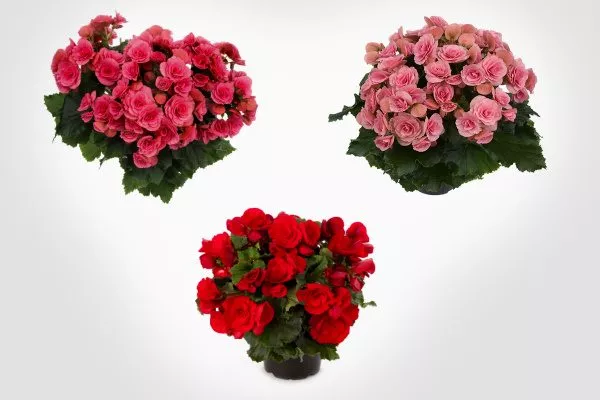
Berceba is very demanding in terms of care. If the cultivation guidelines are not met, the plant will easily die. Therefore, carefully familiarize yourself with all the growing instructions for this hybrid before purchasing.
Carnival
This variety is characterized by large flowers and alternate leaves, with densely double, camellia-like petals. A distinctive feature is the foliage: the upper surface is glossy, while the lower surface is matte. The flower stalks are loosely axillary, and the flowers range in color from orange-yellow to red.
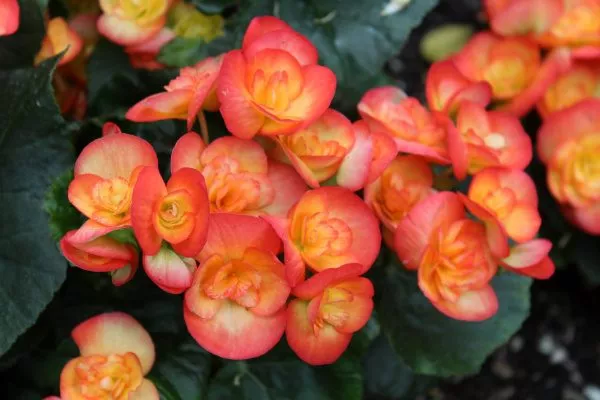
The bush grows to a maximum height of 35 cm, with vigorous, upright shoots and long-lasting flowering. Unlike other subspecies, Elatiora has tuberous roots. It propagates only by seed or tuber, requiring annual repotting.
Dragon
This variety has its own subspecies:
- Dragone Champagne – very dense bushes with apple-shaped flowers.
- Dragone Sunset – pink inflorescences combine orange and peach shades.
- Dragone Dusty Rose – multiple pink flowers.
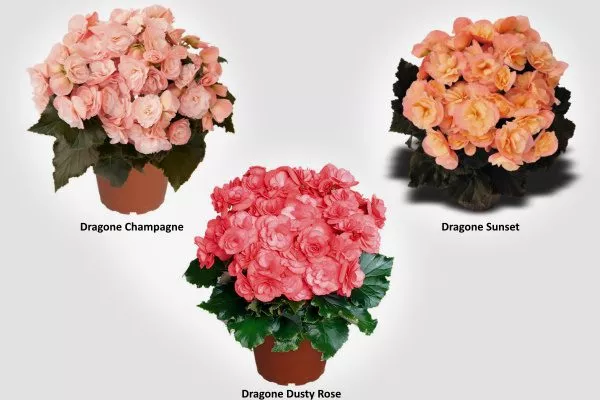
The bushes reach a height of 25 to 30 cm, the flowers are always spectacular, and the leaves are exceptionally glossy and very dense. This is a completely unpretentious variety that tolerates both hot and cold weather.
Other varieties
There are also other sub-varieties of Elatior that are less common:
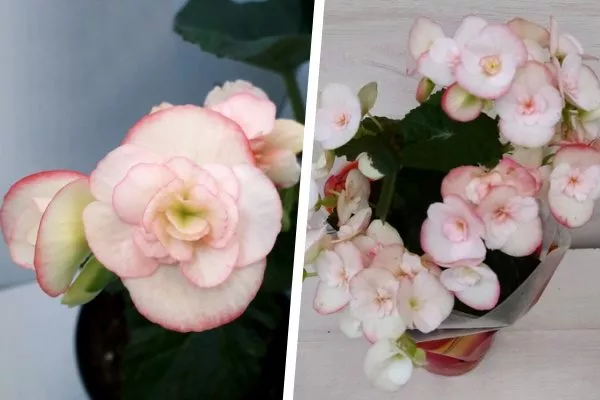
- Christina (Christine). Blooms all year round, petals are densely double, soft pink in color.
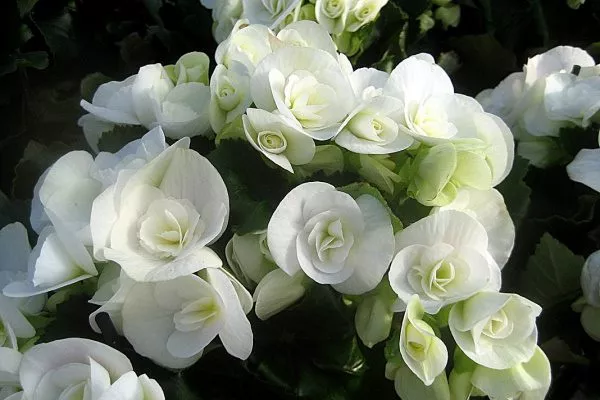
- Valentino. It is divided into 'Valentino Pink' (with pink petals) and 'Valentino White' (snow-white begonia).
- Camilla. Characterized by white-pink shades of petals.
- Clara. A completely white decorative flower.
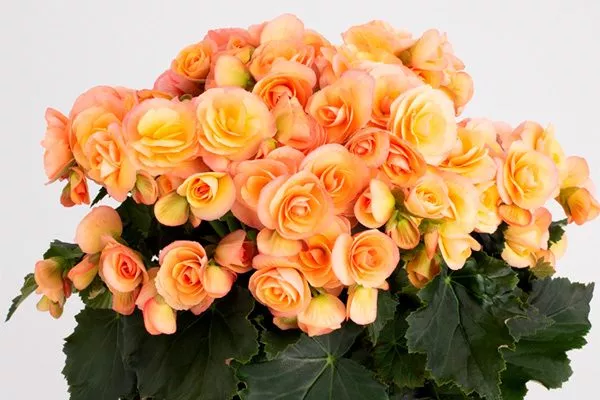
- Nicole Stone. It has unusually beautiful peach flowers.
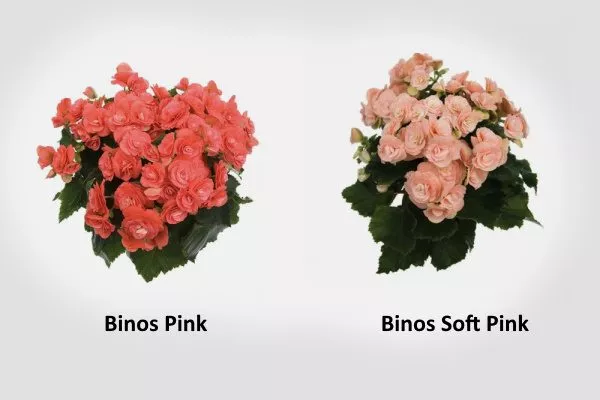
- Binos (Binos). Another cultivar series with double, compact flowers of a pure coral color. It is divided into Binos Pink (with dark pink petals) and Binos Soft Pink (with delicate peachy-pink flowers).
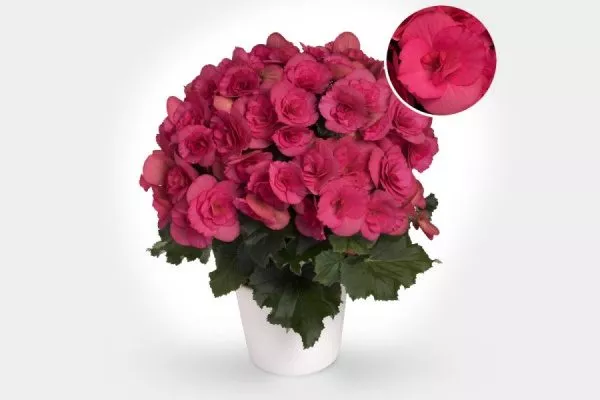
- Bela Lilac pink. Part of the Barkos collection. Flowers are a bright dark pink.
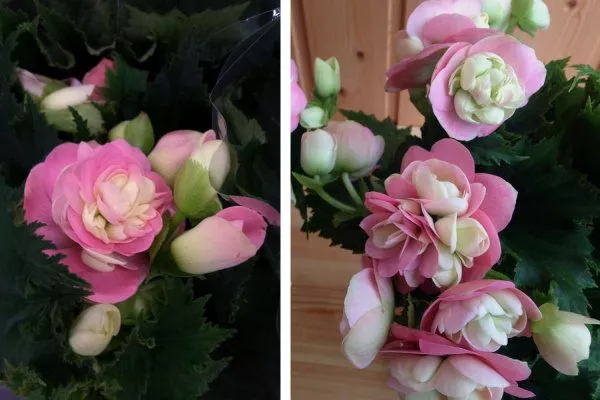
- Hailey Sunset. The interesting color scheme attracts attention – yellow, white, and various shades of pink are present at the same time.
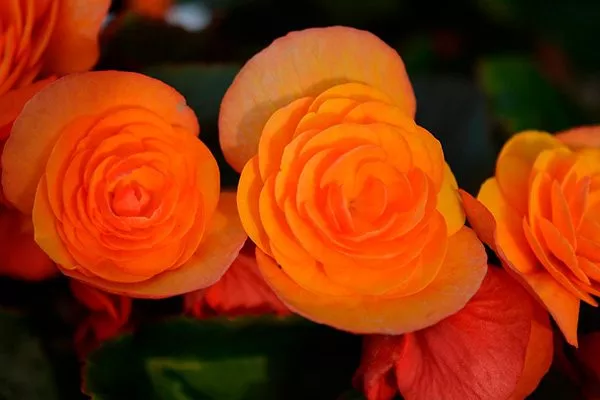
- Fan Orange. It has fabulous orange petals.
Preparing for landing
Growing Elatior begonias isn't as difficult as it seems, but before planting, it's important to properly prepare the containers and select the right soil mixture. The plant's survival rate and subsequent development depend on their size and quality.
Choosing a pot
Elatior pots can be made from a variety of materials, but natural ones like clay and ceramic are preferred. Much more important are other parameters—pot dimensions:
- If you plan to grow a small bush, that is, so that the flower is as compact as possible, but at the same time blooms quickly, purchase containers of small sizes.
- When it is necessary to achieve the growth of the bush in width and the development of large flowers, the flowerpot can be selected wider.
- When propagating cuttings, use a pot with a diameter of 5 cm until rooting occurs. Once the root system has developed, you can transplant it into a container with a width of 10 cm. Then, every couple of years (as the plant grows), increase the diameter by approximately 2-3 cm.
Keep in mind that Elatior's roots develop predominantly in width, so you shouldn't buy tall pots.
Selecting soil
This type of begonia requires slightly acidic soil, rich in nutrients and composed of several components. This will create the necessary loose structure, preventing water stagnation and ensuring a constant supply of oxygen.
Many gardeners purchase substrate from specialized stores. But choosing the right one is crucial. Specifically, suitable substrates for Elatiors include Green, Keva, Peter Peat, Terra-Vita, Begonia, and similar products.
If you can't or don't want to buy a potting mix, make your own. The following composition has shown good results:
- 2 parts peat and leaf soil (begonia absolutely does not tolerate oak and willow leaves);
- 1 part river sand, but it must be coarse-grained;
- Styrofoam – used for a 2-3 cm drainage layer (note that expanded clay and other pebbles are not suitable for Elatior, as they do not retain moisture.
There is another option for home substrate:
- leaf soil, peat - 2 parts each;
- turf soil – 1 part;
- perlite (can be replaced with sand) – 0.5 parts.
To prevent future plant diseases and pest infestations, be sure to bake all the soil and sand in the oven. If you don't have an oven, simply pour boiling water over the soil or use a pink (not clear) solution of potassium permanganate.
Planting Begonia Elatior in a pot
Planting Elatior begonia is easy; just follow these step-by-step instructions:
- Wash the pots in soapy water and disinfect them. If there are no drainage holes in the bottom, drill some.
- First, lay down the foam plastic, which needs to be crushed into pieces (fractions of approximately 1 cm).
- Pour the prepared and thoroughly mixed substrate on top to half the height.
- Insert a bush (rooted cutting, shoot, etc.) into the center.
- Fill the area with potting soil on all sides, making sure to fill all the voids.
- Tamp down very lightly.
- Moisten. You can use Fitosporin or any root growth stimulator along with watering.
To learn how to plant a flower from a cutting, watch the video below:
Growing conditions
Each subvariety of Elatior begonia requires specific growing conditions, so these factors should be taken into account. However, there are some general guidelines.
Location and lighting
Daylight hours are important for Elatior. Unlike other begonia species, Elatior doesn't like excessive light. 10-12 hours a day is sufficient.
Features of the pot location:
- can be placed on any side of the world;
- The northern one is the best – there are no burns in the summer;
- on the western, eastern and southern sides, it will be necessary to shade it, because the green mass of the variety is too sensitive and gets burned instantly;
- Avoid exposure to direct sunlight;
- In winter and on northern windowsills, be sure to connect fluorescent lamps.
Experienced gardeners have a life hack for reblooming or quickly budding when propagating from cuttings. Here's what to do:
- 2 months before the expected flowering time, illuminate Elatior for only 8-9 hours;
- As soon as the buds begin to form, increase the daylight hours to 11-12 hours.
Temperature and humidity
Average temperatures range from +18 to +26 degrees, but much depends on the specific Elatiora variety and the phase of the growing season.
Other features:
- the majority of varieties grow easily at thermometer readings of +15-22 degrees;
- if the temperature is above +22-24, the flowers age faster and fall off;
- if below +12 degrees, the plant dies;
- at temperatures of +28 degrees, the corollas of terry varieties are transformed into simple ones;
- after flowering (during the dormant period) the temperature should be from +16 to +18 degrees;
- immediately after the beginning of budding, maintain the temperature at 24 degrees, after the buds open – at about 20.
The humidity in the room where the Elatior Begonia is growing should be between 35 and 50%, no higher. If the humidity is lower, use a humidifier, hang wet towels nearby, and place containers of water nearby.
Transfer
Repotting begonias, especially Elatior, is often not recommended. The plant does not tolerate such manipulation well. If such a need arises, strictly follow all the instructions, otherwise the sensitive and delicate root system will suffer.
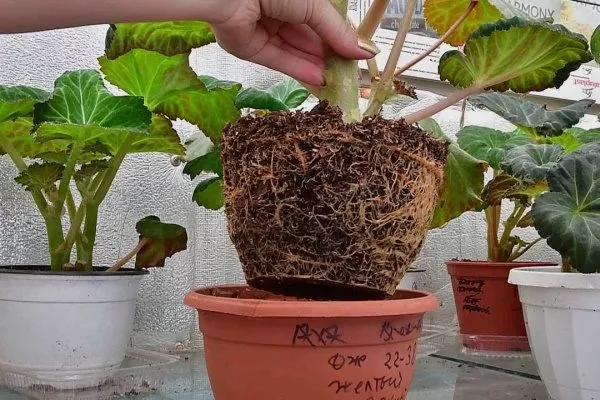
Features of the transplant:
- You can’t replant the flower immediately after purchasing it – it is already under stress due to transportation and changing conditions;
- transfer to another pot is allowed only after the flowering stage is completed;
- 5 hours before transplanting, moisten the soil with a watering can (using the superficial method);
- the pot and substrate must be new (as a last resort, disinfect the flowerpot);
- Be sure to place drainage at the bottom;
- plant the bush to the same level as it was planted before;
- remove the flower from the old container along with the root ball, then carefully clean it from the substrate (you can rinse it);
- when using the transshipment method, do not shake off the soil lump, but lightly knead it with your hands;
- If necessary, cut off damaged roots and treat these areas with charcoal or activated carbon.
How to care?
Care measures are no less important for the life of plants, so do not ignore them and strictly adhere to individual recommendations for the variety.
Top dressing
The first fertilizer application is made immediately after budding begins—during this period, the plant requires a lot of strength and energy, which it draws from nutrients. Potassium-phosphorus compounds are used for this purpose.
Other rules:
- until autumn, you need to apply fertilizer twice a month;
- Feed with vitamin complexes once a month;
- In winter, fertilizing is prohibited – the bush is resting;
- Before fertilizing the soil, water the substrate first;
- form of fertilizer – preferably liquid;
- For lush growth, fertilize every 10 days.
Watering
Elatior absolutely does not tolerate either drought in the soil or stagnant water, so it is important to strictly monitor the moisture process.
Watering rules include the following:
- Follow the regimen – moisturize at the same time of day with an acceptable error of no more than 15 minutes;
- in the summer months, procedures are carried out every 3-4 days;
- in winter it is enough to add water once a week;
- in autumn and spring – as needed (when the top layer of soil dries out);
- Always let the water settle or boil, filter;
- The temperature of the liquid should be identical to the readings on the thermometer in the room.
Pruning and pinching
Elatior is famous for its beautiful large flowers, so the bushes need to be periodically shaped to create a beautiful compact form.
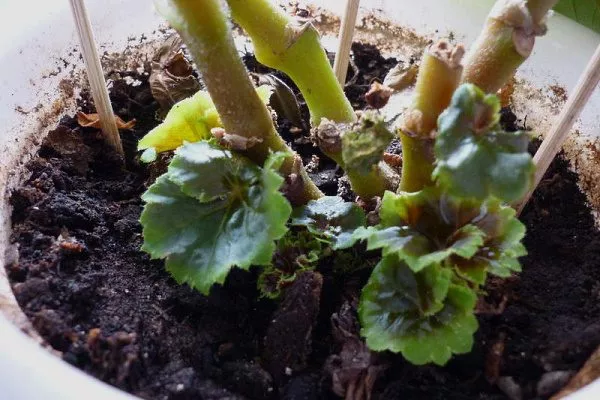
Subtleties:
- if the shoots are growing rapidly upward, pinch the top, which will encourage young lateral shoots to grow (do this in the spring and as needed);
- remove aging leaves and flower stalks, thanks to which the upper root shoots will receive enough oxygen, and the whole plant will receive nutrients;
- To ensure that the branches of the bush are the same length, pinch all the shoots at the same level;
- Cut off dried, broken and damaged stems.
Care nuances during flowering and dormancy periods
Flower stalks are constantly being produced. This is the begonia's most active time, so care should include all necessary measures (this prolongs the flowering period and reduces the risk of disease).
Necessary measures:
- rejuvenate the bushes by pruning;
- monitor the soil and air humidity;
- do not allow the air temperature to drop too low (according to the variety requirements);
- After the first flower stalk has formed, remove it, which will promote the formation of new buds;
- Fertilize at least twice a month.
After flowering, the flower goes into hibernation, so you need to do the following:
- cut off the flower stalks, dried leaves;
- reduce the indoor thermometer reading to +16-18 degrees;
- reduce the frequency of watering;
- refuse fertilizers;
- Before waking up, fertilize with Zircon or Epin.
Bloom
The Elatior begonia has a cluster-like bud formation pattern, so the flowers are arranged in the central part of the plant on upright stems, with several flowers appearing at a time (the number depends on the variety and care). Being a sterile plant, Elatior produces predominantly male flowers.
Flowers are most often semi-double or double, but single-flowered varieties are also common. The color during budding and after petal opening varies, and even the corollas can be either single-colored or two-toned.
Reproduction
Methods of reproduction Elatior begonias are numerous, but it's important to consider the method used to increase plant population in a given case, which directly depends on the variety. It's important to adhere to these guidelines, as they affect the preservation of varietal characteristics.
- ✓ The presence of at least 2 viable buds is necessary for successful rooting.
- ✓ The cutting should be cut with a sharp tool at an angle of 45° to increase the area for moisture absorption.
The most commonly used method is cuttings, which allow for rapid rooting with a 99% success rate. The propagation process:
- Find a healthy, strong shoot. It must have at least two viable buds. Both apical and mid-sections can be used.
- Cut it with a sharp and disinfected knife to a length of 8 to 12 cm.
- Tear off the lower leaves, leaving only 3-5 at the top.
- Treat the cuts (on the bush and cutting) with wood ash. Leave the shoots for a few minutes to dry slightly.
- Proceed to rooting.
- When roots about 2 cm in size form, transplant the cuttings into a permanent pot.
- ✓ The water temperature for rooting should be strictly 20-21°C; deviations will slow down the process.
- ✓ The use of activated carbon in water prevents the development of putrefactive processes.
Begonias can also be propagated using perlite. Learn more in the following video:
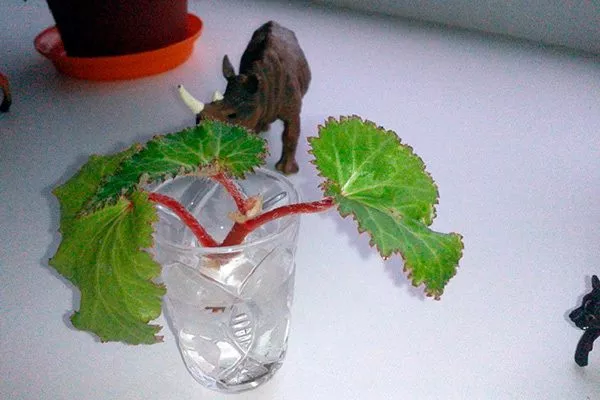
There are two ways to root shoots:
- In the water. For this, use settled liquid at a temperature of 20-21 degrees Celsius. Pour this water into a glass or plastic container (it must be transparent), add one tablet of activated charcoal, and place the cutting so that it is 1/3 full.
Peculiarities:- room temperature – 18-20 degrees;
- frequency of water change – once a week;
- in case of strong evaporation, add liquid;
- During the process of stem rotting, they are cleaned and washed.
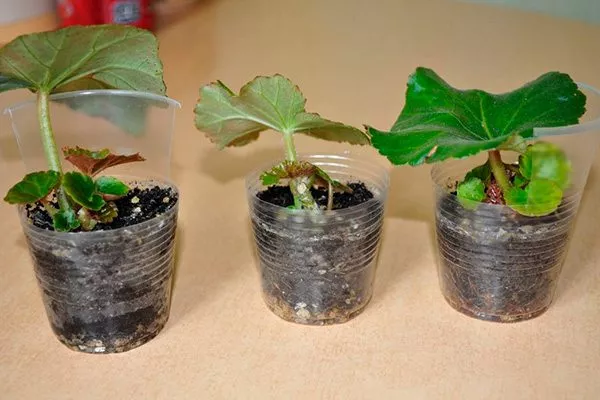
- In the soil mixture. In this case, the rooting conditions are identical. However, the process is slightly different:
- First, the substrate is prepared - it should consist of 2 parts of turf soil and sand with peat, taken in 1 part each;
- then containers - you can take peat or plastic cups, make holes in the bottom for drainage;
- now soak the cut area in a rooting accelerator (Kornevin, Heteroauxin, etc.);
- pour the substrate into a glass and insert the cutting with the cut side down to a depth of 2 cm;
- cover the container with a plastic bag;
- keep it like this until 3 leaves form, after which remove the cover completely;
- Ventilate the seedling every day.
- Elatior reproduces and dividing the bushThe procedure is simple:
- First, the flower is removed from the pot and the roots are washed;
- after that the bush is cut into 2 or more parts;
- each one is transplanted into separate permanent pots.
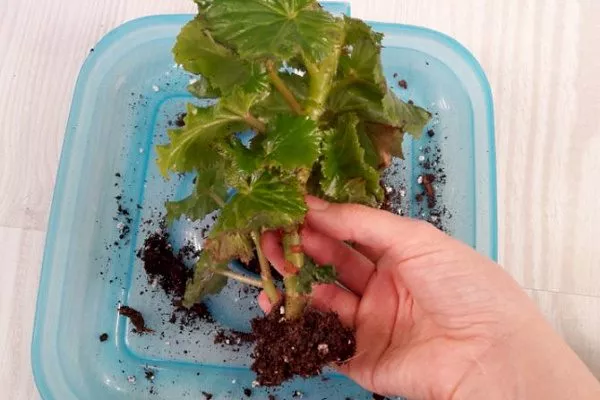
Another way is – seminal, but it is used extremely rarely because it takes a lot of time and maternal characteristics are rarely preserved.
How to do it – brief step-by-step instructions:
- Soak the seeds in a light pink solution of potassium permanganate for 30 minutes. This will kill bacteria.
- Wash the planting material.
- Pour the substrate (standard for begonia) into separate glasses or a common container.
- Spread the seeds on top and sprinkle with soil mixture.
- Cover with plastic wrap, opening daily for ventilation.
- When 2 leaves have formed on the sprout, remove the covering and transplant it into separate pots.
- After 2 months, transplant the seedlings again into permanent containers.
The final method for propagating Elatior is by leaf propagation. The veins contain growth points, which are where the root system will develop. Here's how:
- Choose a good leaf. Cut it off. If it's large, cut it into 2-4 pieces.
- Plant the elements in the substrate so that the veins touch the soil.
- Sprinkle lightly with sawdust on top.
- Cover with plastic wrap. After about 2 months, transplant the rooted seedling into a permanent pot.
For more details, watch the video:
Diseases and pests
Elatior is considered disease-resistant, but if improperly cared for, it can be susceptible to powdery mildew, gray mold, bacterial spot, and ring spot. Any fungicide can be used for treatment.
Common pests include aphids, scale insects, and whiteflies. These need to be controlled with insecticides. To prevent this, follow all the rules and treat your bushes preventatively.
Mistakes in care
To avoid any difficulties growing begonias You need to know what mistakes beginners most often make:
- the humidity level in the air is too low – the edges of the leaves become dry;
- begonias are cold - they begin to wither and turn yellow;
- lack of moisture in the substrate – the bush withers;
- lack of nutrients – flowers become small or budding does not occur at all;
- lack of disinfection of instruments, containers, soil and sand, and cut sites – diseases develop and pests appear;
- Overfilling a pot with water causes putrefactive processes to occur.
Myths about Begonia Elatior
The Elatior variety is popular, so there are many interesting rumors about it. For example:
- It's a common misconception that a bush won't produce buds for a while after purchase. In reality, this happens for only one reason: improper care.
- Since this variety is commonly referred to as "winter," it blooms only in winter. This is another lie, as flowering most often occurs in summer.
- They say that Elatior dies or stops blooming after flowering. This is not true. This only happens if the shoots are not pruned (they become too elongated).
- This variety is highly susceptible to rot. This only occurs in the presence of disease and excessively waterlogged soil.
Reviews
Growing Elatior begonias doesn't require a large investment or excessive effort on the part of the grower. Simply follow the growing guidelines for the specific variety. To ensure a beautiful bouquet, prune the plant regularly and shape the crown.