
Trailing begonias attract attention with their beauty and outstanding decorative qualities. Thanks to their long flowering period, varied colors, and elegant hanging stems, this plant is becoming a popular choice for landscaping gardens, balconies, terraces, and even interiors in homes and offices.
The origin of the hanging begonia
The trailing begonia has its roots in Mexico, where it was discovered and named after Michelangelo Begoni, the French governor of Haiti in the 17th century. The first begonia hybrids were created in the 1800s. The first trailing begonia varieties appeared during this time.
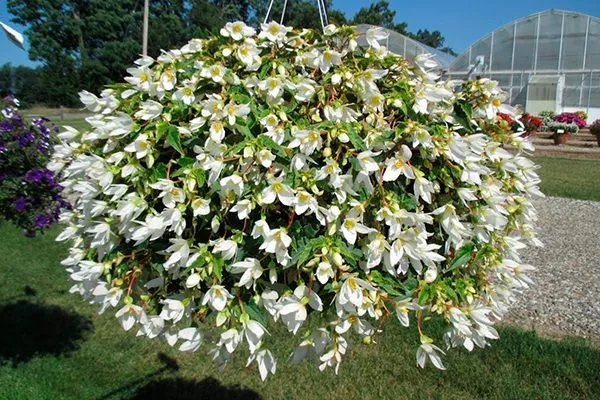
The origins of the trailing begonia span several centuries. It has become one of the most popular plants due to its low maintenance and attractive appearance. Today, the trailing begonia remains one of the most sought-after ornamental plants worldwide.
Description of appearance
The trailing begonia is a widely popular plant used to decorate homes, balconies, and verandas. Its unique visual beauty and variety of species/cultivars attract the attention of many plant lovers.
Leaves
The leaves of the trailing begonia come in a variety of shapes and sizes, varying depending on the specific species and cultivar. They can be green, red, pink, yellow, or white, and also decorated with a variety of patterns and colors.
The leaves typically have a glossy, shiny surface. Some varieties exhibit a marbled or iridescent finish.
Flowers
The flowers of the trailing begonia are a bright and attractive sight, their appearance varying depending on the plant species and cultivar. Flowers can be solitary or clustered in clusters, with shades ranging from white to rich red.
Stem features
The stems of the trailing begonia grow long and flexible, sometimes reaching up to 60 cm in length. They are usually covered with dense hairs, which protect the plant from drying out and dehydration.
Plant size
Trailing begonias can range in size from a few centimeters to 50 cm in diameter. Most species and varieties are suitable for growing in pots or on hanging structures.
- ✓ Disease resistance: The varieties 'Belleconia' and 'Sensation' are highly resistant.
- ✓ Length of shoots: 'Convolvulus' can reach up to 2 m, which is important for hanging compositions.
Varieties
There are many different varieties of trailing begonias, each boasting distinctive decorative qualities that rival each other. Let's look at the most popular.
| Name | Length of shoots (cm) | Leaf color | Flower type |
|---|---|---|---|
| Belina | 30 | green | bells |
| Bollivian | 80 | light green/brown | bells |
| Belleconia | 40-80 | various | terry |
| Illumination | 40-80 | asymmetrical | plain/terry |
| Bindweed | up to 200 | rich green | white |
| Chanson | up to 40 | green | terry/semi-double |
| Funky Pink | 25 | green | terry |
| Golden Balconie | 25 | green | terry |
| Scarlett | 20 | green | terry |
| Venus F | up to 60 | green | terry |
| Sensation | up to 60 | green/bronze-brown | terry |
| Splendid | up to 60 | green | pastel |
| Opium | 25 | green | various |
| Pendula | up to 60 | green | roses |
| Silver Wave | up to 60 | silver | pink |
| Lotus | up to 60 | green | white |
| sandal | up to 60 | green | red/pink |
| Yoke | up to 60 | green | hot pink |
Belina
Begonia Belina is a plant with an erect stem reaching up to 30 cm in height, covered in glossy, green leaves. The leaves are heart-shaped with softly serrated edges, have a dense texture, and are an intense green color.
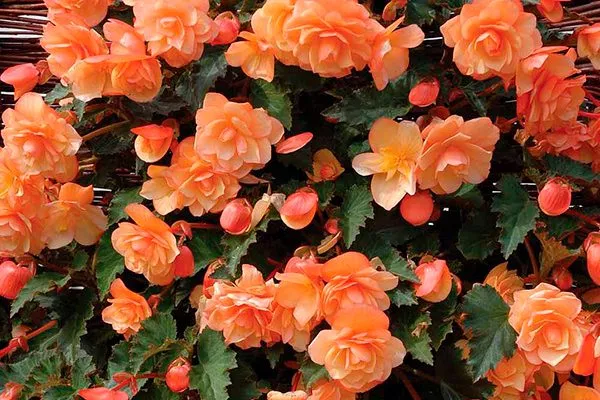
The flowers are bell-shaped, reaching 5 cm in diameter. They can bloom singly or in clusters of 3-5. The color range of the flowers ranges from white to cream, sometimes with delicate pink hues.
Bollivian
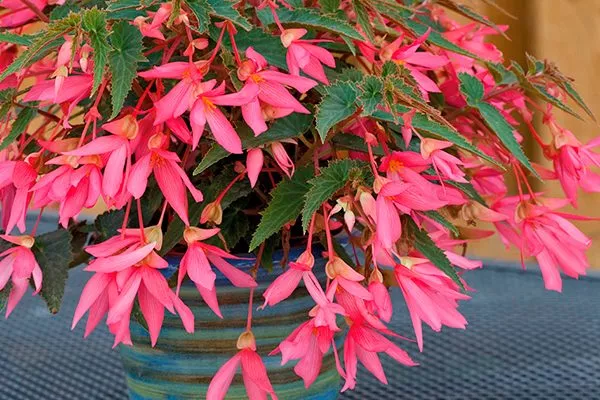
The plant's graceful, slender shoots reach 80 cm in length. The leaves range from light green to brown and are lance-shaped. The flowers are varied in color, with bell-shaped buds and pointed petals.
Belleconia
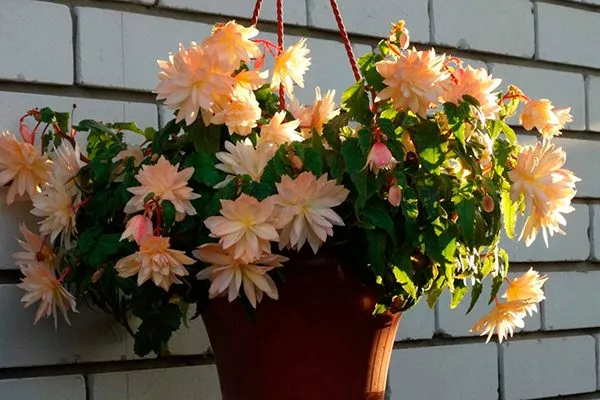
The plant is characterized by large, double flowers in a variety of shades of red, yellow, and orange. Begonia is highly resistant to diseases and insect pests.
Illumination
This species is characterized by slender, fleshy shoots, ranging in length from 40 to 80 cm. The leaves are asymmetrical and entire, with petioles reaching 15 cm in length. The leaf blades are smooth on top, while the underside and shoot surfaces are covered with fine, thin hairs.
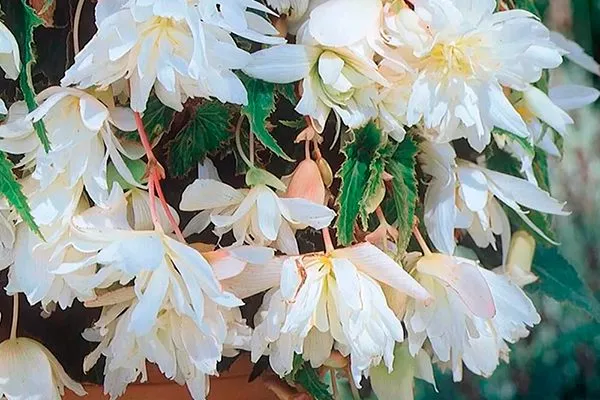
Flowers come in two types: single female and double male. Female flowers typically appear first, followed by male flowers later. Colors range from white and red to orange, yellow, and pink. Mixed varieties are also common.
Bindweed
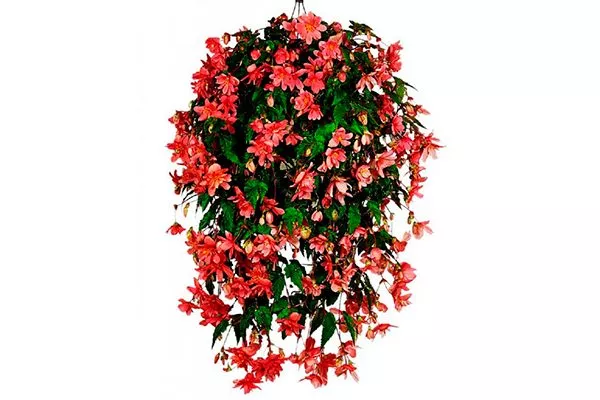
This is an unusual begonia with rich green leaves. Its flexible stems can reach lengths of up to 2 meters. The plant's flowers are small and white. The main flowering period is in winter and early spring.
Chanson
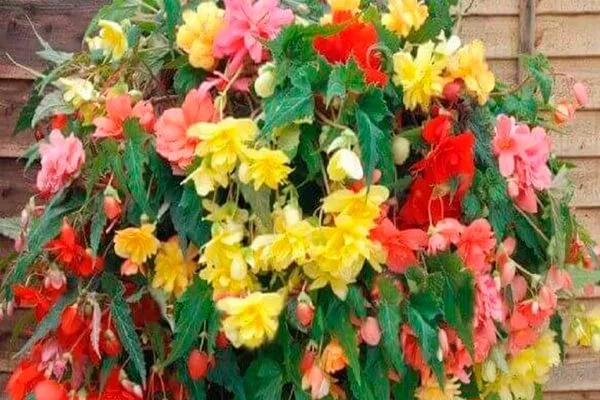
A popular hybrid blend with double or semi-double flowers, reminiscent of camellias. Each bush produces up to eight main stems, reaching up to 40 cm in length. The flowers are up to 8 cm in size and can be a single color or a combination of two different shades.
Funky Pink
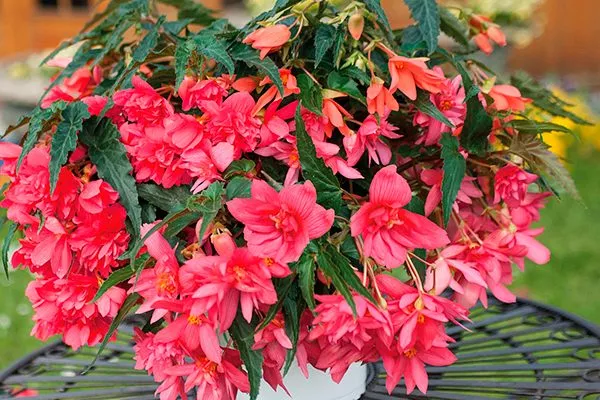
This plant is characterized by stunningly large double flowers ranging from 9 to 12 cm in diameter. With proper care, it branches beautifully, forming lush bushes.
Golden Balconie
These compact bushes, up to 25 cm tall, delight with lush, vibrant blooms over a long period. This variety produces large, double flowers in bright yellow or orange, boasting a pleasant, subtle fragrance. These bushes thrive best in sun or light shade.
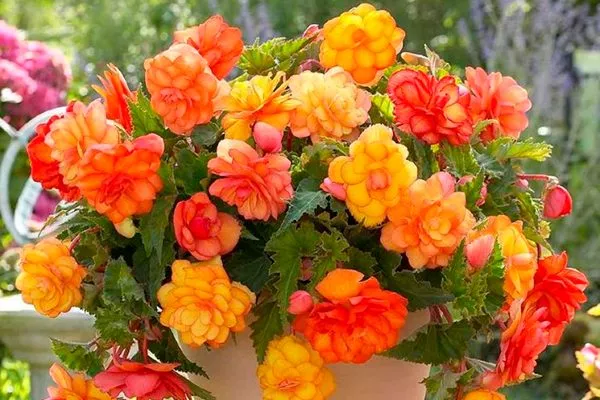
Scarlett
This sun-loving begonia variety grows up to 20 cm tall, with large, double flowers of a rich red hue. Flowering begins in midsummer and continues until October.
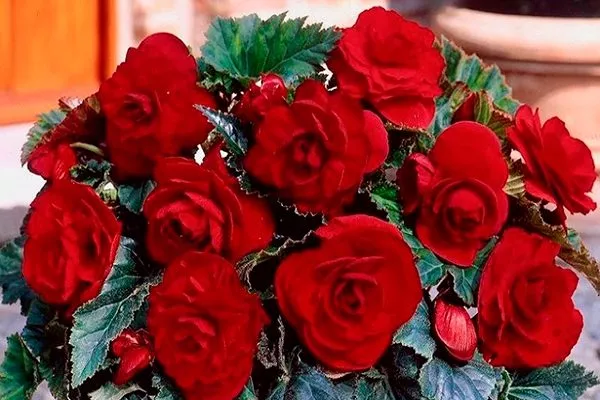
Venus F
This plant is characterized by long, slender stems and double flowers in shades of white and pink. The buds reach 6 cm in diameter.
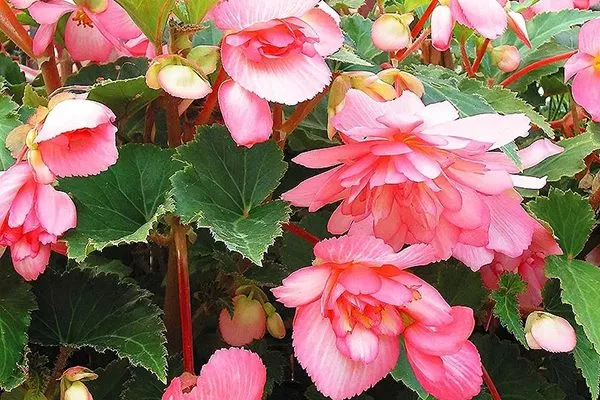
Sensation
A hybrid begonia with large, double flowers reaching 10-12 cm in diameter. The leaves can be green or bronze-brown.
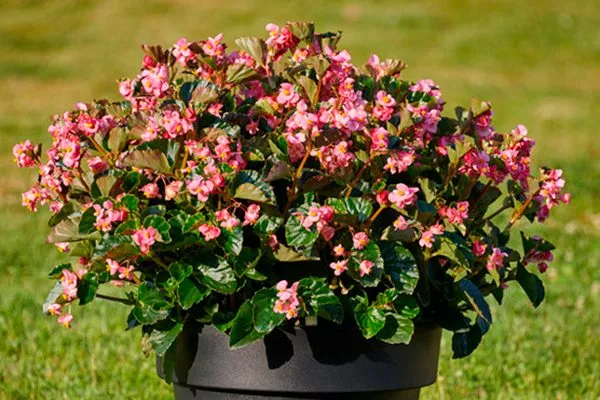
Splendid
Begonias are distinguished by their delicate pastel flower shades, including white-cream, apricot, pink, and yellowish hues. Among the most popular varieties of this species, gardeners highlight Splendid Apricot and Splendid Ballerina.
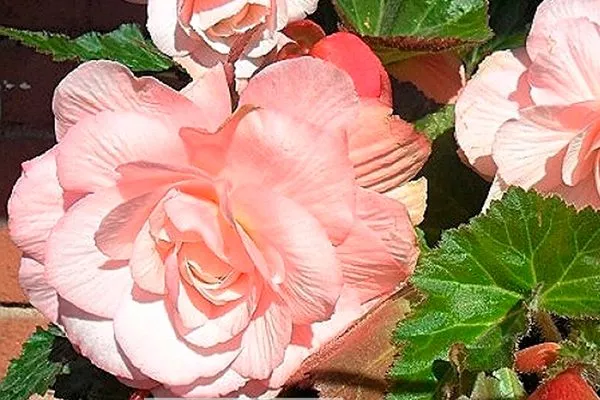
Opium
The Opium series of cultivars, known as Odorata, differs in appearance from trailing plants and resembles miniature bushes. Branches reach 25 cm in length, and flowers are up to 10 cm in diameter. The flowers are pleasantly scented.
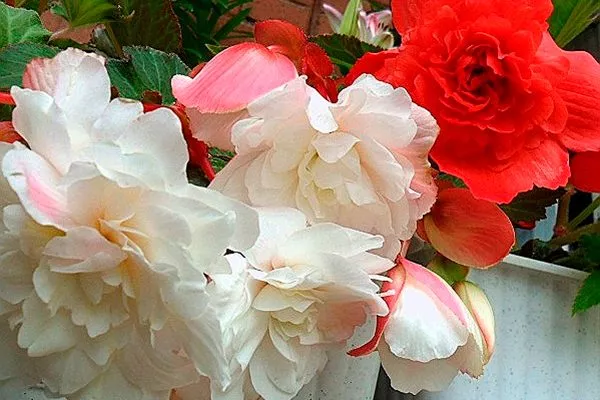
Pendula
Begonias from the Pendula series are trailing hybrids with large, rose-like flowers. Among the most popular varieties in this series are Carmen, Pendula Pink, Pendula Orange, and the cascading Pendula Red.
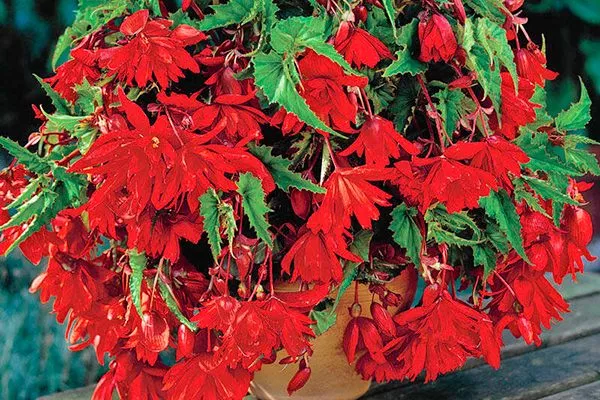
Silver Wave
The Silver Wave variety stands out with its large green leaves, giving them a silvery hue, and delicate pink flowers. This plant looks attractive in any arrangement.
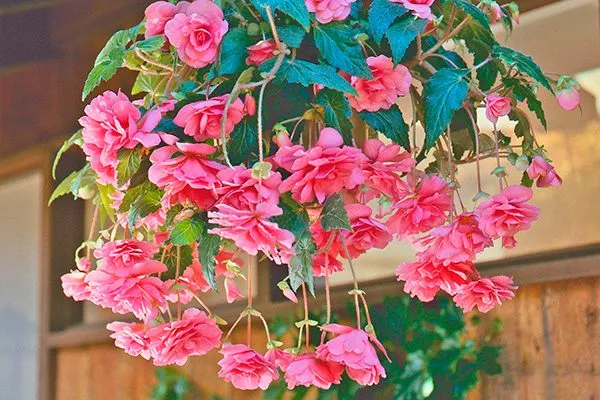
Lotus
The lotus is characterized by long, flexible stems bearing small leaves and tiny white flowers. This plant is typically grown as a hanging specimen.
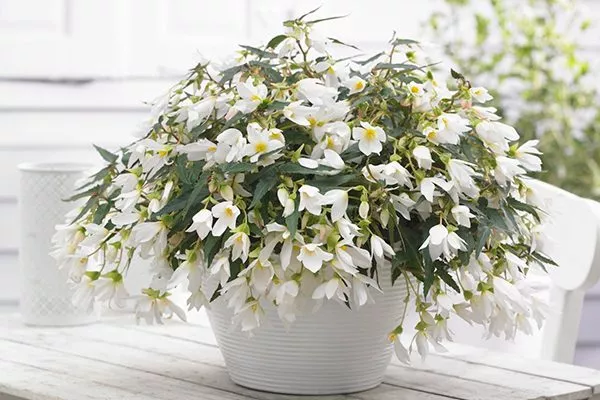
sandal
The Barefoot variety features large red or pink flowers that contrast beautifully with the green leaves. This plant is typically grown in pots and used to decorate interiors, adding a touch of sophistication.
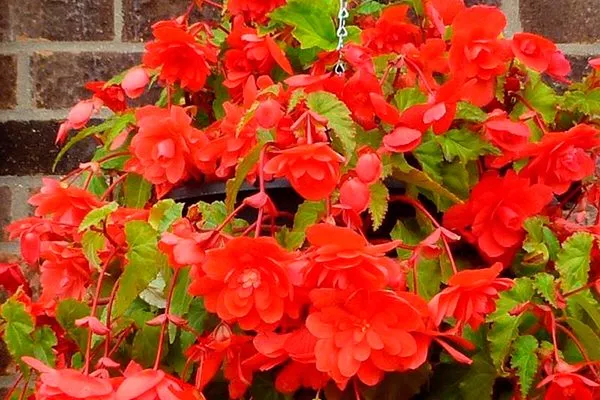
Yoke
The Koketka variety features small but elegant bright pink flowers, held in clusters on long, flexible stems. This plant is typically grown as a hanging plant and is used to decorate balconies and verandas, adding a special charm.
Pros and cons
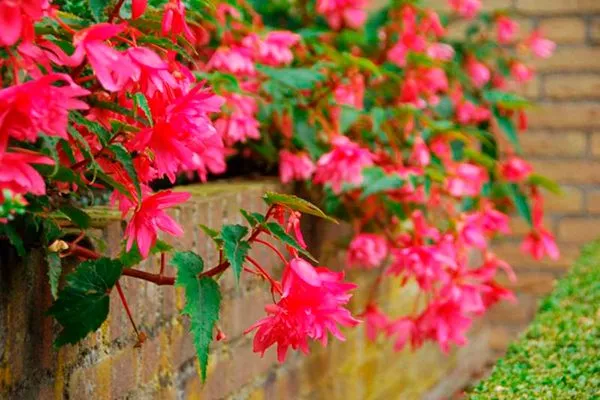
Ampelous begonias are highly decorative plants with beautiful, often large and double flowers, making them excellent decorations for hanging baskets and containers.
Another negative factor is that ampelous begonia does not like the soil to dry out.
Conditions
It's important to adhere to certain conditions to ensure your begonia enjoys strong immunity and lush blooms. Lighting and humidity play a crucial role.
- ✓ Optimum temperature for growth: 18-22°C during the day and not lower than 15°C at night.
- ✓ Air humidity should be maintained at 60-70% to prevent the leaves from drying out.
Lighting and humidity
Trailing begonias prefer good light but don't tolerate direct bright sunlight, so it's best to place their pot in a slightly shaded area with filtered light. Suitable locations include the east or west side of the house, or the south side, a short distance from windows.
In winter, to prevent stretching and loss of decorative appeal, it is recommended to provide additional lighting. Insufficient light can lead to leaf discoloration and flowering problems in the summer.
Suitable soil
A suitable soil for begonias must meet certain parameters. Here are the main ones:
- Composition of the soil mixture. The soil should be light and loose, allowing good aeration for the root system. Ensure the substrate contains sufficient materials that promote air permeability, such as perlite or vermiculite.
- Soil reaction. Begonias prefer slightly acidic soil. A soil pH of 5.5-6.5 is considered optimal for their growth.
- Drainage. The soil should ensure effective drainage, preventing water stagnation at the roots. Adding drainage materials such as coarse sand or expanded clay can be helpful.
- Ready-made substrates. Using ready-made begonia mixes from specialist stores will ensure optimal growing conditions. These mixtures are typically formulated to meet begonias' specific moisture, nutrient, and soil structure needs.
Landing rules
The best time to plant ornamental begonias is the first months of spring. During this period, the plant emerges from dormancy, actively grows, and quickly adapts to new growing conditions.
Choosing a pot
If you plan to grow begonias indoors, it's recommended to choose containers with certain characteristics. Recommendations for choosing a pot for your plant:
- The ideal pot for begonias is one with a wide diameter and a low height. This container configuration ensures good aeration of the substrate and the necessary amount of oxygen for the roots.
- Different pot sizes are suitable for different stages of begonia development. A 5-6 cm diameter is suitable for the first pot if the plant is grown from a cutting. A 10-12 cm diameter is suitable for young plants approximately six months old after rooting.
A pot with a diameter 1/3 larger for each subsequent replanting of an adult flower, carried out every 2-3 years. - Depending on the plant's growth stage, use ceramic pots for mature specimens and plastic ones for seedlings and young plants that will be repotted soon.
- It is essential to have drainage holes at the bottom of the pot to prevent moisture stagnation and root rot.
Before planting begonias, thoroughly wash the pot, treat it with a solution of potassium permanganate and create a drainage layer.
Soil preparation
Begonias grow well in store-bought soil. You can also use homemade potting mixes, following this recipe: combine humus-rich soil, acidic high-moor peat, and coarse sand in a 3:1:1 ratio.
Disinfect your homemade substrate by frying it in a frying pan, baking it in the oven, or pouring boiling water over it. This will prevent pathogens from infecting the plant.
Planting a plant
Proper begonia planting is key to its successful growth and development, ensuring abundant blooms and long-lasting decorative appeal. Follow these steps:
- Partially fill the pot with expanded clay to create an effective drainage layer. Add charcoal to prevent the roots from becoming overwatered.
- Fill the pot with prepared soil mixture, creating a hole for the cutting. If you're planting tubers or seeds, this may not be necessary.
- When planting a cutting, inspect its roots, removing any damaged parts. Place it in the hole, spreading the roots, and cover with soil. No need to compact it.
- When planting the tuber, bury it halfway into the soil, leaving the top portion above the surface. Planting it too deeply can result in a lack of flowering.
- Water the pot thoroughly, ensuring it's well-moistened. Make sure any excess water drains from the tray.
- Add a little soil to the pot containing the planted cutting. The roots should be covered with soil, but the growing point should remain above the surface.
- Ensure there is at least 1 cm of space between the soil surface and the top edge of the pot.
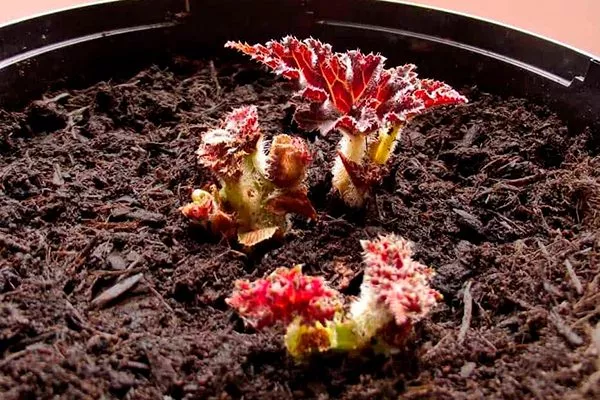
Avoid compacting the soil to avoid disrupting oxygen supply to the roots.
Care instructions
Caring for trailing begonias is largely similar to caring for other varieties of this ornamental flowering plant. To ensure normal growth, simple cultivation practices are recommended.
Top dressing
To ensure your begonia enjoys abundant blooms for a long time, begin fertilizing it in early spring. Use nitrogen fertilizers early on to stimulate foliage growth.
Once the bush begins to form its first flowers, switch to complex fertilizers for flowering plants, which can be purchased at specialized flower shops.
Fertilize begonias with organic fertilizers 2-3 times throughout the summer. Ensure good watering before fertilizing to avoid burning the roots.
Watering
During the warmer months, begonias require regular and abundant watering to ensure they have enough energy to maintain lush blooms. Avoid allowing the roots to dry out, as this can lead to the plant's death. In winter, water moderately after the top layer of soil in the pot has dried out.
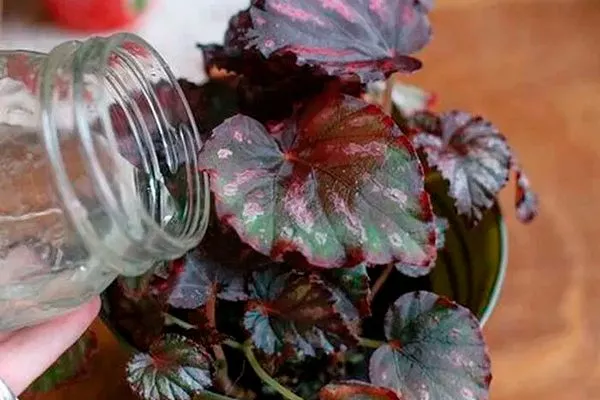
The preferred method of watering is by pouring water around the edges of the pot or into the tray, as the plant reacts negatively to water splashing on the tubers. When choosing a location for begonias, avoid placing them near heating appliances and radiators.
Wintering
This warm-loving plant does not tolerate low temperatures, so during the winter, try to provide begonias with a greenhouse and maintain a temperature of at least 15°C. If growing the flower in a decorative pot, move it indoors to a bright, well-lit location.
If you are unable to create the necessary conditions indoors, follow these recommendations:
- Dig up the begonia tubers and store them in a cool, dry place, such as a basement or garage.
- Before storing, dry the planting material and remove excess soil.
- Place the tubers in boxes or containers filled with dry sand, sawdust or moss.
- Check the condition of the tubers periodically and, if necessary, remove damaged or rotten specimens.
- In spring, when the favorable growing season arrives, plant the begonia again in pots or open ground.
During the winter, trailing begonias enter a dormant state, and their growth slows. Reduce watering and temporarily stop fertilizing, but avoid allowing the soil to dry out completely.
Trimming
To ensure your trailing begonia looks its best, shape it gradually, starting when the plant is young and about 7 cm tall. As it develops, remove the top of the plant, encouraging the growth of side shoots. To speed up growth, reduce watering for a short time after pruning.
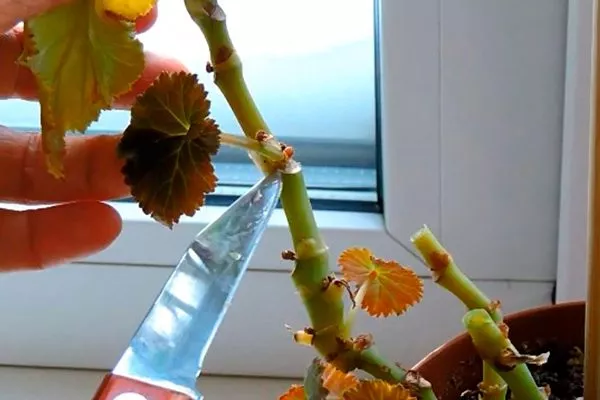
Repeat pruning is performed when the shoots reach 10 cm in length, making cuts above the buds located on the outer side of the plant. Subsequent pruning is limited to the elongated branches extending from the main crown.
Remove dried or damaged shoots as needed. Indoor bushes can become elongated over the winter, so it's recommended to prune them at the end of February, leaving four internodes on each shoot.
Methods of reproduction
Trailing begonias offer a variety of propagation methods, with cuttings being the most common. Additionally, it's possible to purchase seeds or divide the plant's clump or tubers.
Cuttings
Propagating trailing begonias by cuttings is relatively simple, but requires a few special considerations. This process is typically carried out in spring or fall:
- Select an apical cutting with at least two buds and carefully separate it from the tuber.
- Treat the separation areas with crushed charcoal to prevent possible rotting.
- Leave the resulting cuttings to dry for an hour and a half, and then treat them with a rooting stimulator.
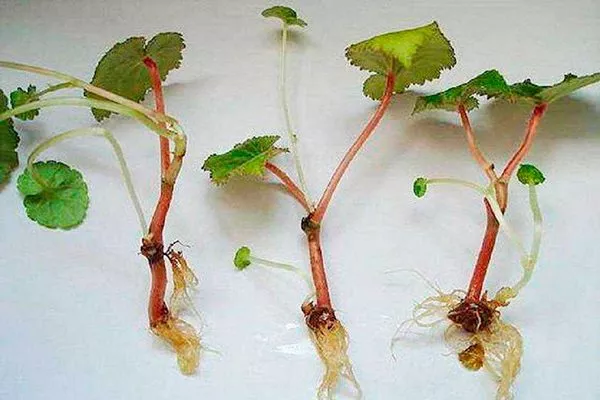
There are two main methods of propagating cuttings:
- Immersion in a deep glass of boiled water. Add a little boiled water and a charcoal tablet to a tall glass. Place the cutting so that its lower end is submerged in 1-2 mm of water.
Maintain a constant moisture level. Cover the glass with a plastic bag on the first day, but only briefly, as excess moisture can cause the stem to rot. - Planting in nutrient soil. This method involves planting cuttings in nutrient-rich soil or peat pellets to create a greenhouse effect (glass can be used for cover). After 2-4 weeks, the cuttings should root, after which they can be transplanted into a pot with prepared soil.
A universal mixture with added perlite and coconut coir is suitable for this method. Cover the plants with a plastic bag until they show signs of growth.
Caring for hanging begonias in the first year involves maintaining the necessary soil moisture without adding fertilizer.
From seeds
Propagating trailing begonias by seed is a less common method, but it's favored by gardeners who find it difficult to obtain cuttings of the desired variety. Seeds obtained from your own plants may not convey the varietal characteristics, which is important to consider.
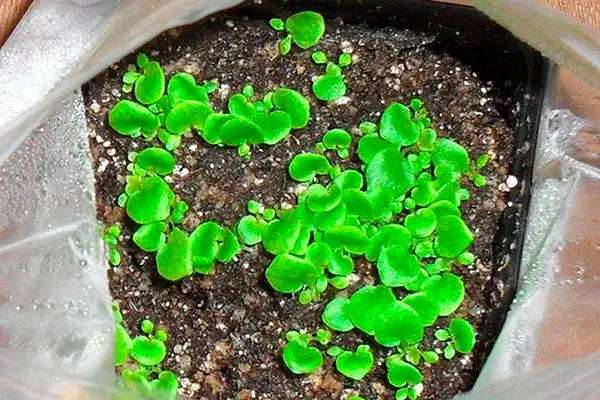
To ensure seedlings bloom in the first year, sow very early, for example, in January. Trailing begonia seeds are extremely small, and various methods can be used for sowing, such as using a common container or peat pellets.
Each sowing method has its own characteristics:
- Sowing in peat tablets. Place the tablets in a container lined with a viscose cloth to distribute the moisture evenly. After watering and allowing the tablets to swell, place one seed in each, then cover the container with a lid.
In this case, subsequent replanting of seedlings is not required. - Sowing in a regular pot. Fill the pot with sterilized substrate and create greenhouse conditions. After sowing, the soil should be moist (but not waterlogged), and the cover should be periodically opened to allow ventilation and remove condensation.
At a temperature of around +23°C, sprouts should appear within a few weeks, but seed germination may not always be high.
When the seedlings have 2-3 leaves when sown in a regular pot, they can be pricked out and transplanted into separate pots.
Bush separation
Cuttings are ineffective for tuberous begonias. Instead, division is used to replant mature plants. Carefully break the plant into several pieces, each containing at least one shoot and fibrous shoots.
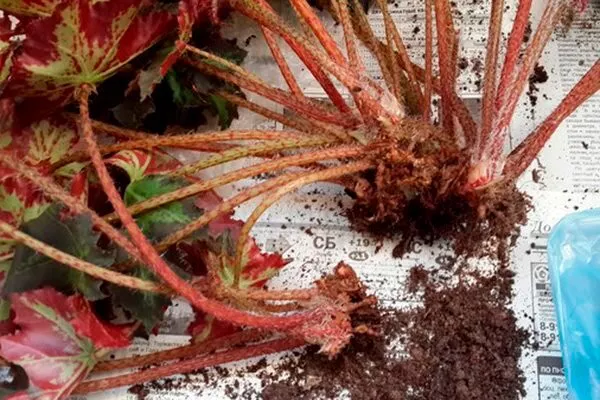
After dividing, trim the top of the plant and plant each section in a separate pot with fresh soil. To create favorable conditions for the divisions, you can temporarily cover them with plastic wrap until they begin to actively develop.
Tuber division
For tuberous begonias, propagation by division requires experience and caution. The procedure involves the following steps:
- Carefully remove the tuber from the soil and separate the “babies” with sprouts from it, carefully cutting them off from the main tuber.
- Treat cut areas with charcoal powder to prevent possible rot.
- Place small tubers halfway up their length in moist soil and cover with plastic wrap. Regularly moistening the soil ensures the necessary moisture for growth.
- When the sprouts reach a height of about 7 cm, bury the tubers completely in the soil.
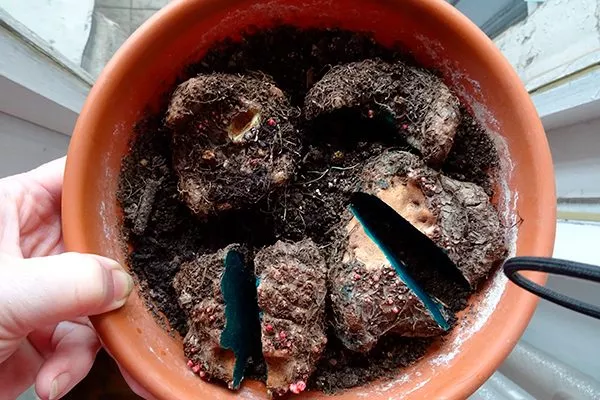
This method of propagating tuberous begonias requires care and consistency in actions to ensure the successful survival of the "babies" and their subsequent healthy growth.
Diseases and pests
When properly cared for, trailing begonias remain generally healthy and are rarely attacked by pests, but failure to maintain consistent growing conditions can weaken the plant's immunity and contribute to the development of various diseases.
Common diseases:
- Gray rot. Symptoms include the appearance of water-soaked gray spots on the foliage and buds of trailing begonias, leading to rot. The disease is most often caused by overwatering in hot weather, which promotes the growth of the botrytis fungus.
A soap solution can be effective against initial infestations. If the disease progresses, a fungicide is recommended. - Powdery mildew. It is characterized by a white, rounded patch on the above-ground parts of begonias, with the leaves often being the first to be affected. Control involves the use of fungicidal solutions, such as Fundazol or a solution of tar soap and copper sulfate.
Preventive treatment with such compounds is recommended at the beginning of spring. - Ring spot. This viral disease is considered incurable. It is characterized by the appearance of yellow-green circular spots on affected begonias, which then take on a bronze tint.
Treat the plants with Fitolavin, a biological antibiotic, spraying it on both the leaves and roots (2 ml per 1 liter of water). If spraying and watering are ineffective, dispose of the plant to prevent infection of other houseplants. - Bacterial spot. This disease can lead to the death of the bush. Initially, water-soaked spots appear on the underside of the leaf blades, then the outer surface of the leaves becomes covered with brown spots, and the buds and petioles turn black.
It's impossible to cure an affected bush, but preventing this disease may be more effective. Treat begonias with a copper oxychloride suspension.
Growing and caring for trailing begonias is a fascinating and creative endeavor. Each trailing begonia is unique, and successful care requires attention to the individual needs of each variety. Growing this beautiful plant brings joy through its beauty.