
Begonia is a popular and widespread plant, ideal for indoor growing. It can be found in a variety of settings, from city apartments to schools and clinics. Numerous gardeners enjoy growing begonias. This article discusses various varieties and cultivars.
Classification
There are many different species and varieties of begonia, each with its own unique characteristics and care requirements. If you've decided to grow this beautiful flower, it's important to know the specific species or variety to avoid care mistakes.
- ✓ Optimum temperature for growth: 18-22°C during the day and not lower than 15°C at night.
- ✓ Air humidity should be maintained at 60-70%, avoiding direct spraying of leaves.
Begonia varieties are classified by their intended use and decorative characteristics, including:
- ornamental flowering plants for the garden;
- decorative flowering plants for the room;
- decorative foliage indoor species.
In addition, they are subdivided according to the characteristics of the rhizome (rhizome, tuberous, with a superficial root system) and the nature of shoot growth (bushy, recumbent, drooping).
| Type of begonia | Lighting | Notes |
|---|---|---|
| Ornamental foliage | Diffused light | Direct sunlight can cause leaf burns. |
| Ornamental flowering | Bright diffused light | Necessary for abundant flowering. |
| Ampelous | Penumbra | Can tolerate lower light levels. |
V.V. Vorontsov's classification of begonias includes tuberous, shrubby, flowering, and ornamental-leaved subspecies. Begonia species can also be identified by the presence of a stem (bushy, tuberous, or leafy).
Ornamental foliage
Belongs to the "metallic" variety of ornamental begonias. This flower's characteristic features are small leaves with a light, velvety texture that's pleasant to the touch.
The foliage is typically a muted green, and its oval shape is enhanced by serrated edges and a metallic sheen at the tip. This is what gives begonias their name—decorative foliage begonias.
| Name | Root system type | Nature of shoot growth | Foliage color |
|---|---|---|---|
| Maculata spotted | superficial | erect | bright green with silvery-white spots |
| Tiger | superficial | creeping | emerald with brown-green stripes |
| Begonia Masonii | fibrous | erect | light green to bright green |
| From Fist | superficial | erect | rich green to brown |
| Variety from Kredner | superficial | erect | green upper part, reddish-brown lower part |
| Heracleum spp. | superficial | erect | green, cherry-red or red-brown |
| Palomar Prince | superficial | erect | copper-green |
| Charlotte Chiffon | superficial | erect | from deep green to burgundy |
| Green Gold | superficial | erect | silvery-blue shades with brown edging |
| The Black Prince | superficial | erect | almost black, burgundy in the sun |
Maculata spotted
It is a herbaceous subshrub with an erect stem, reaching approximately 1 m in length and width under favorable conditions. It is primarily grown in greenhouses and conservatories.
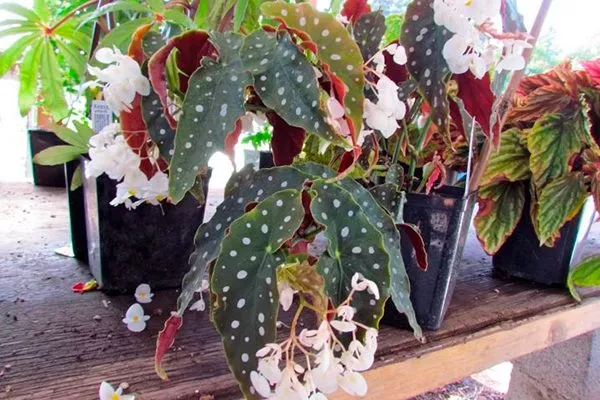
Its leaves are elongated, asymmetrical, reminiscent of a heart with an oblique center, 10-15 cm long and about 5 cm wide. The leaf blades are dense and glossy, with a bright green background, dotted with silvery-white spots, and the back side has reddish-brown-red shades.
The unusually shaped flowers, white or light pink, are borne on a drooping stalk. Blooming lasts from April to July.
Tiger
Begonia is a compact, medium-sized herbaceous perennial plant, reaching a height of up to 30 cm. It forms basal rosettes of shoots, and if left unpinched, it forms a dense, creeping stem along the soil surface.
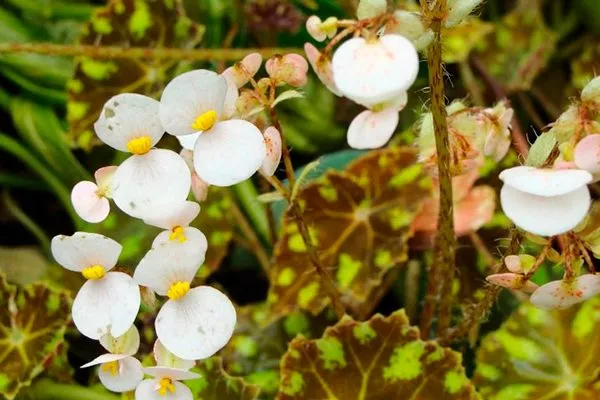
The leaves come in a variety of shapes: round, oval, heart-shaped, or elongated with a pointed tip. Their edges are serrated with fine hairs, and the leaflet on a long petiole can reach 4-8 cm in length. The leaves are colored in various shades of green.
The classic coloration features an emerald hue with brown-green stripes from the center to the edges or brown stripes along the leaf margin. The leaf blade may be decorated with light or dark green spots, dots, and veins. Begonias bloom with small, pale pink inflorescences.
Begonia Masonii
The plant has fibrous roots and attractive leaves, which are asymmetrical, resembling a heart with a pointed end, and reach a length of about 20 cm. The color of the leaves varies depending on the lighting, from light green to bright green.
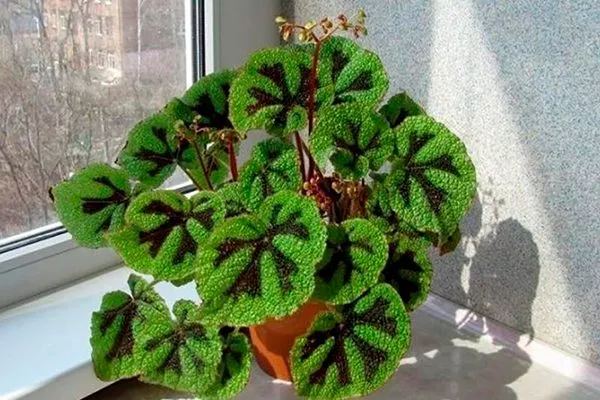
The central cruciform pattern on the leaves forms a five-toed cross and can range from dark green to dark brown on mature plants, acquiring a silvery hue with age. The leaf surface is characterized by fine hairs and a ridged appearance. The leaf margins are decorated with fine teeth.
The leaves grow on long petioles 20-30 cm tall. The Mason's begonia bush is lush, reaching a height of 50 cm. Flower stalks form on elongated stems and bear small pink flowers gathered in panicles.
From Fist
A compact evergreen plant with a thick stem, reaching an average height of 25 cm. The leaves are rounded and irregularly shaped, with a smooth upper surface and a smooth, unserrated perimeter, slightly pubescent with fine hairs along the margins.
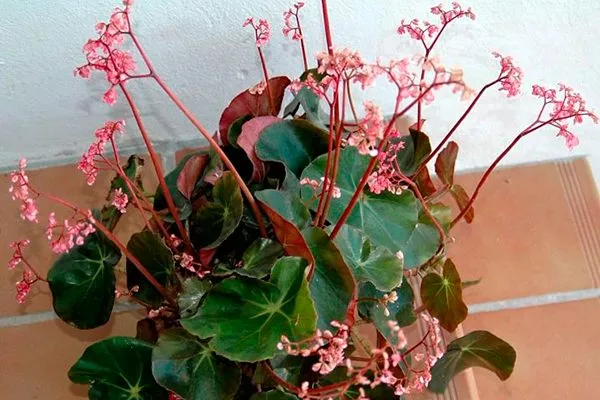
The leaf petioles are light green and long, reaching approximately 12 x 15 cm in size. The color varies from deep green to shades of brown depending on the lighting. The undersides of the leaves have a dark red hue.
The plant produces small pink flowers up to 2 cm in diameter, gathered in clusters at the top of a long stem. Flowering occurs from December to June.
Variety from Kredner
A variety from Kredner. A garden hybrid created by crossing the Begonia scharfi and the Begonia metallica. It is a subshrub with straight, branched stems that maintain an upright shape for a long time.
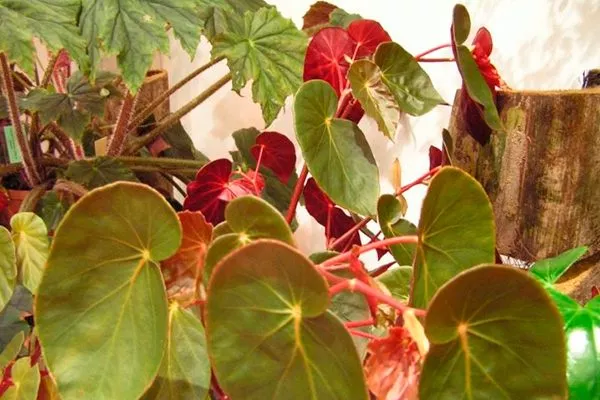
The leaves are easily recognizable by their heart-shaped, pointed tips, green on the upper side and reddish-brown on the lower side. The stems and leaves are covered with whitish hairs.
Flowering occurs in summer, when small pinkish flowers appear, gathered in a loose inflorescence. The plant loves light and requires moderately warm care, regular repotting, and pruning.
Heracleum spp.
It is a popular indoor plant. Begonias have thick stems, green or cherry-brown, with long, dense hairs. The leaf blades are asymmetrical, large (reaching 30 cm in the wild), palmately dissected, with sharply serrated edges and a heart-shaped base.
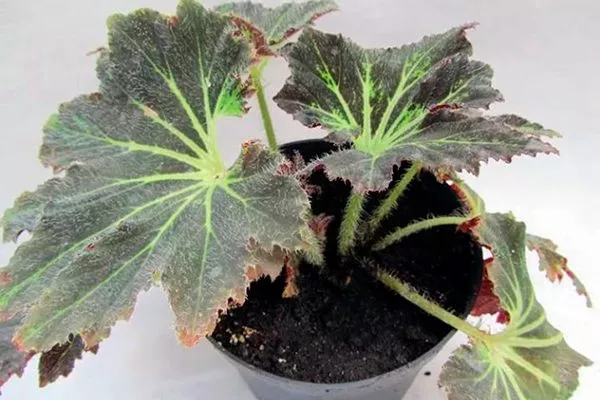
The leaves can be green, cherry-red, or reddish-brown, depending on the light level. Silvery-gray veins are evenly distributed across the entire leaf surface. The flower stalks are long, and the inflorescences are large, bearing small but inconspicuous light pink flowers.
Palomar Prince
The unique Palomar Prince begonia stands out, easily identified by its distinctive leaflet structure. Their spiral shape and copper-green hue make this variety truly unique.
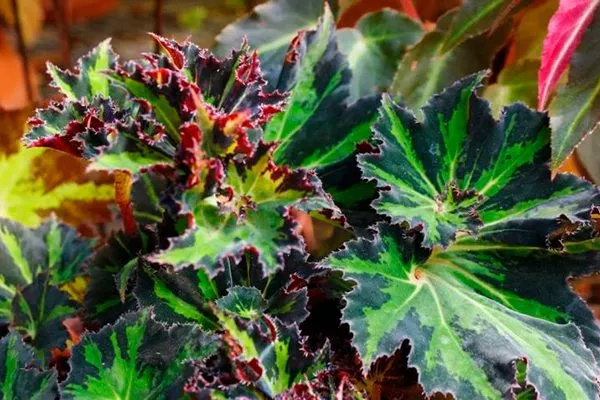
In winter, the plant is adorned with delicate pinkish flowers. Growing this begonia requires no special knowledge or experience in flower care, making the process easy and accessible even for novice gardeners.
Charlotte Chiffon
Begonia plants have creeping, fibrous, and tuberous roots. Leaves are asymmetrical, simple or dissected, with wavy or serrated edges.
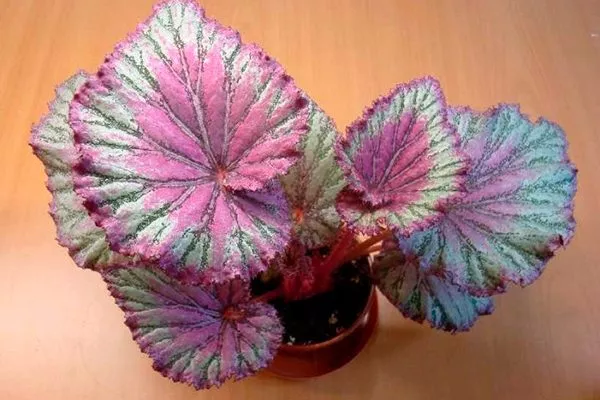
Their decorative qualities are due to the variety of colours, ranging from deep green to burgundy with various geometric patterns, and some species are covered with fine fluff.
Begonia flowers come in a variety of shades, with the exception of blue, and can be small or large. They can be unisexual or monoecious. The fruits are small seed capsules.
Green Gold
The Green Gold variety is popular with gardeners. It is characterized by wide, naturally spiral-shaped leaves. The large flowers of this plant typically take on silvery-blue hues, and the leaf edges are decoratively edged with brown.
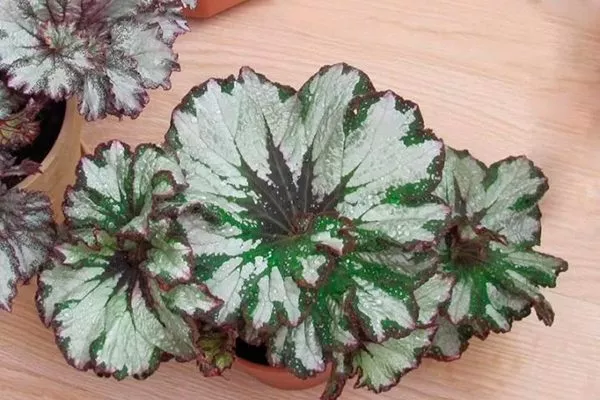
The leaf margins are adorned with a fine brown frill. Despite its modest size, this attractive begonia creates an impressive presence thanks to its shortened leaf petioles.
The Black Prince
The leaves are elongated, obliquely cordate, and have a serrated edge. Their undersides are covered in hairs. The leaf blades are almost black, but when exposed to sunlight, they acquire a burgundy hue.
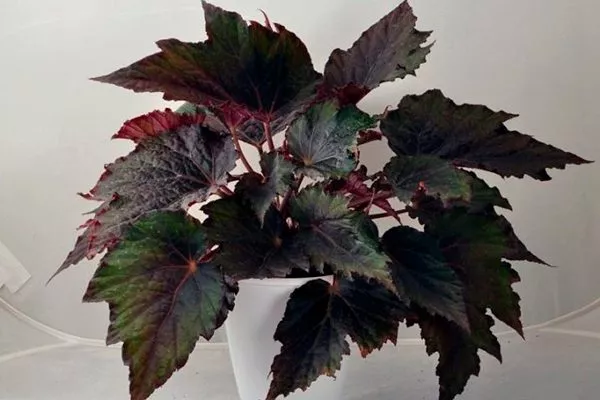
The foliage may take on a burgundy hue in the sun. It prefers shaded areas. A tray is recommended for watering, and a soft brush is recommended for removing dust from the leaves.
Ornamental growing
A special type of begonia is considered an ornamental plant. This category includes several fascinating varieties popular among many gardeners.
| Name | Plant height | Flower color | Flowering period |
|---|---|---|---|
| Senator | 15-20 cm | white, pink or red | all year round indoors, from late spring to autumn in a flowerbed |
| Fortune | up to 30 cm | varied in color | begins earlier than in similar species |
| Fimbriata Pink | 25-40 cm | pink, yellow, yellow-red, orange | July |
| Venus | up to 40 cm | soft pink | not specified |
| Grandiflora | 15-35 cm | white, red, yellow or pink | not specified |
| Apricot | 40-80 cm | white, red, yellow or pink | continuous |
| Non-Stop | 35-75 cm | various shades | from the beginning of May to the end of October |
| Marmorata | about 30 cm | scarlet and white | not specified |
| Terry | not specified | orange, yellow, pink, red and white | not specified |
| Mix | not specified | red, yellow, pink and white | not specified |
| Double White | 25-35 cm | not specified | not specified |
| Elatior Borias | up to 40 cm | red or pink | not specified |
| Bada Boom | 20-25 cm | bright colors with a yellow center | 11-13 weeks after planting |
| Picotee | up to 40 cm | bright yellow with a crimson border | not specified |
| Crispa Marginata | 15-25 cm | soft yellow with a red border | not specified |
| Marble | not specified | pink-red | from May to September |
| Garden | up to 30 cm | various shades | not specified |
Senator
An evergreen plant with fleshy, well-branched shoots. Its height is limited to 15-20 cm. The leaves are a brownish-green hue with a pleasant bronze sheen and measure 3-4 cm.
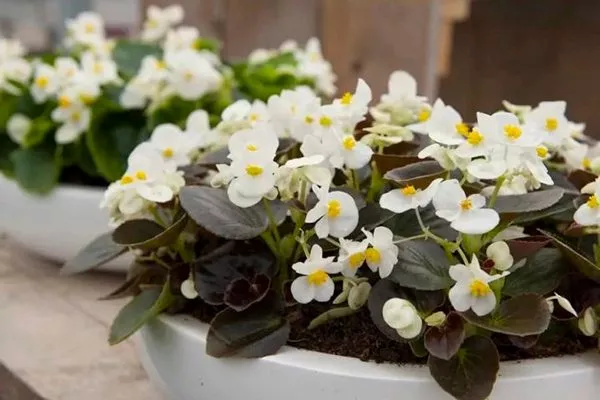
Begonia flowers come in white, pink, or red, and are double-flowered. They bloom profusely and for a long time. Indoors, they delight with vibrant blooms year-round, while in flowerbeds, their blooming period lasts from late spring to fall.
Fortune
This exquisite plant boasts an attractive combination of rich, double blooms in a variety of colors. The bush reaches a height of up to 30 cm. Its characteristic features include short but sturdy flower stalks. This variety boasts a flowering period that begins noticeably earlier than similar varieties.
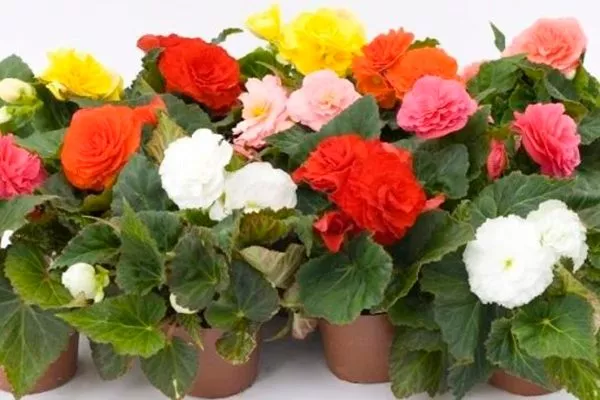
Fimbriata Pink
This exquisite begonia variety is recognized by many gardeners. This tuberous flower with fringed edges boasts large blooms in various shades of pink, yellow, yellow-red, orange, and other vibrant colors.
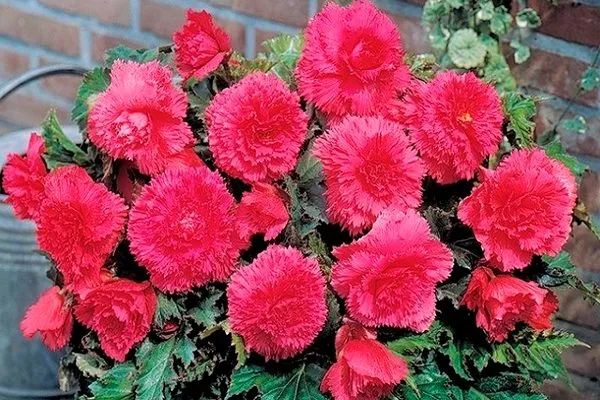
The stems of low-growing begonias reach a height of 25-40 cm, and their main characteristic is their extreme fragility. They are prone to breaking under mechanical stress or even in strong winds, and they also have distinctive jagged tips.
These "green pets" typically attract many admiring glances with their playful colors. This begonia begins blooming in July.
Venus
Another beautiful member of the begonia family is the trailing variety. This plant is easy to maintain. The semi-double flowers boast rich hues, and the green foliage is typically vibrant and picturesque.
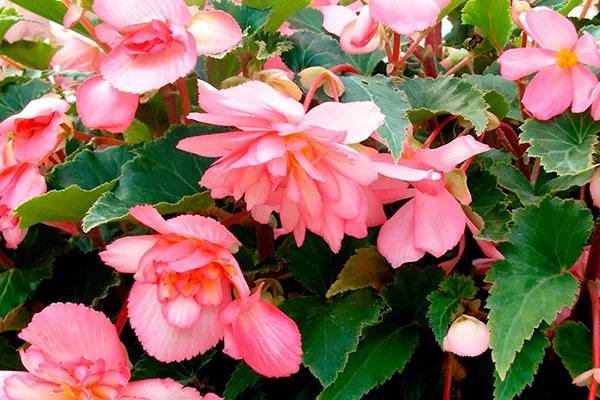
A cascade of long stems, hung with airy flowers or surrounded by dense foliage, flows down the garden. These flowers are a delicate pink, up to 6 cm in diameter.
Grandiflora
A perennial herb with a robust root system, formed by a sturdy tuber that is round and flat with a slight indentation at the top. The stem is thick, fleshy, and brittle, ranging from 15 to 35 cm in height, light green or reddish in color, and heavily covered with hairs.
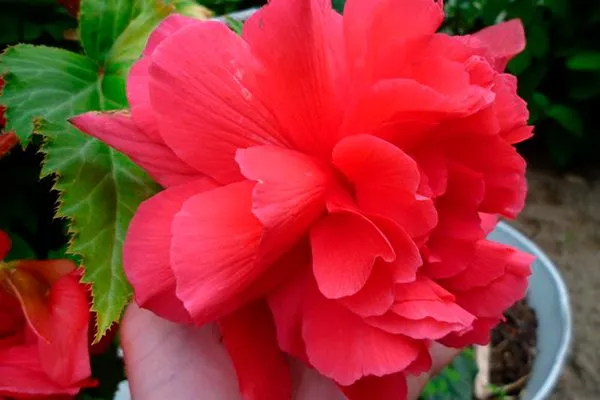
The leaves, long-petioled, variegated, asymmetrical, of varied shape and texture, have serrated veins and serrated edges, and are arranged spirally on the stem. Flowers form in the axils, united in loose panicles.
The male flowers of the Grandiflora begonia are large, densely double, beautiful, with a diameter of 10-12 cm, while the female flowers are smaller, inconspicuous, and consist of 2-5 petals.
Apricot
Begonias attract attention with their continuous blooms. The plant is characterized by delicate yet attractive inflorescences, which can be white, red, yellow, or pink. The petals are often adorned with a distinctive pinkish edge.
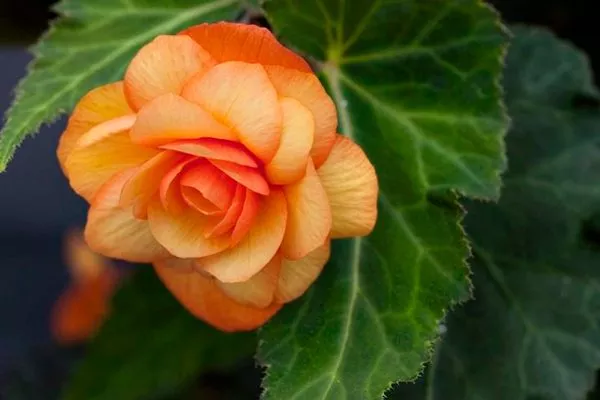
It is distinguished by its thin, fleshy shoots, varying in length from 40 to 80 cm. Begonia leaves are asymmetrical, entire, up to 15 cm long, and have petioles. The upper side of the leaves is smooth, while the underside and the surface of the shoots are covered with fine, fine hairs.
Non-Stop
The cultivar includes six different species with similar structures. The stems are translucent and reach heights of 35 to 75 cm. The leaves are serrated with heart-shaped edges and are colored in shades of green or reddish-brown/bronze.
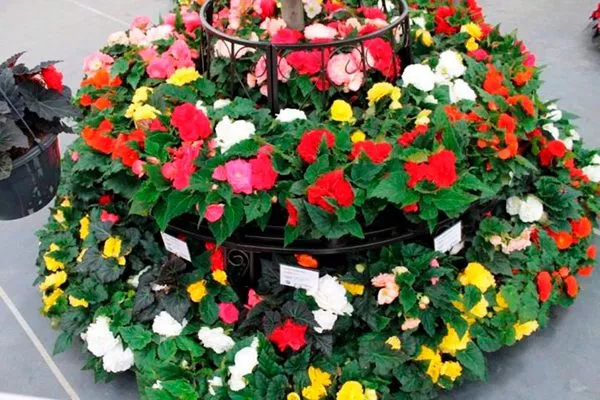
A distinctive feature are the large flower buds, which can be double or semi-double. Flowering continues from early May to late October, providing a colorful and long-lasting bloom. Each variety has its own unique flower color.
Marmorata
Begonia Marmorata is a decorative flowering hybrid with perennial bushy habit. This variety is ideal for landscaping and thrives in gardens, balconies, or north-facing windowsills.
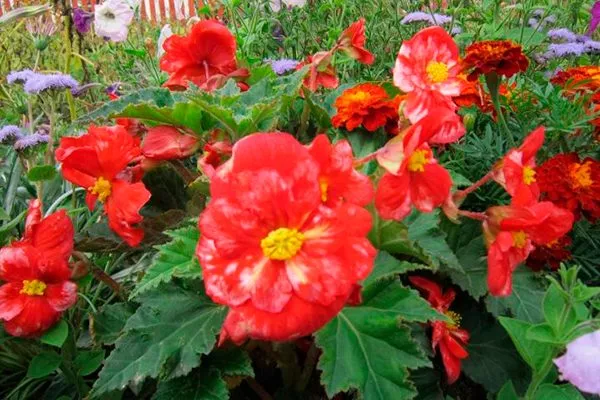
Characterized by a semi-spreading bush growing to a height of about 30 cm, begonias lack variegated leaves. Their root system is tuberous.
The plant's flowers, reaching 12 cm in size, are large and double. Their exquisite marbled coloring combines scarlet and white tones.
Terry
Double begonia is a small ornamental shrub with attractive, serrated leaves in shades of green or red. Its flowers come in a variety of shades, including orange, yellow, pink, red, and white.
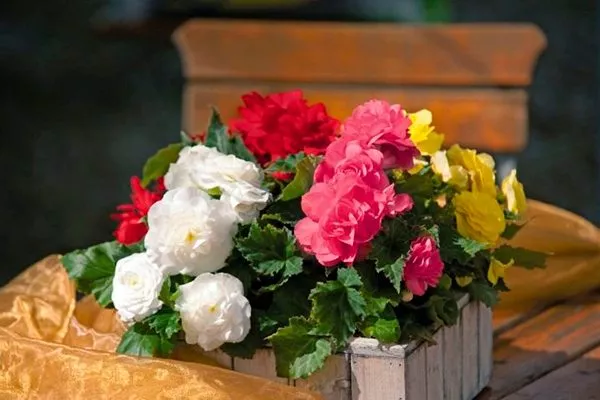
The flowers' shape resembles small roses, and the shaggy edge on the petals adds a delicate touch, making them considered double. The variety of colors, shapes, and foliage allows for the creation of unique and attractive arrangements, both indoors and outdoors.
Mix
This species of begonia grows as a subshrub. With a well-developed root system, tuberous begonia thrives in open ground. Its abundant foliage has a uniform green hue, and the leaves themselves are asymmetrical with serrated edges.
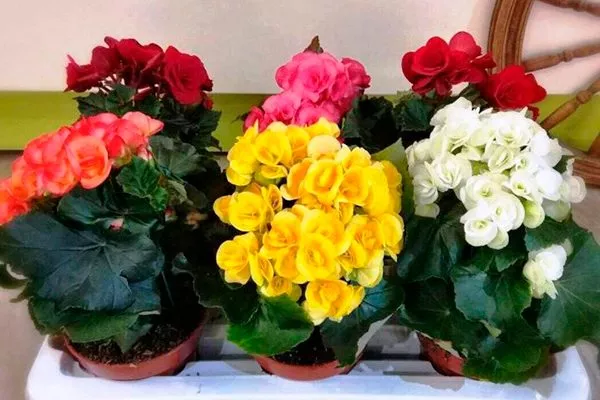
The flower resembles a small rose in appearance. This mixed-flowering begonia features double inflorescences in shades of red, yellow, pink, and white. Its petals are edged with a variety of color hues.
Double White
Double White is a perennial herbaceous plant that delights with its beauty both in a summer flowerbed and as an ornamental houseplant. This begonia forms a compact mini-bush, reaching a height of 25 to 35 cm.
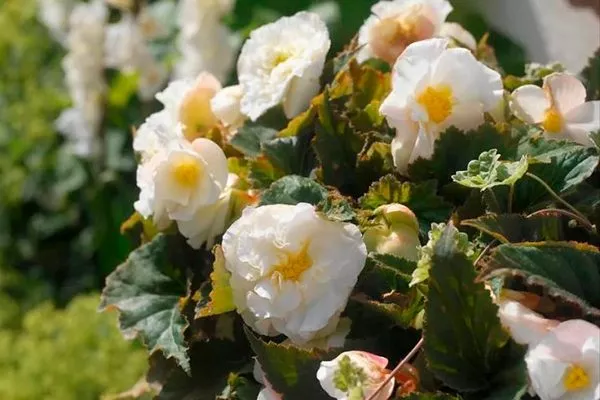
The plant is distinguished by its straight, fleshy stems, little branching, and abundant foliage consisting of decorative leaves with short petioles. The root system is developed and tuberous.
The leaves are striking in their beauty. They are oval-pointed with jagged, serrated edges, have a delicate texture, a glossy surface, and barely visible veins. Their color can range from light green to dark emerald.
Elatior Borias
The bushes reach a height of up to 40 cm, with a thick trunk. The foliage is heart-shaped with a serrated edge and is arranged asymmetrically. The leaf blades are glossy and dark green on the upper side, matte and light green on the underside, with a distinct vein pattern on the underside.
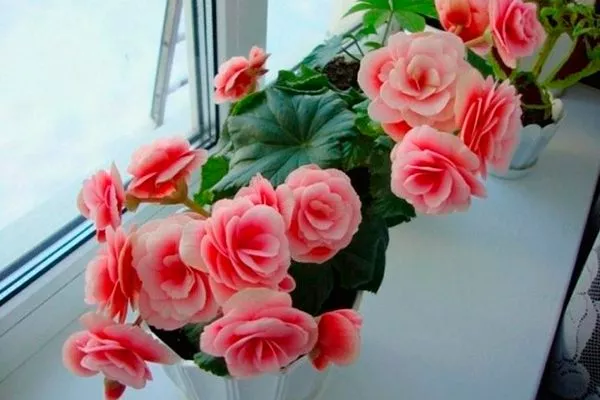
The leaves are up to 8 cm in size. The bright inflorescences of this species are red or pink and reach up to 5 cm in diameter. Begonia is propagated by seeds or cuttings.
Bada Boom
Begonia Bada Boom, a low-growing, flowering annual, is an attractive and versatile choice. It looks stunning in any setting and is widely popular.
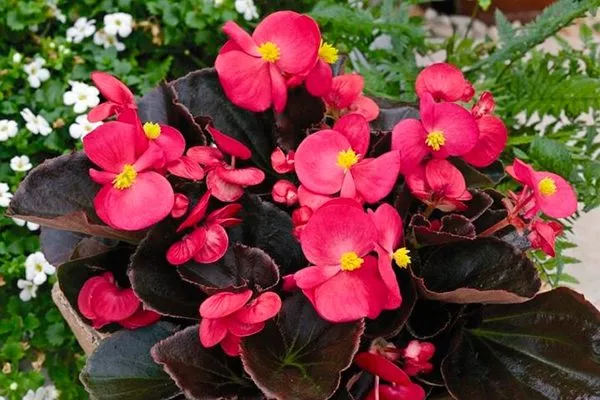
This begonia boasts a uniform structure, early and long flowering period, and, thanks to its excellent branching, quickly fills flower containers. Flowering occurs in just 11-13 weeks. It attracts attention with its striking bronze-colored leaves.
The plants form compact, upright, spherical bushes, reaching a height of 20-25 cm. The leaves are fleshy, rounded-heart-shaped, leathery, and glossy, with a bronze or brown hue. The flowers are round, brightly colored, with a yellow center, and reach 5-7 cm in diameter.
Picotee
This begonia can reach a height of up to 40 cm. It is distinguished by its fluffy shoots, colored a delicate olive shade. The foliage of this variety is heart-shaped, with jagged edges and a dark green hue.
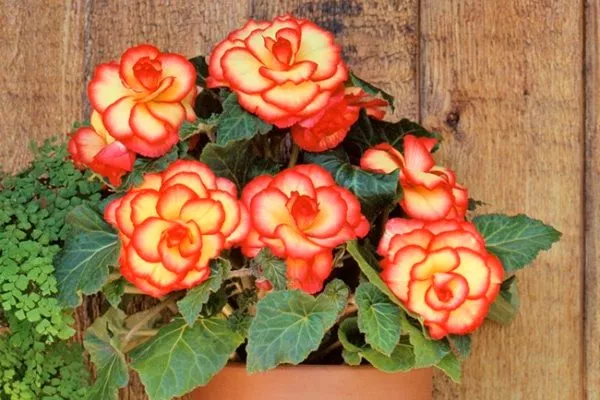
The large flowers grow up to 20 cm in diameter, their petals are slightly wavy and bright yellow with a raspberry-hued edge. This begonia has a delicate fragrance, adding another appealing feature to its overall character.
Crispa Marginata
This perennial plant is often used in landscape design to create attractive flowerbeds, borders, and group plantings. Begonias range in height from 15 to 25 cm and are not trailing.
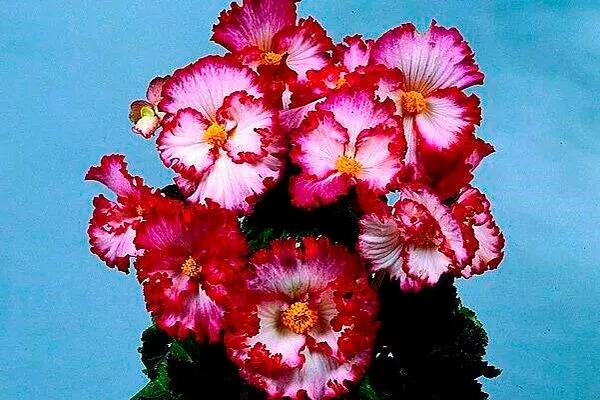
The leaves are pleated and decorated with an openwork pattern, with a light green background and dark green edges, accented with a purple hue. This variety lacks variegation. The flowers are impressively large, reaching 10-12 cm in diameter.
The petals are corrugated and broadly oval. The flowers are a soft yellow with a red edge and a bright yellow center. They are double and have a pleasantly sweet fragrance.
Marble
Small and elegant, the marble begonia blooms with double flowers in delightful shades of pink and red. Its green leaves are characterized by an exquisitely carved pattern.
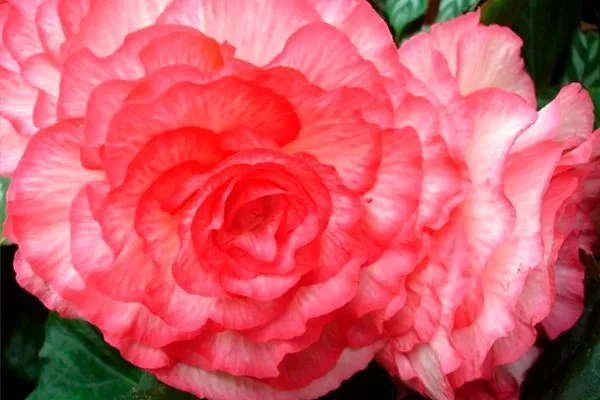
Experts recommend planting the tubers of this plant in early February, preferably in lighter soil, after the danger of frost has passed. It flowers from May to September, creating a beautiful display in the garden or on a windowsill.
Garden
The garden begonia is a relatively compact plant, growing no more than 30 cm tall, making it a popular choice for mixed borders and garden paths. The bright green leaves are characterized by an asymmetrical shape and finely serrated edges.
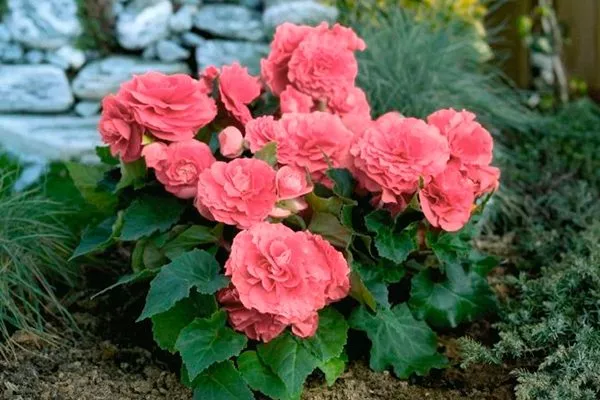
The flowers range from 5 to 15 cm in size when open. They can be double or semi-double, and their coloring comes in a variety of shades. Visually, depending on the variety, they can resemble azaleas, small peonies, or roses.
Ampelous
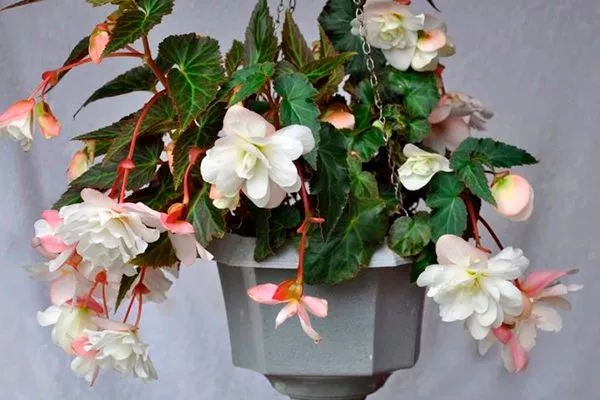
The stems of trailing begonias hang down, reaching lengths of up to 40 cm, and sometimes up to 80 cm. These plants are widely used to decorate loggias and gazebos; it is recommended to plant them in hanging containers or pots on stems.
| Name | Length of shoots | Flower color | Leaf shape |
|---|---|---|---|
| Bella | not specified | not specified | large |
| Chanson | 30-45 cm | yellow, red, copper or white | cordate |
| Cascade Pendula yellow | not specified | yellow | asymmetrical |
| Illumination | up to 30 cm | white, cream, yellow, apricot, light yellow | heart-shaped |
| Cascade Florence | not specified | soft pink | soft green |
| Bolivian | not specified | not specified | not specified |
| Gloire de Lorraine | not specified | various shades | not specified |
Bella
Begonia Bella is one of the most popular varieties, captivating with its graceful and colorful appearance. Its fleshy stems and large leaves lend the plant a distinctive elegance. These features make these flowers a striking addition to a wide variety of interiors.
Chanson
This plant's buds are double or semi-double, 6-8 cm in diameter. The bud color can be yellow, red, copper, or white. The stems are thin, drooping branches 30-45 cm long. The leaves are serrated, heart-shaped, and green.
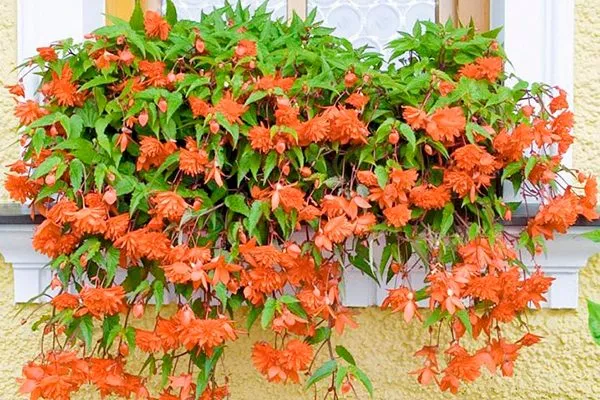
Cascade Pendula yellow
The yellow begonia is another outstanding beauty among trailing plants. It attracts attention with its rich, saturated hues. The leaves are characterized by asymmetry. The inflorescences usually form in drooping, vibrant clusters.
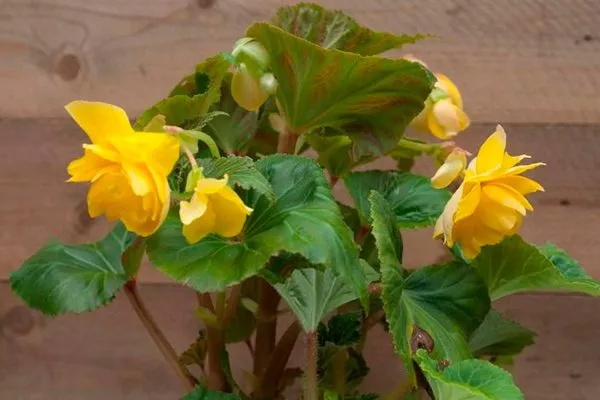
Illumination
Begonias are characterized by slender, drooping shoots up to 30 cm long. The inflorescences are double, 5-7 cm in size, and their color depends on the variety: white, cream, yellow, apricot, or light yellow. The leaves are heart-shaped, bright green with light veins.
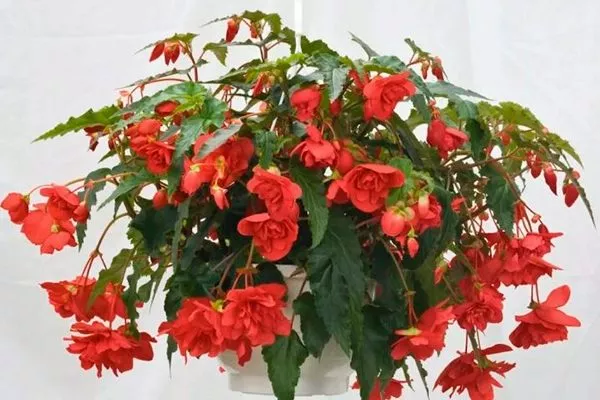
Cascade Florence
This low-growing perennial shrub impresses with its graceful appearance, thanks to its sturdy stems and soft green leaves. The plant delights with large, voluminous flowers, a delicate shade of pink. The flower clusters are arranged on drooping branches, creating a striking and picturesque appearance.
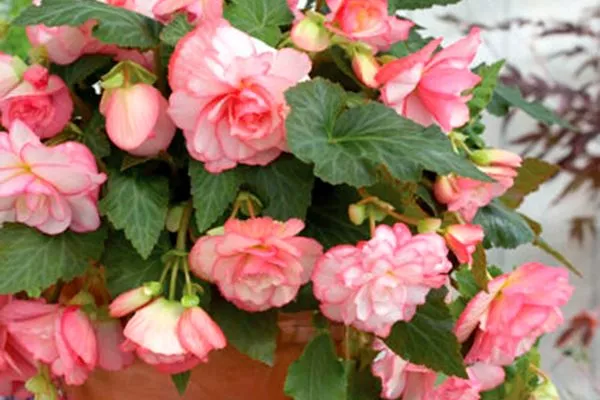
Bolivian
The shoots of this Bolivian begonia grow upward, and as they reach a certain height, they begin to gently curve, forming a beautiful cascade of flowers. This begonia species is further subdivided into several popular cultivars, such as Copacabana, Bossa Nova, and Santa Cruz Sunset.
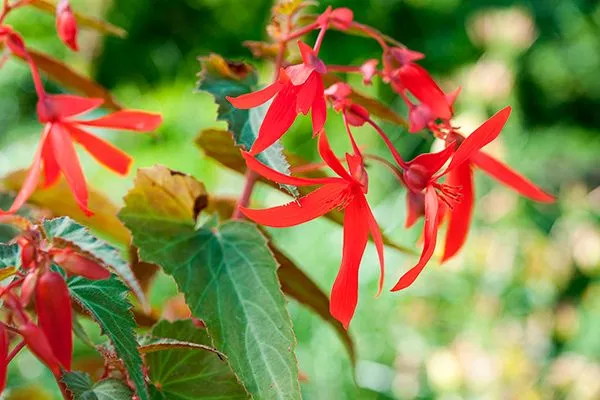
Gloire de Lorraine
The hybrid Gloire de Lorraine is particularly interesting. Its bush is charming, filled with small flowers in a variety of shades. These begonias look beautiful on a windowsill and are also a popular addition to the entryway.
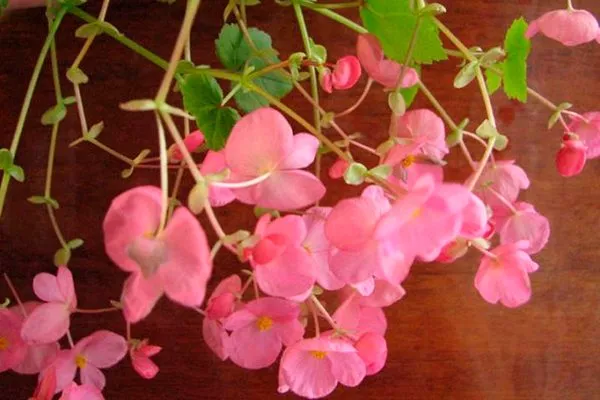
Camelliaceae
The Camellia variety belongs to the Camelliaceae family. It can reach a height of about 35 cm. Its numerous shoots boast large, double flowers, bright pink with snow-white stripes on the petals.
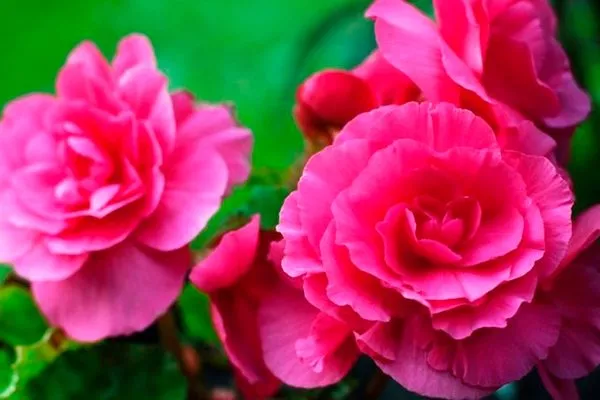
Camellias can brighten up even the most unassuming corners of a room. This plant blooms from July until the first frost. They are easy to care for and easily transplant.
How to choose?
When choosing a plant, pay attention to its overall health and appearance. Leaves and flowers should be free of spots or other defects, and there should be no signs of pests on the surface. Falling or dried foliage may indicate problems with the plant.
Beginner gardeners are advised to avoid overly difficult-to-care-for or exotic varieties. Experienced gardeners recommend starting with varieties such as Elatior Borias and Non-Stop, as they are significantly easier to care for.
The world of begonias offers a stunning diversity of species and varieties, offering much more than just interior or garden decoration. Each species has its own unique characteristics, from vibrantly colored flowers to exquisite foliage shapes. Gardeners can choose from a variety of options, taking into account their growing conditions and preferences.