
Indoor begonias are not only very decorative but also easy to care for. However, despite their relative ease of care, these flowers are sensitive to improper growing conditions. If begonias are not comfortable, they begin to wither, become ill, and may even die.
How often does begonia get sick?
Begonias They are sensitive to any changes in care and maintenance. While they differ in appearance, they are susceptible to the same diseases.
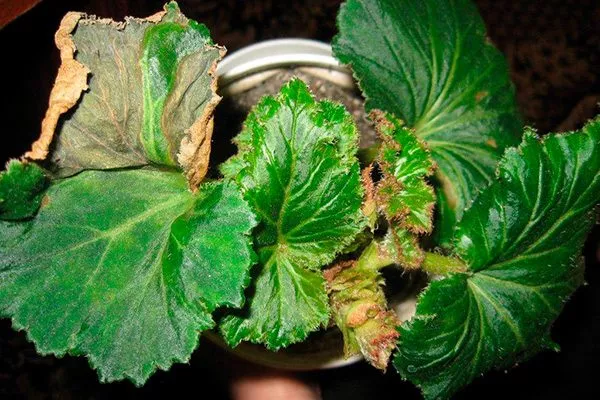
Typically, begonia diseases occur due to:
- violations of the feeding regime;
- incorrect watering;
- insufficient lighting;
- cold drafts;
- pest infestations;
- failure to comply with temperature and humidity conditions for growth.
In begonias, problems can also be caused by varietal characteristics or a violation rules of reproductionThe incidence of disease in these flowers directly depends on external factors and the habitat.
Often, simply moving the pot to a more favorable location is enough for the problem to resolve itself. In other cases, treating the plant requires a significant amount of time and effort.
Main diseases and treatment methods
Most diseases affecting begonias require special treatment—the plant won't be able to overcome them on its own. It will wither, weaken, lose its beauty, and eventually die. To prevent this, it's important to recognize the problem early, diagnose it, and begin treatment.
| Name | Disease resistance | Flowering period | Lighting requirements |
|---|---|---|---|
| Tuberous begonia | High | Summer-autumn | Bright diffused light |
| Begonia everblooming | Average | All year round | Penumbra |
Gray mold
Gray mold is caused by the fungus Botrytis, which lives in soil and on plant debris. Affected plants develop a fluffy, gray coating on all above-ground parts. The plant wilts, and brown or red spots appear on the affected areas.
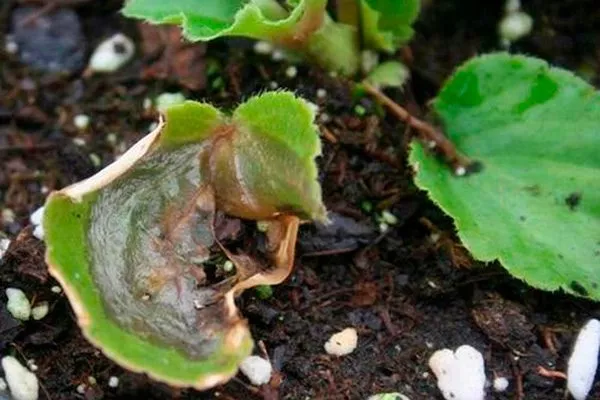
Causes of gray mold:
- high humidity combined with rare ventilation;
- low temperatures.
The fungus spreads by wind and attacks only damaged or dead plant tissue—it does not reproduce on healthy cells. Once on the begonia, the fungus begins to secrete toxins that damage healthy leaves. Gradually, the fungus invades new tissue, spreading throughout the plant.
How to treat:
- At the initial stages, the plant is treated with Fundazole (0.1% solution).
- For severe damage, use Fitolavin (2 ml per 1 liter of water).
- Recommended biological fungicides are Vitaplan (2.5 g per 1 l of water) and Trichocin (4 g per 5 l of water).
- ✓ Use only freshly prepared Fundazol solution, as its effectiveness decreases 24 hours after preparation.
- ✓ Mandatory removal of all affected parts of the plant before treatment to prevent the spread of the fungus.
To avoid damage by gray mold, the room with flowers must be ventilated daily, regardless of the weather outside.
Powdery mildew
There are two types of powdery mildew: true and downy. The former is caused by a fungus called powdery mildew. A white coating appears on the leaves of affected begonias, where spores mature. Over time, these spores begin to secrete a liquid that coats the leaves like drops of dew. The leaves of the affected plant turn brown and die.
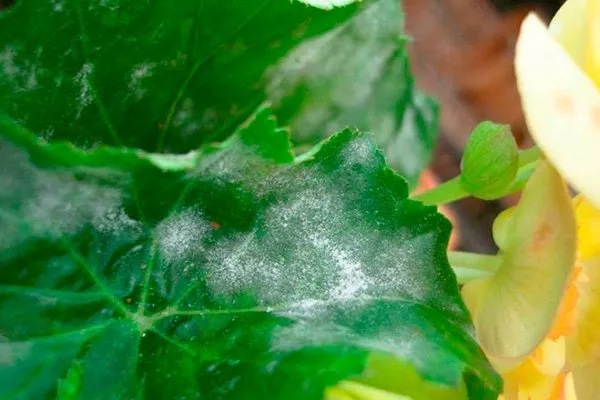
Causes of powdery mildew:
- high air humidity;
- waterlogging of the soil;
- low temperatures.
Both types of powdery mildew are rapidly progressing and difficult to treat once they reach severe stages. Immediate action is necessary as soon as the first signs of the disease are detected. Both types of powdery mildew are treated with the same medications.
How to treat:
- Spray the plant with Quadris (1.25 ml per 1 liter of water). If the disease is severe, perform three treatments at intervals of 7-10 days.
- For minor infestations, use Previcur Energy (1.5 ml per 1 liter of water). Repeat treatment after a week.
- It is recommended to treat powdery mildew with Fundazol (1 g per 1 l of water) or Topaz (1 ml per 5 l of water) twice.
| Name | Method of reproduction | Pest resistance | Optimal temperature |
|---|---|---|---|
| Royal Begonia | Leaf cuttings | High | 18-22°C |
| Begonia bauerii | By dividing the bush | Average | 20-25°C |
Bacterial spot
The disease affects the undersides of leaves, causing small, glassy, water-soaked spots to appear. Over time, these spots turn brown and spread to other parts of the plant, including stems and flowers.
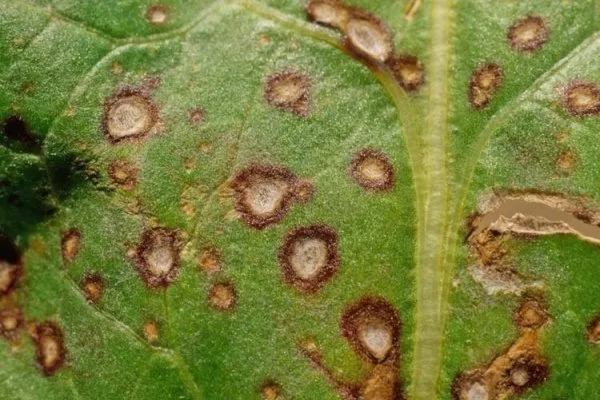
Causes of bacterial spot:
- poor ventilation;
- close placement of flower pots;
- elevated temperatures (+25…+30°C);
- high humidity;
- phosphorus and potassium deficiency;
- increased soil pH;
- water droplets falling on leaves.
How to treat:
- Preventative spraying with Vitoplan and Trichocin is recommended before the disease appears. Plants also need to be watered monthly under the roots with a fungicide solution.
- The use of a systemic biological bactericide, Fitolavin, is indicated, and in the initial stages of the disease, Fundazol.
- ✓ The appearance of water-soaked spots exclusively on the underside of leaves in the early stages.
- ✓ Rapid spread of spots on stems and flowers, which is not typical for other diseases.
In case of severe damage, it is recommended to destroy the begonia and thoroughly disinfect the pot.
Cucumber mosaic on begonia
This viral disease is accompanied by the appearance of spots, yellow rings and deformation of leaves.
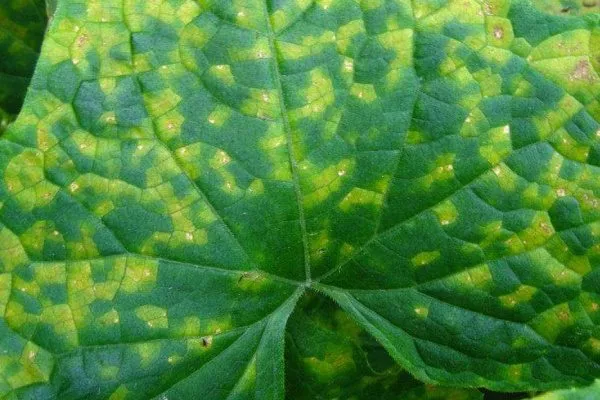
Causes of cucumber mosaic:
- unfavorable conditions of detention;
- weakened immunity;
- infection from diseased plants.
Cucumber mosaic virus spreads very quickly and has no cure. Infected plants must be destroyed, and containers thoroughly disinfected.
Ring spot
The disease is caused by a tomato virus. Affected begonias develop yellow-green concentric lines and spots, the leaves take on a bronze tint, and the entire plant becomes covered in necrotic spots. The disease can be transmitted by insects. Treatment is difficult and rarely successful.
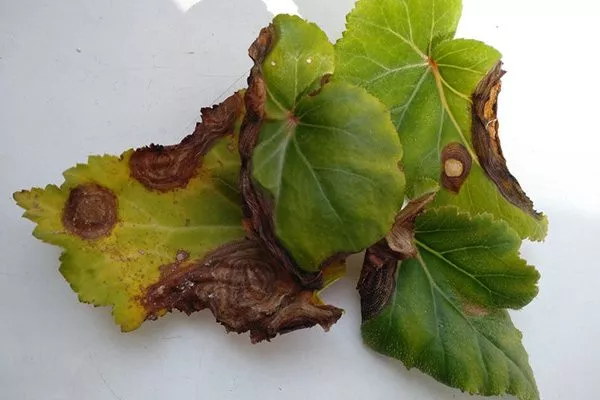
Causes of ringspot:
- high temperatures;
- high air humidity;
- close arrangement of pots with plants.
How to treat:
- Spraying with the biological antibiotic Fitolavin. Apply to the foliage and roots (2 ml per 1 liter of water).
- If spraying and watering do not help, the plant must be destroyed to avoid infecting other houseplants.
Fusarium
The disease affects the roots and vascular system of plants. It is caused by the fungus Fusarium foetens. Infection occurs through soil, air, and water. The disease causes yellowing, wilting, and drying of leaves, along with the appearance of a pale pink coating.
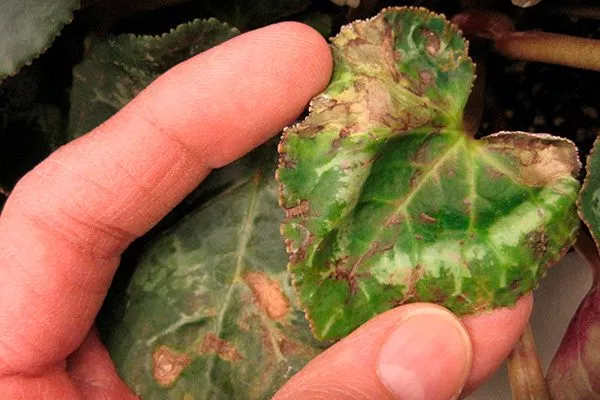
Causes of fusarium:
- infection due to mechanical damage;
- increased humidity and temperature;
- Violation of plant maintenance conditions.
How to treat:
- Replacing contaminated soil and treating the new substrate with Trichodermin or Fitosporin.
- In cases of severe damage, when biofungicides are ineffective, plants are sprayed with Vectra, Topaz, Quadris and other chemical fungicides.
Preventive spraying with Fundazol (1 g per 1 l of water) and adding Trichodermin to the prepared soil substrate are recommended.
Blackleg
The disease is caused by the fungus Pythium. It lives in the upper layers of the soil and feeds on organic matter. The fungus causes blackening of the basal and root parts of plants. The stems become thinner, and ulcers appear.
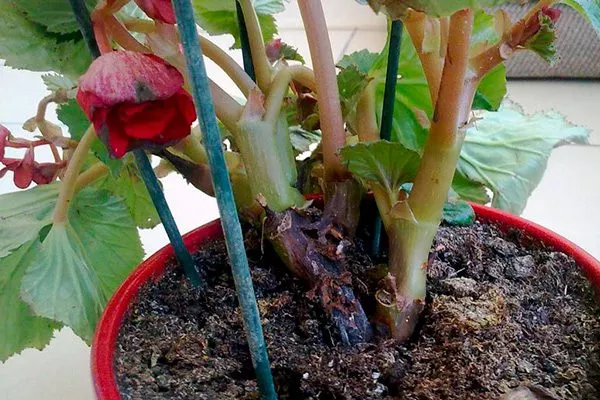
Causes of black leg:
- compacted soil;
- high humidity;
- poor drainage.
How to treat:
- treatment of plants with copper-containing preparations - copper sulfate, Bordeaux mixture, Hom, Oxyhom;
- The soil is sprinkled with clean river sand - it will remove excess moisture.
Prevention of black leg involves regular ventilation, moderate watering and proper fertilizing.
Black root rot
The disease is caused by phytopathogenic fungi that live in the soil and on plant debris. Affected plants experience wilting of the leaves at the edges. When replanting, black, rotting spots may be visible on the roots.
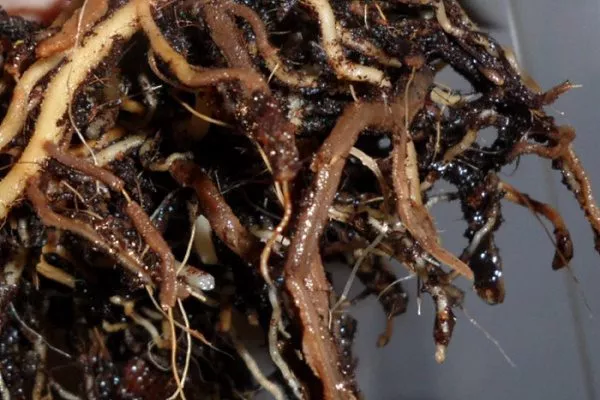
Causes of black root rot:
- overwatering;
- infection from diseased plants.
How to treat:
- removal of affected areas;
- treatment with Benomyl (according to the instructions).
Begonia's reaction to violation of care rules
Begonia is demanding of growing conditions and reacts sensitively to unfavorable temperature, humidity, lighting, and improper care.
The leaves curl, dry out and turn yellow.
One of the most common signs of poor care is yellowing leaves. The solution depends on the underlying cause.
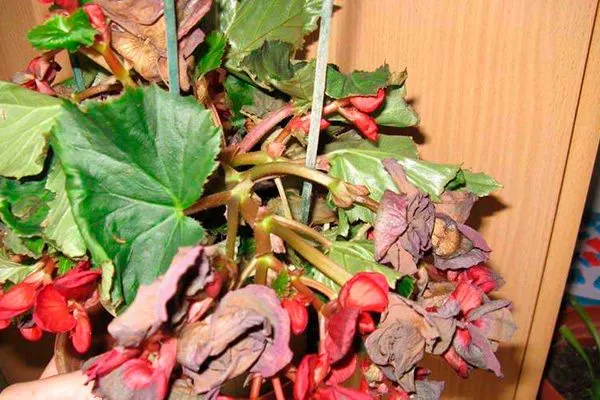
Causes of yellowing leaves:
- The watering regime has been violated. Using unsettled or cold tap water. The solution is to let the water settle.
- Moving a flower. The solution is to return the plant to its original location, feed it and remove dried leaves.
- Dry air. It's triggered by radiators being turned on. The solution is to turn on a humidifier.
- Violation of the light regime. The solution is to create optimal lighting for the plant. Shade it from direct sunlight or turn on grow lights, depending on the situation.
The buds are falling off
One of the common reactions of begonias to improper care is the shedding of leaves, flowers, and unopened buds. To help the plant, it's necessary to determine the cause of this phenomenon.
Reasons for bud drop:
- Violation of conditions of detention Dry air, root rot from overwatering, direct sunlight, high/low temperatures (above 23°C in summer/below 16°C in winter). The solution is to correct these care errors.
- MalnutritionThe problem can be solved by adding complex fertilizers, such as Kemira Lux and similar products. Flowering begonias and those preparing to bloom should be fed only with phosphorus and potassium, avoiding nitrogen. You can also change the soil; the best option is a mixture of equal parts coniferous, sod, and leaf mold, with the addition of sand and peat.
- Pests and diseasesBud drop is most often caused by gray mold and powdery mildew, which should be controlled with fungicides. Bud drop can also be caused by pests such as aphids and spider mites. When these appear, spray the plant with insecticides and acaricides, respectively.
Spots appeared on the leaves
Leaf spots indicate a problem—the plant is experiencing discomfort. The begonia urgently needs help to prevent the disease from progressing and eventually dying.
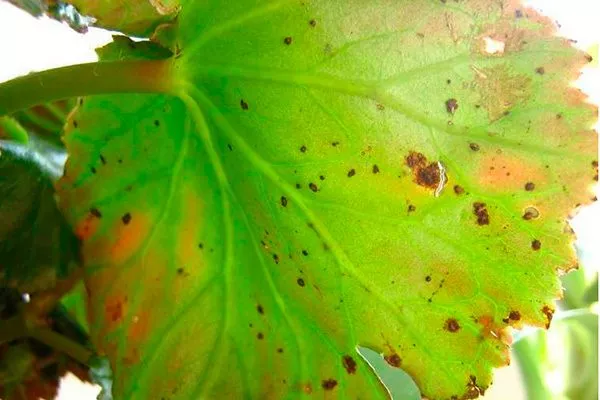
Reasons for the appearance of spots:
- Brown — insufficient watering, low air humidity, substrate contamination with fungus.
- Whites - gray rot or powdery mildew.
- Yellow - cucumber mosaic virus.
Sticky coating on leaves
If your begonia's leaves have become sticky, it's likely that the plant has powdery mildew due to high humidity. Water-soaked spots covered with a gray coating soon appear on the sticky leaves. To save the plant, trim off any affected areas, lower the room temperature, and temporarily stop spraying.
A sticky coating can also appear when plants are damaged by pests such as scale insects, whitefly caterpillars, spider mites and other pests.
Stem extension
If a begonia has stretched too quickly, it's not getting enough light. It needs to be provided with adequate lighting by moving it closer to the light. Stretching can also be caused by a cramped planting container or a micronutrient deficiency.
Cessation of plant growth and development
Sometimes, begonias stop growing and produce foliage. It's the leaves of this plant that are particularly valuable as a decorative feature. Furthermore, growth retardation is a warning sign that the plant's maintenance conditions are not being met.
Why is my begonia not growing?
- building up a damaged root system after transplantation;
- exposure of leaves to direct sunlight;
- lack of lighting;
- the air temperature is above +28°C.
Reddening of leaves
A healthy plant has greenish leaves with white spots. In early spring, the undersides of the leaf blades take on a reddish tint. This is generally normal, but if the red color extends to the upper side of the leaves, the plant is likely suffering from too much light. The solution is to move the begonia's pot to a more favorable location.
Pest diseases and their control
Pests attack plants, causing significant damage—some suck out sap, while others chew through leaves, roots, and flowers. Furthermore, insects can carry various diseases. It's important to detect pests before they cause serious damage and take appropriate action.
The main pests of begonia:
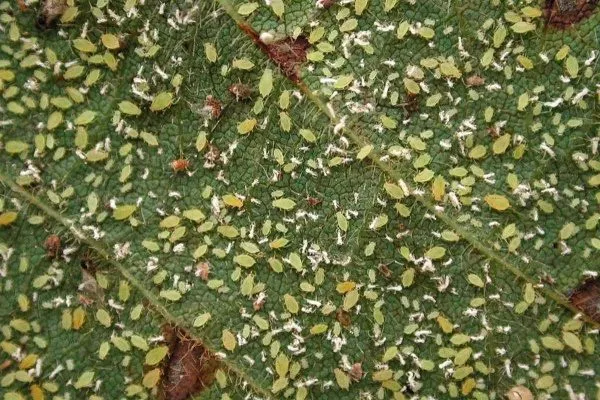
- Aphid. These are small, sucking insects that live in colonies and are usually green or black. Severe infestations can cause all leaves and buds to fall off. Treatment with a soap solution is helpful, and in severe cases, insecticides (Actellic and Fufanon) can be used.

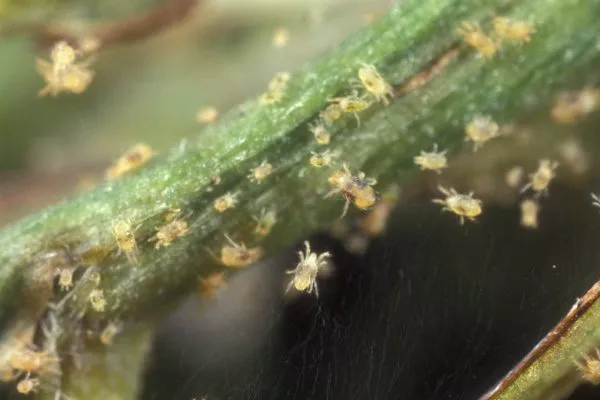
- Spider mite. A small, sucking insect, difficult to see with the naked eye. Affected plants' leaves become dull and wilt, with a fine web appearing on the underside. The problem can be addressed with chemicals (Actellic and Fufanon) or biological treatments (Fitoverm and Akarin).
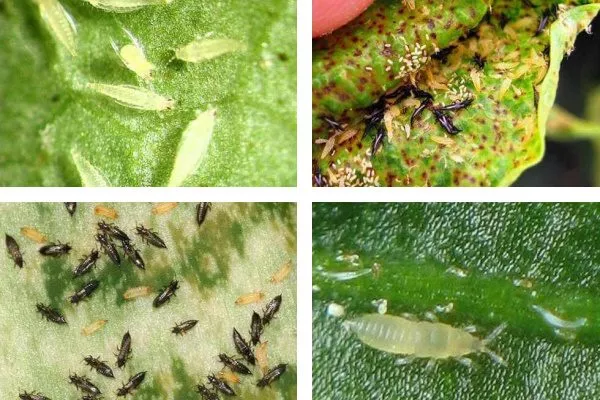
- Thrips. These tiny insects cause the plant to become dull and lifeless, dropping leaves. Spraying with a soap solution and an insecticide (Omite or Vertimek) is recommended.
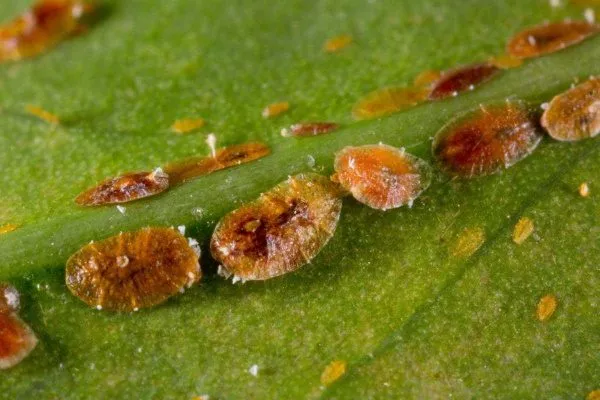
- False scale insect. A small insect that appears as brown scales when on the plant. It is recommended to remove the pests with a brush and treat the plant with an effective insecticide (Aktara or Mospilan).
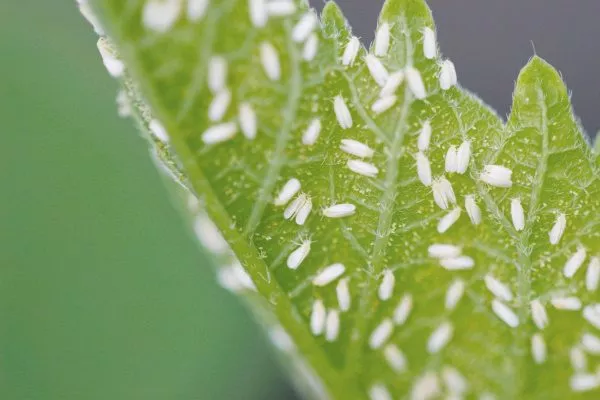
- Greenhouse whitefly. These small white butterflies feed on plant sap. A soap solution (40 g of laundry soap per 10 liters of water) and broad-spectrum insecticides (Applaud and Aktara) can help control them.
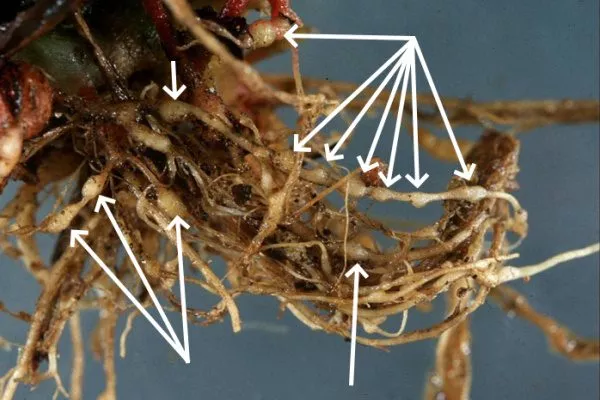
- Root-knot nematodes. The presence of these tiny microscopic worms in the soil can be detected by growths on the roots and lifeless leaves. It is recommended to destroy the plant.
Prevention
Experienced gardeners prefer to prevent diseases rather than fight them. A variety of preventative measures help them achieve this.
Preventive measures for begonia:
- soil disinfection before planting;
- preventing stagnation of water during irrigation;
- regular loosening of the soil;
- application of complex fertilizers throughout the entire growing season;
- timely removal of damaged and affected parts of the plant;
- placing flower pots away from radiators, stoves, air conditioners, and heaters;
- maintaining temperature in the range of +12…+20°C;
- shallow placement of tubers when landing — the apical buds should be visible, and as they take root, soil should be added;
- For disease prevention, spraying with a 0.5% copper oxychloride suspension every 12-14 days and a 0.3-0.5% colloidal sulfur solution is recommended;
- To prevent pests, it is recommended to spray plants with systemic insecticides 1-2 times a month, for example, Mospilan (0.25 g per 1 liter of water).
Care tips
Experienced gardeners know many nuances and secrets that help them grow begonias successfullyThey share them with newcomers.
Begonia care tips:
- flowering varieties prefer bright light, leafy varieties prefer diffused light;
- regularly ventilate the room where the begonias are located, but do not allow drafts;
- It is better to transplant after wintering - in March;
- If you notice diseased roots during replanting, trim them off;
- When replanting, place the roots in a weak solution of potassium permanganate to prevent fungal infections.
Most indoor begonia diseases are caused by improper conditions and care. Correcting all plant care errors will result in faster and more effective treatment. Most importantly, if begonias are grown in a favorable environment and properly cared for, they are virtually disease-free.