
This plant belongs to the Begoniaceae family. It's grown both in the garden and indoors. Begonias are prized for their ability to bloom year-round. But even such an easy-to-care-for flower can be ruined if you don't know how to care for it.
How to grow indoor begonia?
Caring for the flower involves choosing the right location (the plant does not like to be constantly moved), providing sufficient lighting, nutritious soil, and regular, but not too frequent, replanting.
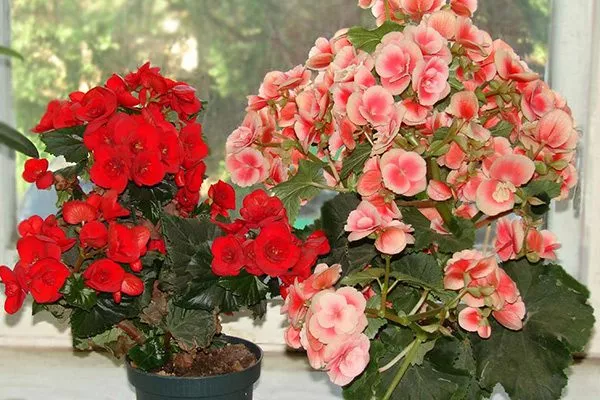
Selecting soil and pot
The ideal pH is between 5.5 and 6.5. You can prepare a suitable substrate yourself. For this, you'll need leaf mold, black soil, and peat in a 2:1:1 ratio. If desired, you can add additional components (sand, humus, or pine soil). Add all ingredients in the following order:
- spread sand on the bottom of the pot;
- add a layer of leaf soil to the middle of the container;
- Place peat and black soil on top.
A standard round ceramic pot is suitable for begonias. This material provides good air circulation and does not retain moisture evaporation. Drainage holes are made in the bottom of the pot. For cuttings that are just beginning to root, choose containers with a diameter of 5-6 cm.
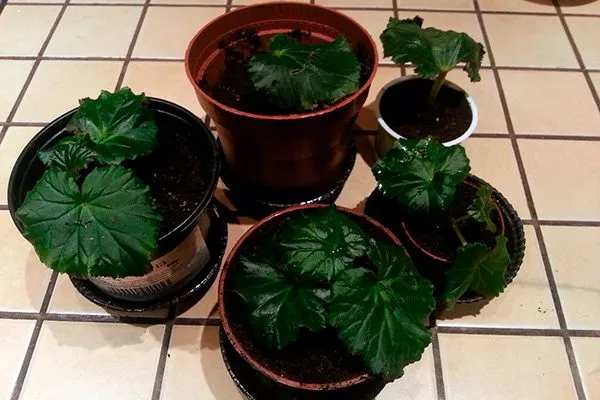
Young plants (over 6 months old) feel more comfortable if the pot size reaches 8-10 cm. The dimensions of each new container should be 1/3 larger than the diameter of the previous one.
Location, lighting
The plant prefers good but indirect light. Direct sunlight can cause sunburn on the begonia's leaves. Therefore, the pot should be left on a windowsill in the fall and winter, and then moved to a slightly shaded area from early spring to late summer.
How to transplant correctly?
Begonias shouldn't be repotted immediately after purchase. They need a couple of weeks to acclimate to their new environment. Then they can be repotted, but only in two cases:
- the flowering phase is over;
- The roots have grown so much that there is not enough space for them in the old container.
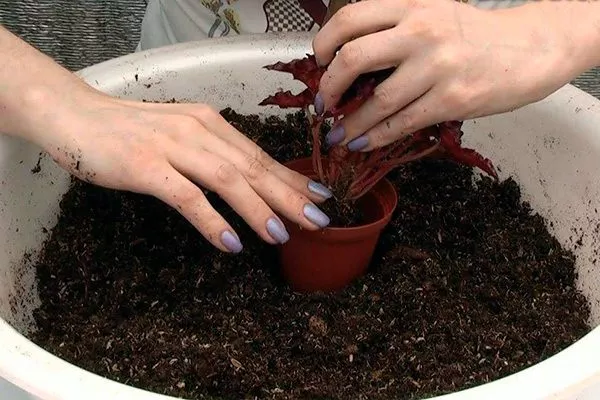
When repotting, gardeners use the transshipment method. This involves keeping a ball of soil on the plant's roots. This helps the begonia recover more quickly after the transplant. Then, the pot is moved to a dark place, watered generously, and allowed to rest for 3-5 days.
What conditions need to be maintained?
The main reason for the flower's good health is the consistency of its maintenance conditions, which are changed only in case of extreme necessity.
Lighting
Begonias prefer strong but indirect light. If moving the plant from the windowsill is not possible, shade it with a screen, curtains, or drapes. At the onset of winter, when the plant experiences a lack of light, it can be supplemented with a standard 60-watt bulb (providing the begonia with 14 hours of daylight will ensure it blooms throughout the winter).
Air temperature and humidity
The plant prefers temperatures between 21 and 23°C in summer and between 15 and 18°C in winter. The recommended humidity level is 60%. Begonias do not tolerate temperature fluctuations well. At the slightest discomfort, they shed their leaves, and in the worst conditions, they die.
Caring for indoor begonias at home
Over 1,000 varieties of this plant, not counting hybrids, can be found on store shelves. But all of them depend on specific growing practices. Adherence to these practices will determine how long the plant will delight its owner with good health and abundant blooms.
How to care for indoor begonia after purchase?
The plant is grown in industrial greenhouses, where ideal conditions are maintained. Afterwards, it endures the stress of transportation and storage. Then, it ends up in an apartment with dry air and unsuitable lighting and temperature conditions. Therefore, once in its new home, the begonia doesn't thrive.
Peculiarities:
- Immediately after purchasing the flower pot, choose a windowsill for it, focusing on the north side in the summer and east-west windows in the winter.
- It is desirable that this place is not strongly illuminated and not crowded with other plants.
- The purchased begonia is inspected and all damaged parts are removed. The cuts are treated with Epin.
- It takes a week after purchase for the plant to adapt to the new conditions. If it's a flowering variety, this period can extend up to a month.
- For the first 5 days, the plant is not watered or moved, and care is taken to ensure that there are no drafts near it.
- If the gardener is afraid of the soil drying out, then a container of water can be placed nearby.
- After the begonia has adapted, it's time to repot it. If it's blooming, wait until it finishes blooming first.
When and how should you prune?
Begonias don't require special pruning. This procedure is only used when the plant has lost its decorative appearance. First, prepare a sharp knife and disinfect it. Trim off all dried and bare shoots, trying not to exceed a length of 4-5 cm. This will stimulate the plant to produce new buds.
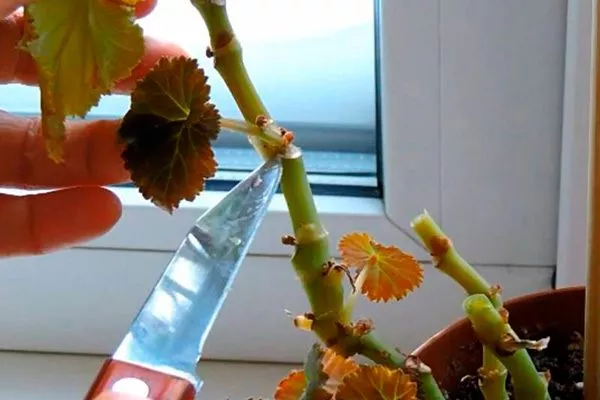
Tuberous begonias are pruned completely in October. This procedure begins after yellow spots appear on the leaves. Pruning forces the plant to enter dormancy more quickly and gain strength before the next flowering season.
Watering and spraying
Water the plant as the soil dries out (to a depth of 1.5 cm). Depending on the time of year, this will take 3 to 7 days. Use filtered or boiled water that has been left to stand for 24 hours in an open container.
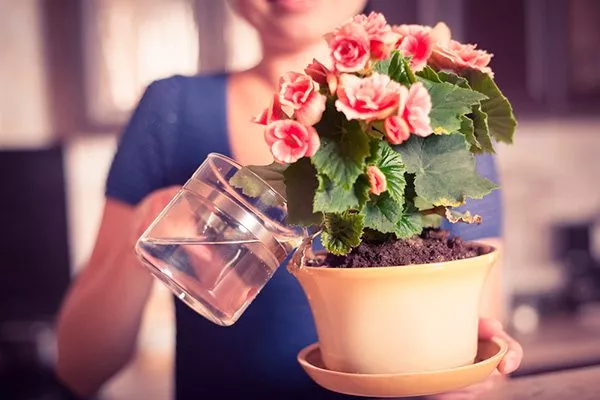
- ✓ The optimal water temperature for irrigation should be no lower than 20°C and no higher than 25°C.
- ✓ To prevent fungal diseases, it is recommended to add 1-2 drops of iodine per 1 liter of water for irrigation.
Peculiarities:
- During hot weather, begonias should be watered generously enough to allow excess water to drain. Once the soil has absorbed all the liquid, it should be loosened to a depth of at least 1-2 cm. This ensures good moisture levels and adequate air access to the plant's root system.
- If there is water left in the tray, carefully drain it from there.
- It is advisable to water the plant so that water does not get on the leaves.
- Begonia is sensitive to excess moisture; if its leaves get wet, they will become covered with brown spots.
Not all gardeners resort to misting. It's intended to maintain ambient humidity and isn't essentially a necessary part of plant care. If desired, begonias can be sprayed with room-temperature water from a spray bottle. However, do this away from the plant to avoid any droplets from falling on the foliage.
Other methods of maintaining air humidity are popular:
- a container filled with liquid is placed on the windowsill located above the radiator;
- an even layer of pebbles is poured into the middle of the saucer, water is added and a pot with a tray is placed there;
- A wet towel is regularly thrown over the switched-on radiator and changed as needed.
Top dressing
Flowering varieties (during the period of ovary formation) require fertilization approximately twice a month with phosphorus-potassium fertilizers. Once buds appear, use complex fertilizers (supplemented with Bud, Ovary, and other stimulants). Before use, dilute with water at a ratio of 1.5 g per 1 liter of liquid. After flowering, fertilize the plant once a month.
Foliage begonias are fed with nitrogen fertilizers. The main component inhibits bud formation but promotes dense, vibrant foliage. However, if such fertilizers are applied to a plant capable of producing flowers, it may not bloom again.
How to care in winter?
Only tuberous begonia species go dormant during the winter. The expected dormant period is from November to February. These dates may vary depending on the regional climate. Other begonias are ready to delight with their flowers and foliage at any time of year. All a gardener needs to do is maintain suitable growing conditions.
Other nuances:
- In winter, begonias don't have enough light. To artificially extend daylight hours to 10-14 hours, special phytolamps are stocked up in advance.
- Ornamental foliage plants are fed with nitrogen preparations once a month.
- Flowering varieties need phosphorus and potassium every 15 days.
- Flowers should not be moved unless absolutely necessary, and strict attention should be paid to the absence of drafts. The pot should be insulated with a layer of thick fabric if the gardener is unsure of the ambient temperature.
- Before winter sets in, tuberous begonias shed their leaves. After this, they are stored in a cool, dark place.
- A couple of times a month, their soil is sprayed with a solution of potassium permanganate (diluted to a pale pink color).
- It is recommended to maintain a low temperature (12 to 15°C). Lower temperatures can lead to rotting, while higher temperatures can lead to premature budding.
Begonia propagation
The plant can be propagated in several ways. Beginners are recommended to use cuttings, sprouting tubers, and dividing leaves. More experienced gardeners propagate flowers from seeds and divide the rhizomes of mature begonias.
Growing from seeds
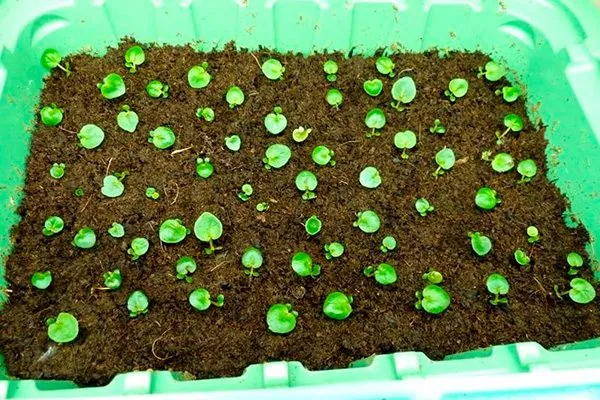
The best time to sow is from late February to early March. In warmer climates, the timing shifts and can last from January to April. Scatter the seeds over the moist soil surface (you can spray them with a spray bottle) in containers, gently press them in, cover with plastic wrap (to create a greenhouse effect), and move them to a warm, sunny spot.
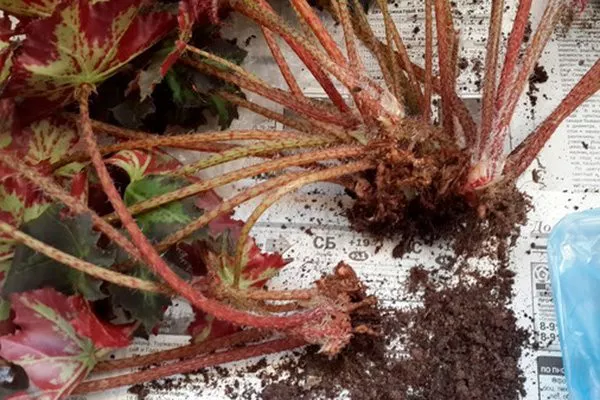
Division of rhizomes in deciduous species
First, dig up the entire begonia, including the rhizome. Then, cut each rootstock into several pieces with a sharp (disinfected) knife, ensuring that each section retains its buds and roots. Sprinkle the cut sections with activated charcoal and allow them to dry. After this, the pieces are ready for planting.
Cuttings
Spring and early summer are considered the best time to plant. Cuttings about 6 cm long are taken from the plant, ensuring that at least 3-4 leaves remain on each. Then, all the branches are placed in glasses of water with Kornevin.
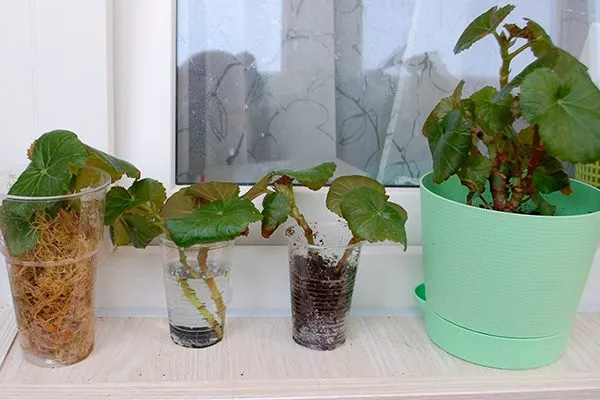
After three weeks, the first roots will appear. At this point, the seedlings are ready for planting in pots filled with soil. They are carefully buried, ensuring that no soil gets on the leaves.
Leaves
Healthy leaves are cut from the plant. Small leaves are planted whole, while larger ones are cut into several pieces along the main vein. The rest of the procedure is the same as with cuttings. However, you can use another method.
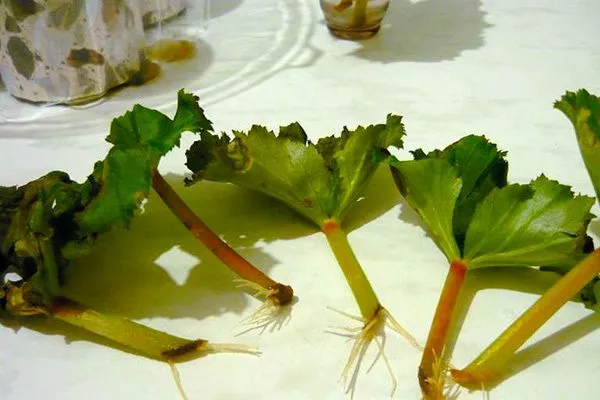
To do this, first prick and moisten the sand. Place the cut leaves face down on the prepared sand, secure them in place, and moisten them regularly until the first roots appear.
Tubers
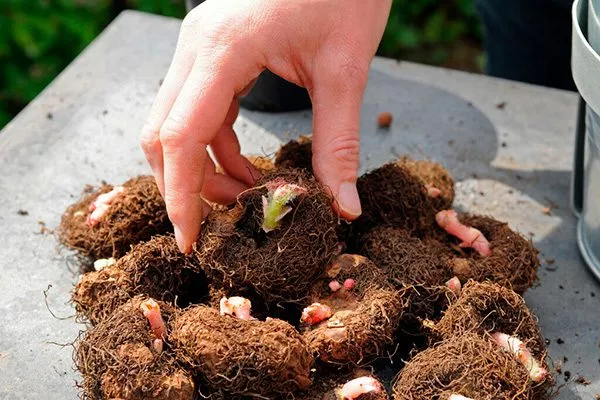
At the end of March, the tubers are placed in a growing medium, ensuring the ambient temperature does not fall below 18°C and the humidity level exceeds 50%. They are watered through a tray and provided with constant indirect light. Once the tubers sprout, they are planted in a permanent pot.
Diseases and treatment
The first signs of disease indicate an infection or errors made in plant care:
- brown spots on leaves - lack of moisture;
- the green color of the foliage began to fade - not enough light;
- Fungus on stems and leaves - there is too much liquid in the soil or this is the result of careless watering, during which moisture got on the begonia (all affected areas are cut off and treated with fungicidal preparations);
- white coating - the appearance of powdery mildew, caused by sudden changes in temperature or very dry air, the plant is completely treated with a 1% solution of colloidal sulfur (100 g of the substance is diluted in 10 liters of water) or Fitosporin;
- damp gray spots - the begonia was frequently overwatered and began to rot. In mild cases, the flower is treated with antibacterial preparations and the watering regime is adjusted; in neglected cases, the affected parts are cut off and after treatment, the plant is replanted in different soil;
- The edges of the leaves dry out, gradually covering the entire surface - the beginning of vascular bacteriosis, the affected parts of the plant are cut off, and then the entire plant is treated with an antibacterial drug.
Major pests and their control
Begonias are vulnerable to attacks by scale insects, thrips, spider mites, and aphids. These insects infest the stems and leaves of the plant, sucking out all the plant's vital fluids and gradually killing the plant. Folk remedies (tar soap solution, tobacco infusion) and insecticides (Decis, Akthar) are used to control them.
But besides these, root-knot nematodes—roundworms that attack the begonia's root system—also pose a danger. If they are present, the plant stops blooming and begins to wither. To save it, dig up the entire plant, cut off the diseased parts of the roots, and immerse the remaining rhizome in hot water (50 to 55°C). Then, rinse it in cold water and replant it in clean soil.
Consequences of neglecting a flower
Begonias quickly adapt to their surroundings. Therefore, they tend to shed their leaves when suddenly moved to a balcony. Good, but diffused, light is an added benefit.
Peculiarities:
- Direct sunlight will burn the delicate leaves.
- During the cold season, radiators can dry out the air significantly. This can cause begonias to wilt and rot.
- The same applies to watering. Excessive amounts of liquid lead to the development of diseases.
- The container in which the begonia will grow is equally important. Incorrect choice of material will lead to overheating of the soil and a lack of moisture and oxygen. This can lead to the death of the plant.
- It's best to keep the root system from becoming cramped in the pot. Otherwise, the flower will begin to darken and dry out.
Finally, watch a video with recommendations on caring for begonias:
The ability to bloom year-round has made begonias one of the most popular apartment plants. But decorative foliage varieties are almost as attractive as flowering varieties. With proper care, begonias will delight their owners for a long time with beautiful flowers and the rich colors of their dense foliage.
Thanks for the interesting information. I sowed begonia seeds in the spring and now I'm caring for the tiny seedlings, but I don't really know how. This is a very timely article; there were a lot of things I didn't know about care.