
Begonias will grace any room. However, with the onset of cold weather, the plant begins to suffer, which affects its appearance. To avoid this, gardeners need to follow certain care guidelines. These don't take much time, but they will help prevent plant deformation and subsequent recovery.
Signs of the onset of a dormant period
The dormant period begins in November and lasts until the end of February. A characteristic sign of "hibernation" is the cessation of flowering. During this time, the plant gathers strength for further development. If care errors are made, the begonia may not bloom again.
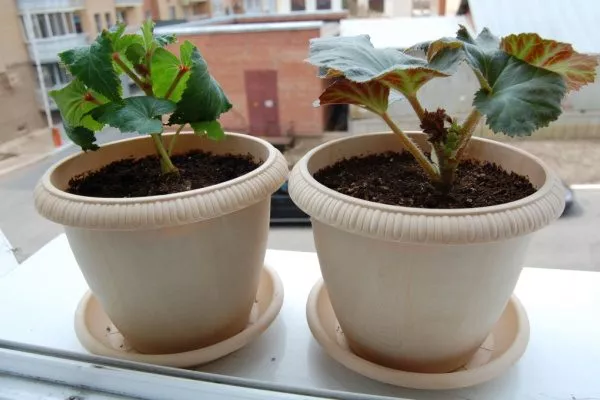
- ✓ The optimal temperature for overwintering begonias should be within 15-16°C, but not below 10°C.
- ✓ The air humidity level should be maintained at 60-70% to prevent the leaves from drying out.
Features of winter care
They consist of proper preparation for the onset of cold weather and adherence to begonia care techniques.
Preparing for winter
At the very beginning of autumn, the plant's stems and foliage begin to dry out and wilt. From this point on, reduce the amount and frequency of watering. Dead leaves are cut off, and the pot itself is moved to a darker, cooler location. This will allow the begonia to rest and gain strength before the next season.
A good place to overwinter is an insulated balcony or basement. Cover the plant pot with newspaper or thick fabric. Cover carefully to avoid direct sunlight. In the worst case, the begonia's leaves will get burned. At the very least, the plant will wake up before budding and shoots have begun.
- ✓ The location should be protected from drafts that can cause the plant to become too cold.
- ✓ Avoid exposure to direct sunlight to avoid leaf burns.
Sometimes the plant begins to form new buds in September. However, late blooming weakens it and prevents it from gaining strength before the upcoming winter. Therefore, regularly removing buds helps the plant gain strength before the coming cold weather.
Basic rules
They consist of several points:
- Observe the watering regime.
- The required level of ambient air humidity is from 60 to 70%.
- No fertilizing. Make an exception only for flowering begonias. They require fertilization once a month. Use mineral fertilizers with a low nitrogen content (Ammophos, Nitrophoska).
- The room temperature should not fall below 10°C.
- Insulate the pot to prevent the roots from getting too cold.
- Don't disturb the resting plant. This means don't move or replant it.
Watering
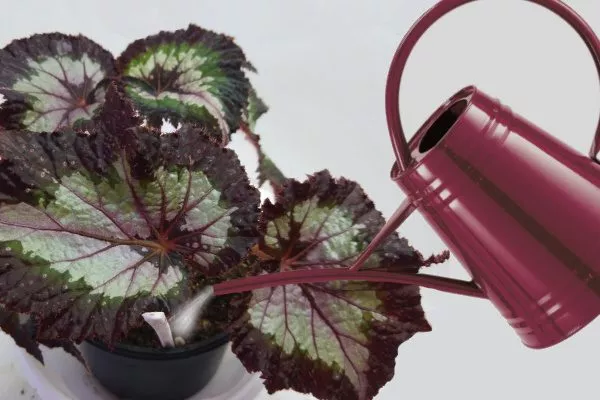
The plant requires water when the soil around it has dried out to a depth of 1-2 cm. Therefore, in winter, begonias should be watered no more than once every 10 days. Excess moisture can lead to root rot, while too little moisture can lead to tuber death.
Before watering, prepare the water. To do this, pour it into an open container and let it sit for 24 hours. Some gardeners water begonias using the immersion method:
- Select a suitable container whose dimensions are slightly larger than the pot.
- Fill it with water.
- Place the pot there.
- Wait until the liquid is absorbed into the soil through the drainage holes.
- Remove the plant and blot the bottom of the pot with paper towels.
- Return the begonia to its usual place.
Temperature conditions
A temperature of 15-16°C is sufficient for the plant's well-being. However, in winter, heating systems are constantly running, making it difficult to maintain the required temperature. Therefore, if the temperature rises to 22-25°C, increase the frequency of watering.
If you're dealing with a blooming begonia, it's best to avoid such situations. High temperatures and excessive moisture will stimulate further growth. However, in winter, there's not enough natural light, causing the plant's shoots to thin, stretch, and gradually become deformed. The foliage turns pale and becomes sparse.
To slow down the begonia's life processes, it is placed in a place with low temperatures and watered only when necessary.
Humidity
Begonias should be kept in a room with high humidity. If this isn't possible, you can increase it using other methods:
- at the beginning of the heating season, thoroughly wet a towel and throw it over the radiator;
- a container with water is placed next to the pots and filled as needed;
- install a humidifier in the room;
- Spray the plant with a spray bottle, being careful not to let any water drip onto the leaves. Otherwise, the begonia will develop brown spots.
Lighting
The plant dislikes direct light. Therefore, place the begonia pot in a semi-dark area or in a spot with diffused sunlight. Insufficient light causes the plant's foliage to fade. To avoid this effect, move the pot closer to a window.
If your begonia's condition worsens, you need to provide it with artificial lighting, adding about 6 hours of daylight. Electric bulbs are a good option.
Top dressing
If the begonia is one of those species that bloom in winter, it is fertilized once a month with a mineral concentrate.
Trimming
If the begonia is in good condition during the winter, gardeners refrain from pruning. The next step is to remove all dried and wilted leaves in the spring.
What to do during the awakening period?
In March-April, return the begonia to a cool windowsill. After a few days, increase the amount of water during watering. Once the plant has adjusted to its new location, it will bloom again.
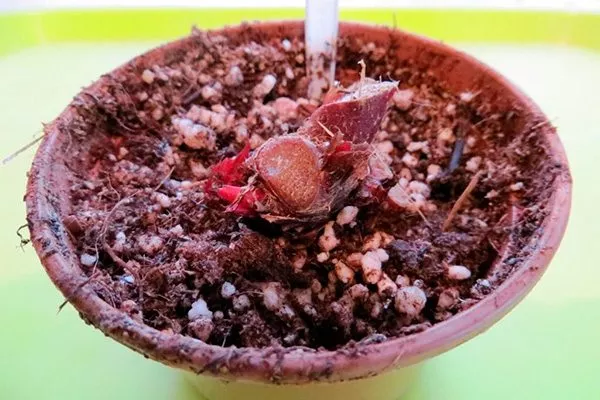
If the roots have filled the entire space of the pot, the begonia is transplanted into a new container:
- Disinfect the soil (heat in a microwave oven).
- Wash the dishes thoroughly.
- Place a layer of expanded clay on its bottom.
- Cover it with a small amount of charcoal. The next layer will be a couple of centimeters of soil.
- Remove the begonia from the old pot.
- Shake the soil off the roots, cut off any dead parts, and wash everything else with a weak solution of potassium permanganate.
- Place the plant in a new container without burying the root collar.
- Fill with fresh soil and compact lightly.
Possible problems and diseases
Most problems begin after mistakes in plant care:
- Dry leaf edges indicate low humidity or uncomfortable temperatures. It's recommended to move the pot to a different location.
- Deformed foliage indicates proximity to heating devices. In this case, move the begonia to another room.
- Stem rot and damaged roots indicate too much moisture in the soil. If water has accumulated in the tray, it's recommended to drain it and reduce the frequency of watering.
- Leaf drop indicates the plant is over-chilled. Move the plant away from the windowsill and protect it from drafts.
Begonias can be affected by powdery mildew and cucumber mosaic virus. These diseases cause spots on the leaves, gradually leading to the death of the plant. At the first sign of disease, begonias should be quarantined and regularly treated with fungicides, following the instructions.
Finally, watch a video on how to preserve begonias during the winter:
In winter, begonias don't require much attention. All that's required of their owner is to keep an eye on the flower's condition. With the arrival of spring, the rested plant will delight with abundant blooms and vibrant colors of its dense foliage.