
Tuberous begonias attract attention with their magnificent blooms throughout the summer. This plant is most often used to decorate balconies and gardens, but can also be successfully grown indoors. The preferred method of planting is from tubers, but propagation by seed or cuttings is also possible.
Tuberous begonia: description
Tuberous begonia is a small flowering plant resembling a miniature bush with beautiful, vibrant flowers and stems approximately 30 cm long. The name of this begonia species refers to its tuberous roots, which serve as a means of reproduction.
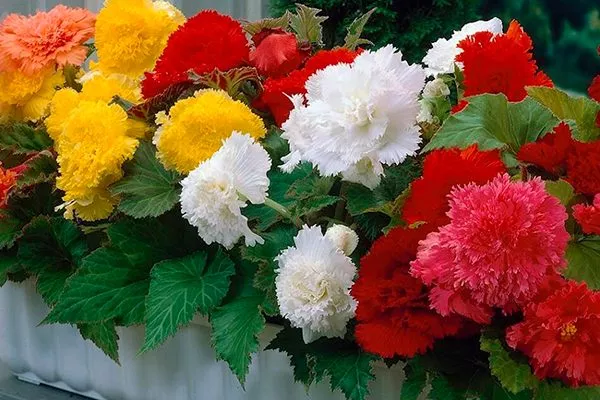
Leaves are characterized by short petioles, varied shapes (often heart-shaped), shine, and density. Characteristics of tuberous begonia species:
- The most famous variety is the large-flowered variety. Its flowers have beautiful serrated edges, reminiscent of roses, carnations, camellias, or peonies. The variety of flower shades includes red, yellow, orange, pink, white, and burgundy, as well as two-tone variations.
- Trailing tuberous begonias are bushy plants with long, drooping stems reaching 30 cm or more. They boast dense foliage and form beautiful inflorescences, making them an excellent choice for balconies and hanging pots.
- Multiflora, or multi-flowered begonias, impress with an abundance of single and double flowers, as well as attractive, fuzzy leaves in a variety of shades. These low-growing plants make a striking accent in garden design thanks to their abundant blooms and decorative foliage.
The roots grow in the top layer of soil, spreading outward, and take the form of smaller, flattened or rounded tubers, resembling a jagged potato. Small roots grow from the base of the tubers, providing the plant with nutrients from the soil.
Varieties
There are many varieties of tuberous begonia, each characterized by an attractive appearance and unique characteristics.
| Name | Flower type | Plant height (cm) | Flowering period |
|---|---|---|---|
| Chanson | Terry/semi-double | 30-40 | Summer-autumn |
| Bolivian | Elongated petals | 30 | Late spring - early autumn |
| Matilda | Terry | Compact | Until October |
| Olivia | Terry | Flower diameter 16-18 cm | Summer-autumn |
| Scarlett | Heart-shaped leaves | 25-35 | Summer-autumn |
| Party Dress | Terry | 30 | Summer-autumn |
Chanson
The Chanson series of begonias features a variety of cultivars, offering a range of colors: white, yellow, red, and orange. These begonias offer a variety of flower shapes, offering both double and semi-double varieties.
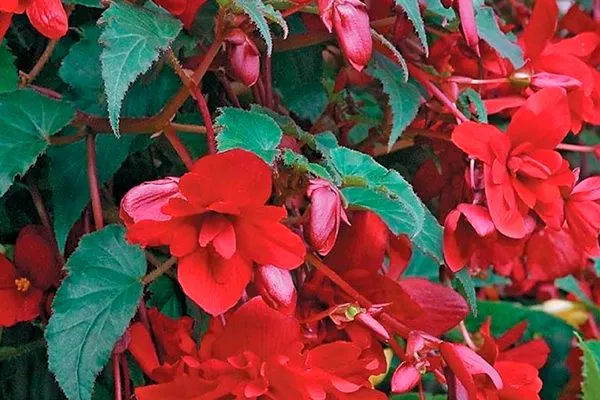
The flowers are large and clustered in abundant inflorescences. The stems range in length from 30 to 40 cm. When fully open, the flower reaches a certain diameter.
Bolivian
Begonia boliviana is a collection of diverse varieties (Copacabana, Santa Cruz Sunset, Bossa Nova, etc.). The initial shoots of these plants grow upward, but when they reach approximately 30 cm in height, they begin to descend, creating a cascading effect.
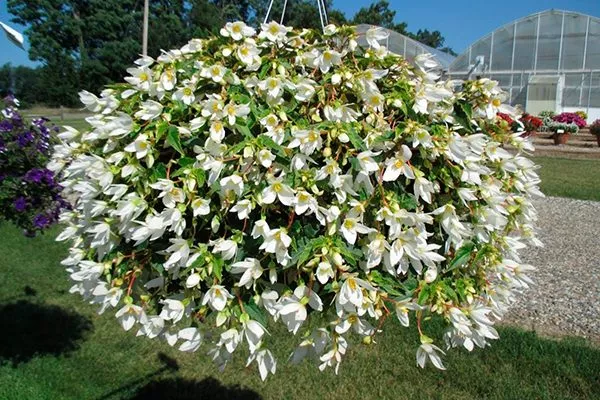
The leaves of this begonia species differ from those of more compact varieties—they are smaller and more pointed. The flowers are striking in their unusual shape, consisting of several elongated petals, usually four to five in each. They are grouped in clusters of three on racemose inflorescences.
Flower shades can range from red and orange to pink and white. The flowering process of the Bolivian begonia begins in late spring and continues until the first autumn frosts.
Matilda
This plant produces delicate white flowers with pink edging at the petal tips. The pink color intensifies with age. This variety's flowers are double and quite large, reaching a diameter of 14 to 18 cm when fully open.
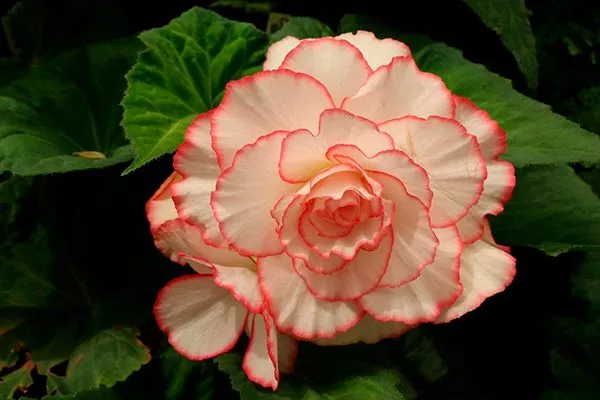
The petals have a wavy shape. Begonia Matilda is known for its abundant blooms, delighting with neat flowers even until October. The bush is compact, although the leaves are large.
Olivia
The Olivia variety not only boasts an attractive appearance but also a captivating fragrance. The blooms of this variety reach 16-18 cm in diameter and are a delicate apricot color.
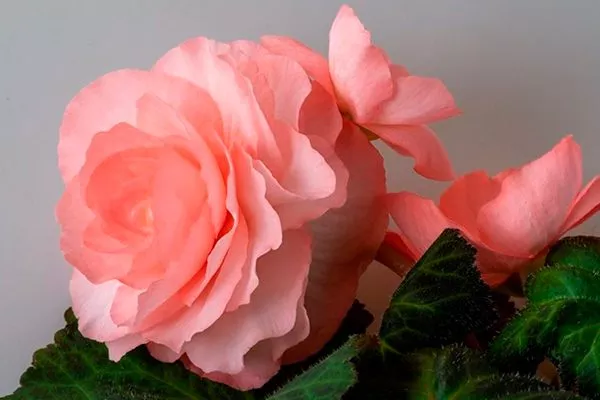
The flower's double petals gradually decrease in size toward the center. When blooming, the begonia fills the air with a rose-like aroma.
Scarlett
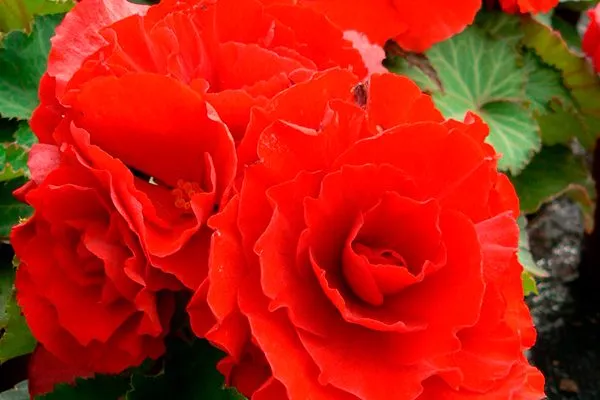
Scarlett is an impressive low-growing perennial, reaching a height of only 25-35 cm. The plant's leaves are rich green, heart-shaped, and edged with jagged teeth.
Party Dress
Begonia 'Party Dress' is a true beauty with vibrant orange-yellow flowers edged in red. This variety's flowers are distinguished by their large, double structure. The bush grows to a height of no more than 30 cm, but blooms profusely.
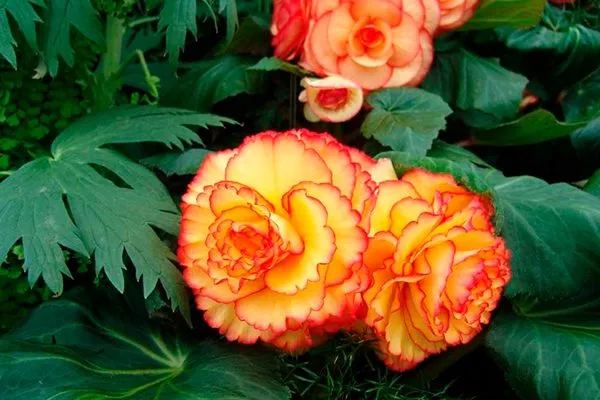
The edges of the petals are fringed, creating a ruffle-like effect. These begonias have a striking appearance, and they make a wonderful addition to any garden or balcony.
There are various varieties of tuberous begonias known as Scottish hybrids, which get their name from the breeding work carried out by the Scottish Begoni Society.
Basic rules of home care
Caring for tuberous begonias is not much different from growing other plants. However, it's important to follow certain guidelines when performing gardening procedures.
Position and lighting
Tuberous begonias grown indoors require plenty of bright, indirect light, avoiding direct sunlight. A southwest- or southeast-facing windowsill is ideal.
During midday sun, it's recommended to protect the bushes from bright light to prevent sunburn on the foliage. This promotes healthy growth and development.
Temperature and humidity
To maintain normal growth, it's important to maintain a constant, moderate temperature of 22-25°C. During hot summers, the plant may bloom less profusely and grow more slowly due to stress. In such cases, move the plant outdoors, preferably to the shade under a tree.
Maintaining high humidity indoors promotes faster growth and abundant flowering. Avoid splashing water on flowers and foliage to prevent brown spots. For safe and effective humidification, place an open container of water near the plant.
Watering and fertilizing
Water potted begonias generously, but avoid allowing water to stagnate around the roots. Even a single instance of overwatering can lead to rot at the base of the stems or tubers. Water begonias with standing water, slightly warmer than room temperature.
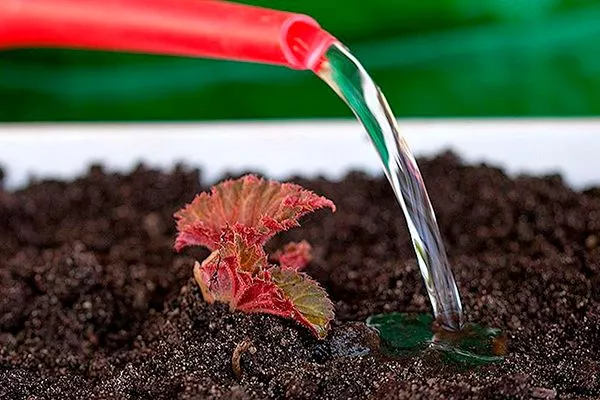
- First feeding: 2 weeks after emergence, use a fertilizer with a high phosphorus content.
- Second feeding: during the budding period, use complex mineral fertilizer.
- Third feeding: after the first flowering, use fertilizer with potassium to maintain the plant.
To improve plant growth and flowering, fertilize regularly during the growing season. Fertilize only two or three times, using a complete mineral fertilizer for flowering plants. These measures will help maintain the health and beauty of your plant.
Pruning and replanting
Tuberous begonias are repotted primarily as needed, usually due to limited pot space. This process is traditionally carried out in the spring, before the shoots begin to actively develop, with the optimal time being early March.
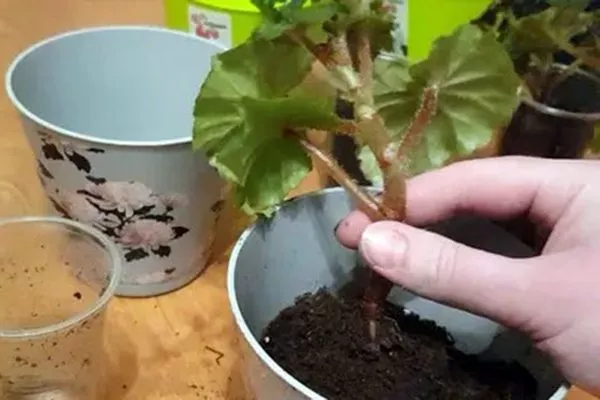
Follow the instructions:
- Remove the tuber from the previous pot and clean it thoroughly. Inspect it carefully for damage, and trim off any rotten or damaged roots.
- If the tuber itself has rotted, carefully remove the damaged area with a sharp knife and treat the wound with crushed activated charcoal.
- Before subsequent planting, disinfect the plant tuber by soaking it in a weak solution of potassium permanganate for 20-30 minutes.
These measures will help ensure the health and well-being of your indoor begonia.
Preparing for the dormant period, storing tubers
In early fall, stop fertilizing and reduce watering your tuberous begonia. Remove excess flower buds to preserve nutrients in the tuber.
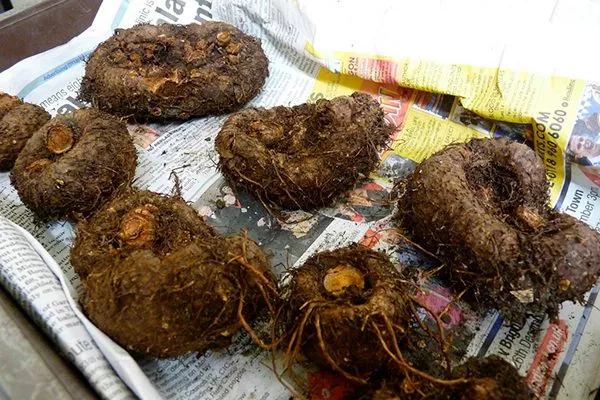
Follow the recommendations:
- Leave plants grown outdoors until the first frost. If the above-ground portion hasn't died back naturally by mid-October, trim it back to a height of 2-3 cm.
- Dig up the tubers and place them in boxes to dry in a warm, ventilated area.
- After drying, remove the remaining shoots and send them for the winter.
Young first-year plants grown from seed do not enter a dormant period, continuing to develop underground parts. During winter, keep them in cooler conditions with moderate watering. Store dug-up tubers in plastic bags with sawdust, dry peat, or sand in the refrigerator or basement.
Overwinter the tubers left in pots filled with soil in cool conditions with limited watering, covering the surface with paper if necessary. During this period, begonias are dormant from November to February, and with proper care, the planting material retains its characteristics.
Planting tuberous begonias at home
Planting tuberous begonias isn't complicated, but it does require some responsibility. Choose the right pot and soil for the job to ensure your plant will delight you with vibrant blooms in the future.
- ✓ Optimum temperature for sprouting tubers: +20…+22°C.
- ✓ Required air humidity for young plants: 60-70%.
Selection and preparation of soil
For planting tuberous begonias, it's recommended to use fertile, loose soil with a neutral pH. If you're preparing the soil yourself, use sand, peat, and leaf mold in a 1:1:3 ratio. Adding organic fertilizer, such as well-rotted cow manure, will enrich the soil beforehand.
The process of planting tubers begins in pots in early spring, choosing medium-sized containers where the height is approximately equal to the width. The pot's volume is calculated based on the size of the tuber, leaving approximately 3 cm of space between the tuber and the rim of the pot.
The finished seedlings are spaced at least 30 cm apart in the flowerbed. When choosing a planting site, choose a sunny but sheltered corner. In the fall, before the onset of severe cold, the tubers are dug up and stored in a cool, dark place.
Size and shape of the pot
The pot size directly depends on the size of the planting material, so it's important to choose the optimal size. The pot shouldn't be too wide or too deep. After planting, ensure there's a 3-4 cm gap between the edge of the pot and the top of the tuber.
Process
When a tuber is ready for planting, remove any old, dried roots. To restore the water balance and disinfect it, soak it in a fungicide or a weak solution of potassium permanganate for about half an hour.
When preparing the pot, fill it one-third full with drainage material, add soil on top, and form a small hole. Place the tuber in the hole, then lightly cover it with soil, leaving the growing points exposed.
When the begonia begins to grow actively and produces shoots approximately 4 cm tall, add a little more soil to the pot, completely covering the tuber. When young tubers up to 5 cm in size sprout, leave no more than three shoots. For larger and older tubers, removing the shoots is not necessary.
Planting and care outdoors
Planting and caring for tuberous begonias outdoors involves several steps. Let's take a closer look:
- Selecting a location. Choose a location with partial shade or filtered light. Begonias prefer bright, but not direct, sunlight.
- Preparing the soil. The soil should be fertile, loose, and well-drained. You can add sand to improve drainage. Add compost or humus to improve soil fertility.
- Planting tubers. Plant the tubers in boxes or directly into the ground at a depth of about 5-7 cm and spaced about 30 cm apart. Allow sufficient space between plants to allow for free spreading.
- Watering. Water the plants. Keep the soil moist, but avoid standing water, especially during rainy periods.
- Care. Carefully monitor the soil and maintain moderate moisture. Fertilize with a flowering plant fertilizer periodically during the growing season. Remove faded flowers and old leaves to encourage new blooms.
- Frost protection. If frost is a possibility in your area, consider maintaining the air temperature around your begonias or temporarily sheltering them from the elements.
- Transfer indoors. At the end of the season, before the onset of frost, the tubers can be dug up and moved indoors for wintering, especially if the climate is cold.
By following these steps, you can successfully grow tuberous begonias outdoors and enjoy their colorful blooms.
Methods of reproduction
There are several ways to increase the number of begonia seedlings. Gardeners choose to propagate by tubers, cuttings, or by growing from seed.
Tubers
At the end of the growing season, the top of the plant dries out. Removing the dried portion is an essential part of care. Follow these instructions:
- Dig up the tubers, clean them lightly, and treat them with a weak solution of potassium permanganate or a fungicide. Then transfer the tubers to a wooden container filled with dry peat or sand and store them indoors at a temperature of 5 to 7°C.
- In March of the following year, plant the tubers in boxes filled with fertile soil to stimulate germination. Gently press the tubers into the soil, burying them halfway.
The growing substrate replicates the composition of the soil for planting and includes leaf soil, humus, sand and peat in appropriate proportions.
Cuttings
Tuberous begonias can be propagated by cuttings. Well-developed side shoots are suitable for this purpose. Step-by-step instructions:
- Select healthy cuttings, which you can then plant in soil mixture or place in a glass of water.
- When planting in soil, deepen the cuttings by 2-3 cm. To prevent the cuttings from rotting, sprinkle the surface of the soil mixture with a thin layer of calcined river sand.
- To create optimal sheltering conditions, cover the cuttings with a plastic bag or glass jar.
Growing from seeds
It is recommended to sow between February and March. Use a moisture-retentive, loose substrate. Spread the seeds evenly over the soil surface and moisten them with a spray bottle. Then cover the seeds with transparent film or glass. Maintain a temperature of 24-27°C until the first shoots appear.
Provide regular moisture and ventilation to the seeds. The first shoots usually appear within 1.5-2 weeks. After this, move the seedlings to a cooler location (18-20°C). Transplant the seeds twice: once when the second leaf blade appears, and again 20-30 days later.
When the plants reach a height of about 10 cm, transplant them into individual small containers. Active tuber growth begins in the first weeks of autumn. With proper care, the tubers will reach a size of about 1.5 cm by the beginning of the dormant period.
Possible problems
Tuberous begonias can be susceptible to various problems. These may include:
- Fall of leaves. If the room is too cold, begonias may react by losing their leaves. Provide a warm location for the plant.
- Wilting of leaf blades. Insufficient moisture can cause leaves to wilt. Regularly maintain optimal humidity levels for the plant.
- Sparse flowering. Nutrient deficiencies and insufficient light can result in poor blooms. Fertilize and move the plant to a brighter location.
- Drying leaves. Low humidity and high temperatures can cause leaves to dry out and lose their turgor. Maintain optimal indoor conditions.
- Yellowing of leaves. High humidity and a cold environment can cause leaves to turn yellow. Provide a warmer location for the plant.
- Whitish spots. Powdery mildew appears. Apply fungal control products.
- Spots of brown and black shades. The plant may be affected by a bacterial disease. Use a fungicide.
- Foliage rot. Stagnant moisture in the substrate and water spilling onto the leaves can cause rot. Ensure good drainage and avoid overwatering.
- Pests. Aphids, spider mites, and whiteflies can attack begonias. Use insecticides to control them.
Growing tuberous begonias is a fascinating and accessible process for gardeners. This plant will delight you with its magnificent blooms, diverse varieties, and ease of care. By following the planting, propagation, and care recommendations, you can enjoy the beauty of begonias both on your balcony or in your garden, as well as indoors.