
Ornamental foliage begonias rightfully occupy a high position in the hierarchy of houseplants, and the diversity of their species can satisfy even the most discerning preferences. These plants amaze the imagination with their foliage, creating a cozy atmosphere in the home. Learn the basic care requirements and give them the care they deserve.
Description of the ornamental foliage species
These plants are evergreen shrubs. There are a variety of flowering and non-flowering species, but their colorful leaves are what draw most attention. Leaf blades can be monochromatic or have two- or three-colored patterns, with contrasting edges and various inclusions.
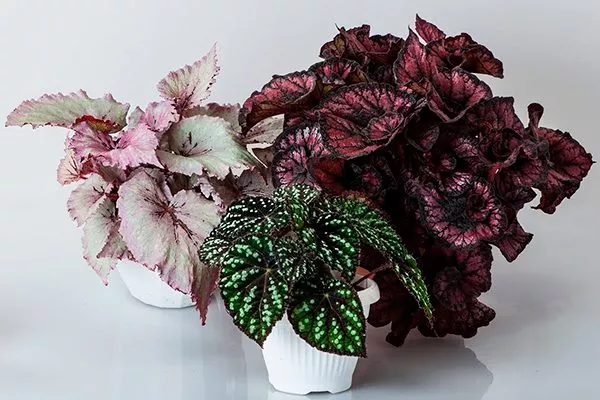
A characteristic feature of the leaves of these begonias, similar to flowering varieties, is their asymmetrical shape. However, the leaves can vary in size, shape, the presence of serrated edges, and even take on a spiral shape.
Varieties
Breeding advances annually expand the range of ornamental begonia species. Despite generally belonging to the same category, plants can vary significantly in appearance. To better understand this diversity, let's consider the possible variations.
| Parameter | Miniature varieties | Medium grades | Large varieties |
|---|---|---|---|
| Sheet size | 5-10 cm | 10-20 cm | 20-30 cm |
| Bush height | 10-20 cm | 20-50 cm | 50-150 cm |
| Examples | Tiger, Bauer | Charlotte Chiffon | Cuff |
| Growth rate | Slow | Average | Fast |
By type, color and size of leaves
Ornamental begonia leaves range in size from 10 to 30 cm long and 5 to 25 cm wide. Miniature varieties include 'Tiger,' 'Bauer,' 'Mini Mary Christmas,' and 'Baby Dress.' Medium-sized varieties include 'Charlotte Chiffon,' 'November Frost,' and 'Pearl de Paris,' while large varieties include 'Cuff Begonia' and 'Kane Begonia.'
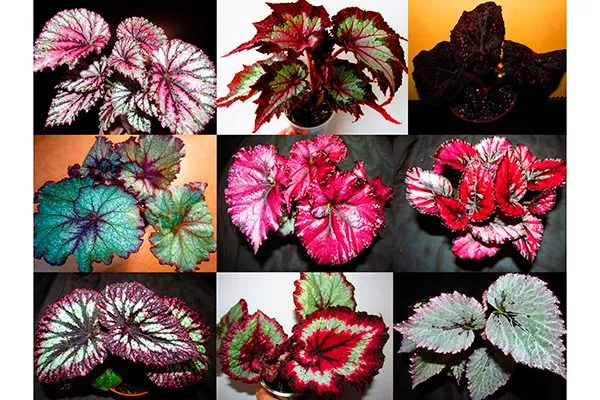
The shape of the leaves varies:
- Round, like Pavonina, Rohceart, Desert Dream, Acetosa.
- Elongated-oval, like Pearle de Paris, Merry Christmas, Listida, maculate.
- Heart-shaped, like Inca Night, Evening Glow, Silver Jewel, Stained Glass.
- Snail-shaped, like Lillian, November Frost, Rohceart, Escargot, Maid Marion.
- Feathery, like Gryphon, Little Brother Montgomery, Benitochiba, Carolina leaf.
The leaf margin can be entire, serrated, or deeply lobed. Some cultivars, such as 'Evening Glow,' 'Escargot,' and 'Helen Lewis,' have entire margins, while 'Purple Snow,' 'Silver Greenheart,' 'Chocolate Cream' have serrated margins, and 'Black Fang,' 'Grifon,' and 'Regal Minuet' have deeply lobed margins.
The leaf surface can be smooth and even, or ribbed. The underside is often smooth and hairy, green or reddish in color, with distinct veins. The leaf color scheme can change as the plant grows, achieving maximum contrast with adequate light.
By the height of the bushes
Ornamental foliage begonias come in a variety of heights and shapes. Let's take a closer look:
- Low with creeping stems. Their height does not exceed 5-20 cm. Examples include the varieties Mini Merry Christmas, Dollar Down, and Bindweed.
- Average. This category includes plants with a height of 20-50 cm, such as Mini Merry Christmas, Dollar Down, and Bindweed.
- Tall. These begonias reach heights of 50-150 cm. They include many hybrid varieties that form lush bushes without much pruning. Examples include Black Velvet, Hallelujah, Black Prince, Black Fang, November Frost, and Lilian.
There are also large cane varieties. They are characterized by distinct thickenings at the stem nodes, giving them a resemblance to reed shoots. These include Maculata, Superba, and Mallet.
By the presence of flowering and the shade of the petals
All ornamental foliage begonias are flowering plants, capable of producing buds throughout the warm season. Their flowers, small and simple, are gathered in sparse racemes with drooping peduncles. The buds emerge from the leaf axils at the top of the shoot.
Ornamental foliage begonias come in a variety of colors. White varieties include Charm and Black Fang, while pink varieties include Chocolate Cream, Fireworks, Chalykusha, and Burning Passion.
Popular species and varieties
Of the wide variety of ornamental foliage begonias, some have gained particular popularity among gardeners. They are appealing not only for their unique appearance but also for their ease of adaptation to indoor conditions. Growing them is relatively straightforward.
Mullet
The Mallet family includes ornamental shrubs with reed-like stems and leaves of unusual texture, varied colors, and shapes. Almost all of them are hybrids between Cane begonias and begonias from other groups.
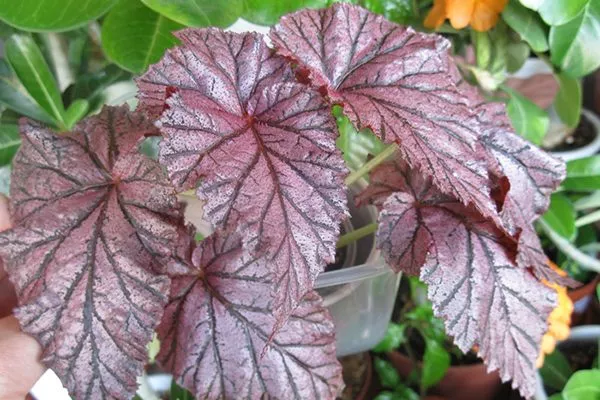
A prominent representative of this family is the Arthur Mallet cultivar. This plant, undemanding in terms of growing conditions, is distinguished by its particularly beautiful leaves, which have a satiny pink sheen.
Spotted or Speckled (Maculata Raddi)
A herbaceous subshrub with an upright stem that, under favorable conditions, can reach approximately 1 m in height and width. It is characterized by elongated, asymmetrical, heart-shaped leaves with a sloping center, 10-15 cm long and about 5 cm wide.
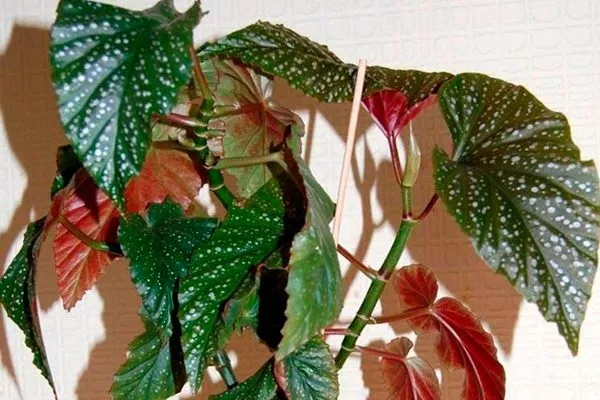
The tips of the leaves are pointed, giving them a visual resemblance to angel wings, which is why begonias are sometimes called angel wings. The leaf blades are dense and glossy, highlighted with silvery-white spots against a green background, while the undersides take on russet-brown-red hues.
The unusually shaped flowers are white or light pink, forming small clusters on drooping stalks. Blooming continues from April to July.
Coral (Corallina)
The shrub reaches a height and width of over 50 cm, with elongated-ovate leaves that can reach up to 25 cm in length and 7 cm in width. The leaves have a serrated edge and a pointed tip, and are dark green with white-silver spots or splashes. In summer, a red tint appears on the underside.
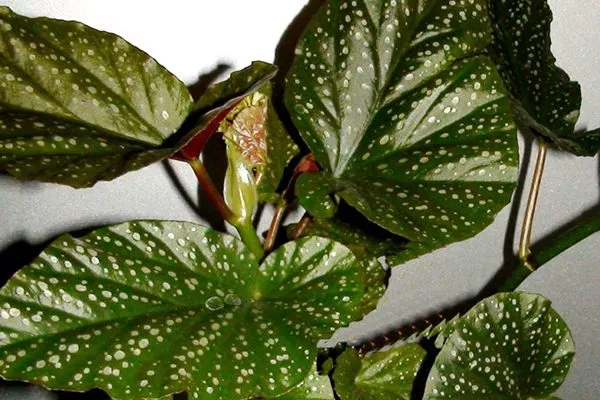
Flowering usually begins in spring, and the buds form from fused petals in various shades of red, creating the appearance of luxurious drooping clusters reminiscent of berries. The flowers have a delicate and refined fragrance. Popular begonia varieties include Lucerna and President Carnot.
Carolina leaf (Carolineifolia)
It is one of the oldest houseplants and is native to Mexico. Its creeping stems are approximately 4 cm thick. Large, palmately dissected leaves are supported on long, yellow-green petioles, reaching 40-45 cm in length.
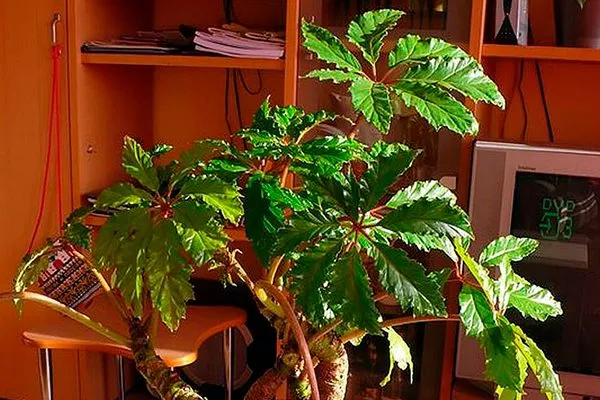
The leaves themselves are no more than 35 cm long, and their surface is clearly veined. With age, the leaves fall, leaving scale-like marks on the stems. The flowers are pinkish or yellowish-green, gathered in loose, racemose inflorescences.
Metallic (Metallica)
This subshrub is characterized by strong, upright, and well-branched shoots. Its name reflects the color of its leaves: the undersides are purple, while the front is green with red veins and a metallic sheen.
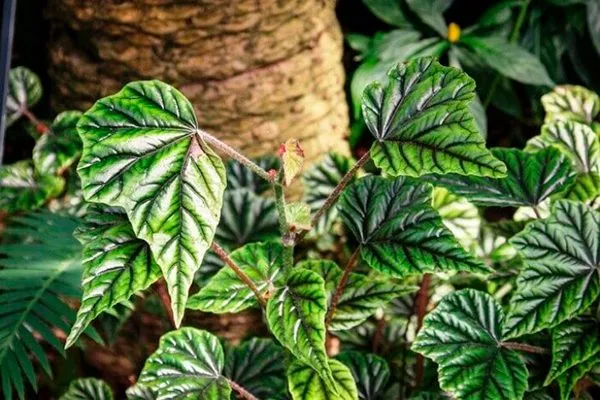
The stems and leaves are covered with short, bristly hairs. Throughout the summer, this begonia variety produces small white flowers covered with pinkish hairs on the outside.
Crednera or Pig's Ear (Credneri)
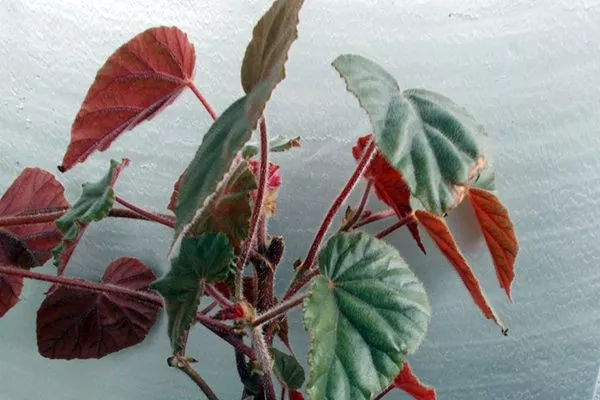
This begonia is the result of a hybridization of two species, the Metallic and the Scarf. The leaves are light green with a metallic sheen on the upper surface and a bright pink hue underneath. Under light, they become translucent, creating an effect reminiscent of an auricle. This variety belongs to the bushy begonia species.
Royal or Rex
Begonia is compact, reaching a maximum length of 50 cm. It is characterized by a thick, creeping rhizome that protrudes above the soil surface. The stem is horizontal and spreading, eventually forming drooping shoots.
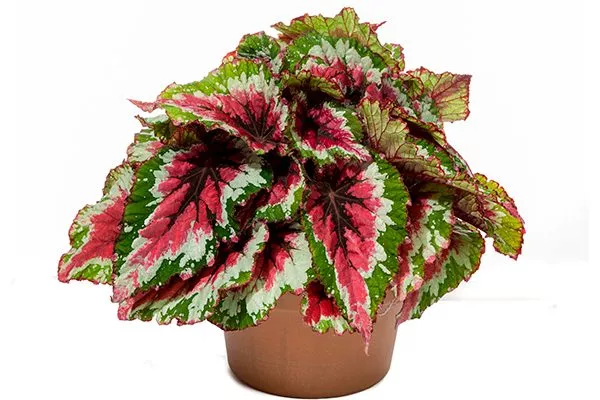
The plant's leaves are large and broadly oval, reaching up to 30 cm in size. They are heart-shaped at the base and have sharp edges. The leaves come in a variety of colors, including dark green, bronze-brown with silver spots, or cherry red with a metallic sheen.
The upper surface of the leaf is velvety and slightly pimpled, covered with short hairs, while the underside is highlighted with raised red veins. The plant produces inconspicuous flowers that are usually removed.
Mason or Maltese Cross (Masoniana)
This strikingly beautiful indoor begonia boasts a compact and striking appearance. Its roots are creeping, thickened, and covered with numerous hairs.
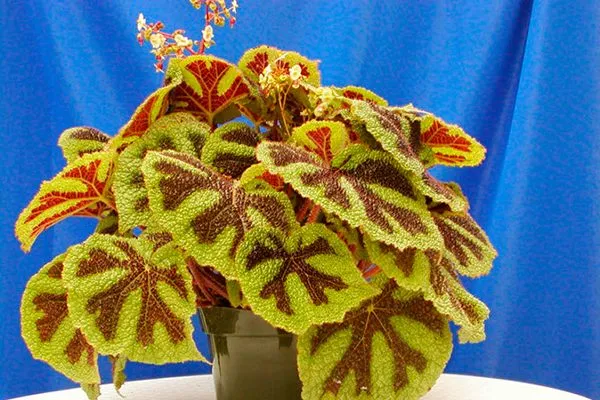
Begonia leaves have a bumpy texture, are rounded and angular, asymmetrical, and light green. Each leaf has a prominent crimson pattern in the center, reminiscent of a five-pointed Maltese cross. Over time, the overall background of the leaves becomes silvery, adding elegance to this plant.
Red-leaved (Erythrophylla or Feastii)
The stem is slightly shortened, upright, and noded. The leaves are long, round, either entire or dissected into several segments, with a smooth, almost glossy surface. The upper surface of the leaves is green.
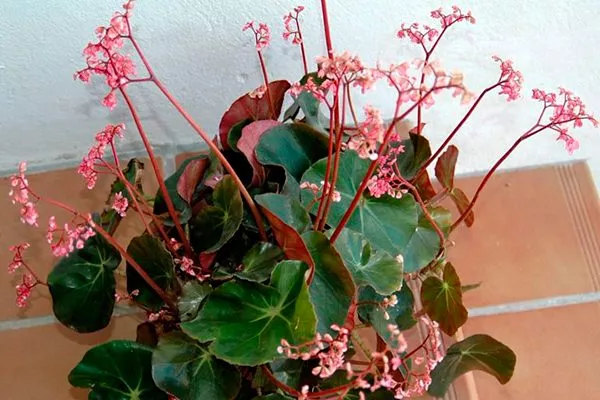
The underside of the leaves can be red, brownish, or purple, with prominent white veins. The leaf margins can be serrated or wavy. Flower colors can range from white, pink, yellow, to red, with a variety of shades surrounding them.
Heracleifolia
The stems are thick, green or cherry-brown in color, and covered with long, dense hairs. This plant is distinguished by its asymmetrical leaves, which are large (in the wild, reaching up to 30 cm), palmately dissected, with sharply serrated edges and a heart-shaped base.
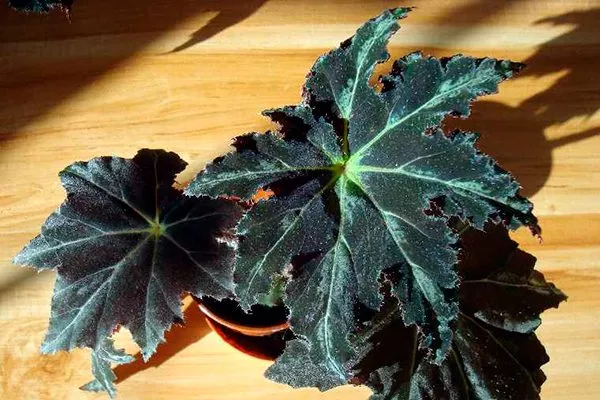
The leaves can be green, cherry-red, or reddish-brown. Silvery-gray veins are evenly distributed across the leaf surface. The flower stalks are long, the inflorescences are large, and the flowers, though inconspicuous, are light pink and unusually shaped.
Collared (Manicata)
The bush of this species is quite large and abundantly branched. Its leaves, reaching 30 cm in diameter, are large, light green blades. The upper surface of the leaves is glossy, while the lower surface is covered with cilia.
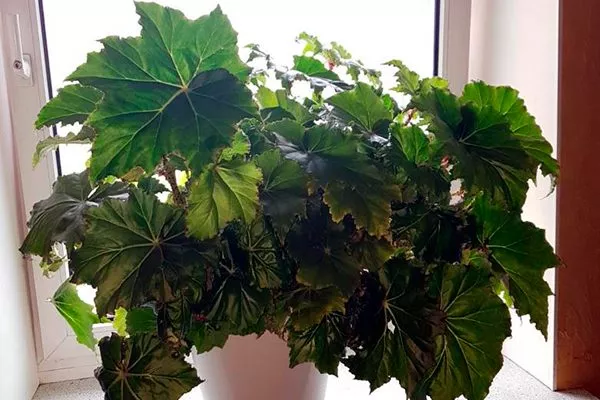
The edges of the leaf blades are jagged and covered with small hairs. This begonia's name comes from the formation of a distinctive "cuff" of red hairs at the junction of the petiole and leaf.
Tiger
This begonia variety has gained popularity due to the exquisite beauty of its leaves and the compact habit of its bush. Small white flowers appear in winter. Tiger begonias have almost no aboveground stem, and long, drooping leaves grow directly from the root system. The bush typically grows to a height of no more than 30 cm.
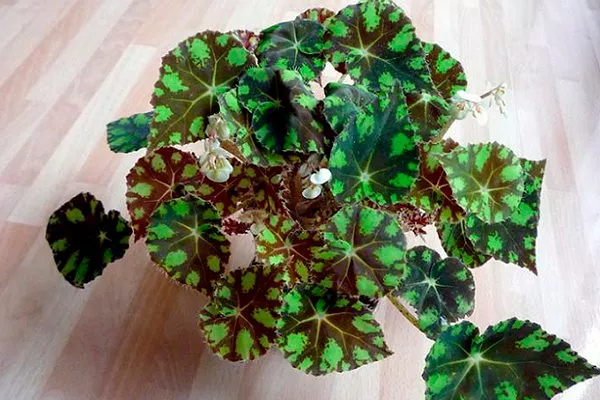
The leaf color is particularly striking: green with spots in shades of light green, brown, or black. The undersides of the leaves are pubescent. The plant is undemanding and thrives in shade and partial shade.
Bauer (Bowerae)
This is a hybrid of the tiger begonia. This compact plant reaches up to 15 cm in height. The heart-shaped, velvety leaves with rounded edges possess a unique tiger-like coloring: contrasting light green spots, shimmering with a bronze tint, stand out against a dark, almost black background.
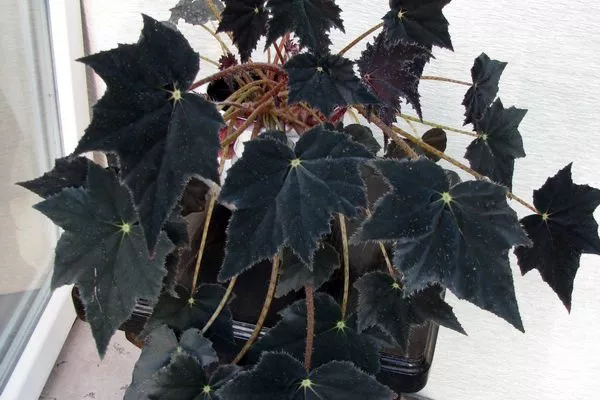
The leaf edges are edged with milky-white cilia, and the veins are clearly visible. The leaves are supported on long, red petioles. Flower stalks emerge in the spring directly from the creeping rhizome, from which basal rosettes form. The flowers are gathered in umbel-like racemes.
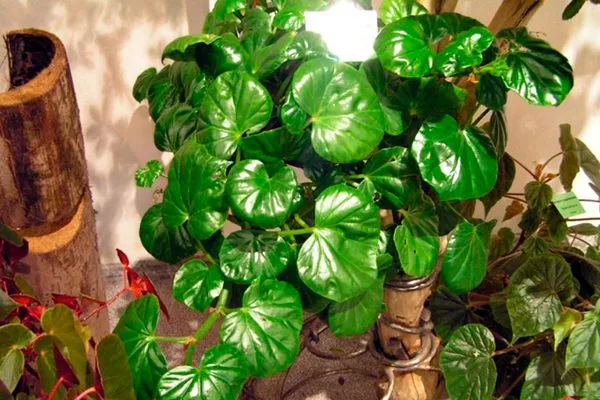
Bindweed (Convolvulacea)
The leaves of the morning glory begonia form a lush bush about 20-30 cm tall, although under optimal growing conditions, the plant can reach 50 cm. The flowers are small and modest, but the plant's overall appearance is offset by the lush foliage, creating an attractive decorative solution.
Caring for decorative foliage begonias at home
Ornamental foliage begonias are easy-to-grow and resilient. If they are neglected or various problems arise, they may suffer from leaf loss and deterioration in their overall health.

Lighting for foliage begonias
Due to their low light requirements, begonias offer the opportunity to use their luxurious variegated leaves to decorate not only windowsills, but also interiors, including bathrooms.
Intense shade can affect the beauty of the patterns, the density of the bushes, and the size of the leaves. Begonias will thrive in any sunny or partially shaded location.
The only thing you should pay special attention to is protection from direct sunlight. Begonias prefer indirect light, so even morning sun can cause leaf spots and damage their attractive appearance.
| Lighting type | Effect on the plant | Recommended varieties |
|---|---|---|
| North windows | Slow growth, pale patterns | Metallic, Hogweed-leaved |
| Eastern windows | Optimal development | All kinds |
| South-facing windows (with shading) | Brightly colored, risk of burns | Royal, Coral |
| Artificial lighting | Maintaining decorative appearance | Tiger, Bauer |
Comfortable temperature conditions
Begonias with attractive foliage thrive in room temperature conditions, preferring to avoid both cold and heat. Their ideal temperature range is between 15-20°C. It's important to avoid temperatures falling below 15°C, even for short periods in winter.
High temperatures can negatively impact the appearance of foliage, causing tips to dry out. If optimal conditions are difficult to achieve, humidification can help maintain a favorable environment for begonias.
Regular ventilation of the room containing begonias is important, as access to fresh air promotes the formation of beautiful leaves.
Watering and air humidity
Caring for these magnificent foliage begonias requires a simple and careful approach to watering. These plants do not tolerate stagnant water, preferring evenly moist soil that never dries out completely. In winter, adjust the watering schedule based on how quickly the soil dries out.
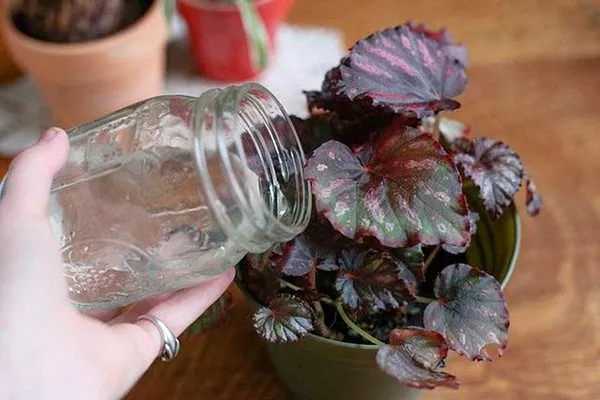
Some begonia varieties may require periods of rest, which necessitates more significant adjustments to the watering schedule, but most foliage begonias don't require such specific measures. Water should be provided at the same temperature as the ambient air.
When watering deciduous begonias, be very careful, as they do not tolerate moisture on their leaves and stems. Even the slightest drop can stain them, so misting is not recommended.
Fertilizers for deciduous begonias
Begonias appreciate fertilization, applied exclusively from March to October. Use specialized fertilizers for ornamental foliage plants. If fertilizers specifically formulated for begonias are available, it's best to choose those.
Fertilizer application schedule
- March-April: nitrogen fertilizers (NPK 3-1-2)
- May-June: complex (NPK 1-1-1)
- July-August: potash (NPK 1-1-3)
- September: Doses halved
- October-February: break in feeding
Transplantation and substrate
Repot decorative foliage begonias only when necessary, when they begin to feel crowded in their current containers. When repotting, choose pots 2-3 cm larger than the previous ones. Prefer wide, flat pots (where the height is smaller than the diameter).
The optimal time for this procedure is February or March. When repotting begonias, use nutritious and loose soils with an optimal pH of 5.8 to 6.5. Ready-made universal soils may be a suitable option.
If you are preparing the mixture yourself, use the following ingredients:
- Sand, leaf and humus soil with double the proportion of turf soil in equal quantities.
- Sand, leaf and humus soil with double the proportion of turf soil, peat in equal quantities.
Diseases and pests
Foliage begonias, like other houseplants, are susceptible to diseases, often caused by poor indoor climate. High humidity and poor ventilation can promote powdery mildew, while excess moisture and low temperatures can lead to gray mold.
These problems can be solved by using a fungicide solution and then implementing regular preventative measures. Important procedures include loosening the soil, proper watering, ventilation, ensuring optimal lighting, comfortable humidity, and temperature.
Insect pests such as aphids and spider mites can attack begonias. Control may involve using pesticides such as Dr. Foley and Actellic. Regularly cleaning the leaves of dust and dirt and regularly inspecting the plant will help prevent pest problems.
The nuances of reproduction of the species
Ornamental foliage begonias offer a variety of propagation methods for producing new specimens, and rooting is generally quick and easy. Propagation of foliage begonias is best done in the spring.
| Method | Rooting period | Success | The best varieties |
|---|---|---|---|
| Leaf cuttings | 25-30 days | 85% | Royal, Mason |
| Stem cuttings | 18-22 days | 95% | Coral, Collared |
| By dividing the rhizome | Immediately | 100% | All bush species |
| Seeds | 60-90 days | 40% | F1 hybrids |
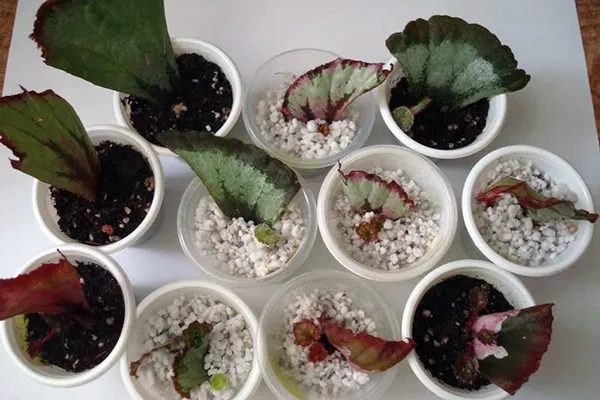
Among the best methods of propagation of this type of begonia are:
- Dividing the rhizome into large parts during transplantation. This can be done either manually or by cutting the trunk. Make sure there is a strong root cluster. Each division should have one or more buds and shoots.
- Rooting cuttings "with a heel" or parts of a leaf. Begonia leaf blades can be cut along the main veins, placing the cut side down on damp sand and pressing it down with pebbles. Rooting is done with bottom watering, at a slightly damp location, and in a bright location.
- Separation of apical cuttings with 3-5 leaves. After processing the cuttings, place them in water or plant them in standard begonia potting soil. Rooting occurs in slightly moist soil and in a bright location at room temperature.
Begonia can also be propagated by rooting leaf parts.
Key aspects of caring for ornamental foliage begonias include maintaining diffused light, moderate watering, protection from direct sunlight, and moderate humidity. Taking all these factors into account, growing ornamental foliage begonias becomes a fascinating and enjoyable experience.