
Growing Bolivian begonia is a fascinating and creative activity, bringing joy to both beginners and experienced gardeners. This plant, with its vibrant flowers and elegant forms, can enhance both indoor spaces and garden areas or balconies. Providing begonias with the right conditions is essential.
Breeding history
Hybridization between wildflowers and other Andean species was pioneered by the eminent horticulturist John Seden. He conducted extensive research at Veitch's nurseries, conducting a variety of experiments.
Seden paid special attention to an exotic plant presented at a special exhibition by Richard Pearce. Brought from the Andes, the plant was crossed with a Begonia weichii. This perfect fusion resulted in the first varietal hybrid of the tuberous species.
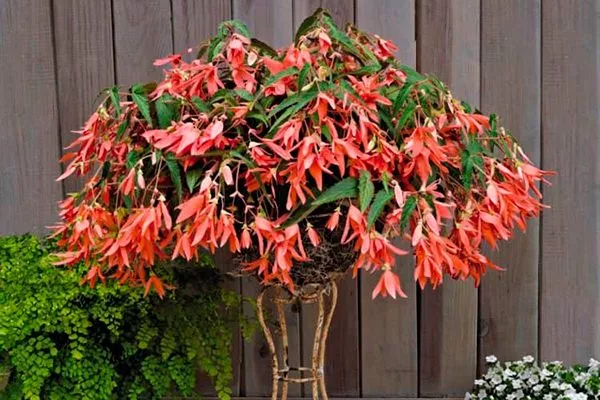
Following the successful experiment, the Bolivian begonia was used for a long time exclusively as a source material for creating various varieties of trailing plants. This was facilitated by the flower's natural ability to thrive on minimal soil.
Description of the flower and its features
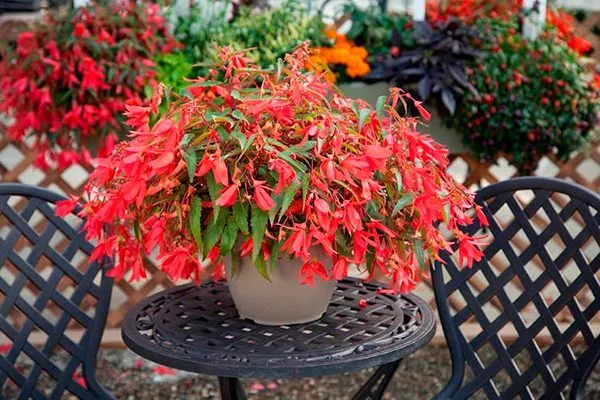
The Bolivian begonia is a magnificently beautiful flower that has caused quite a stir. Description and characteristics of the plant:
- Stems. Stems arising from a tuberous rhizome reach impressive lengths of up to 80 cm and typically either trail along the surface or hang down. The overall height of the flower ranges from 30 to 45 cm.
- Leaves. The lanceolate leaves are characterized by a rich green, light green, or almost emerald hue. They are decorated with distinct serrations along the edges.
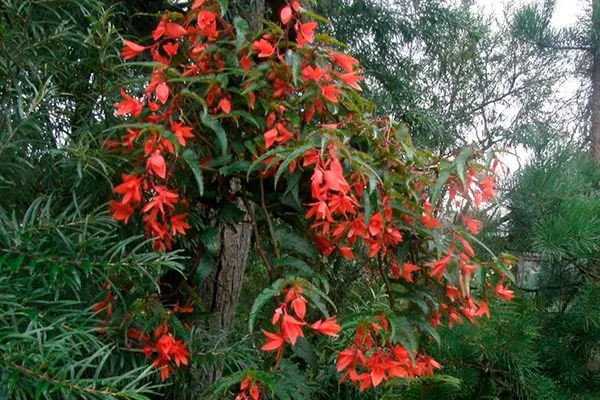
- Flowers. The vibrant orange-red flowers of this native variety adorn a short stem and resemble drooping stars, each composed of four segments. They are grouped in clusters of two or three.
- Root system. The rhizome-type, branched root system forms powerful, horizontally arranged tubers. Numerous lateral shoots extend in various directions, while the bulk of the roots are located closer to the surface, spreading widely.
- Seeds. After flowering, the begonia forms a wing-shaped capsule, within which numerous small seeds ripen. These can be carried considerable distances from the mother plant by winds and heavy rains.
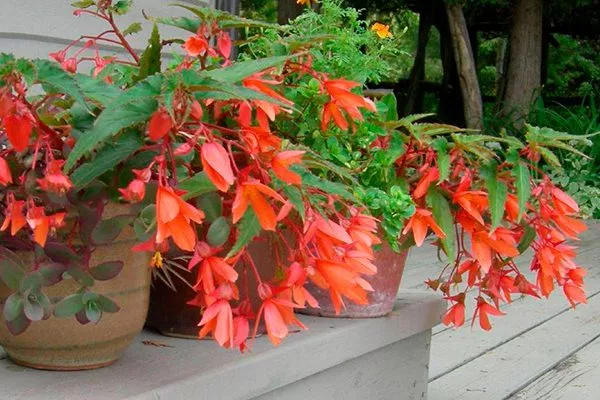
Florists note that this type of begonia attracts attention with its striking appearance and unpretentiousness, making it a beautiful and vibrant decoration for both natural landscapes and home greenhouses.
Pros and cons of the species
Varieties of Bolivian begonia
All varieties of Bolivian begonias are captivating with their rich colors and exquisite appearance. Each has its own unique characteristics.
| Name | Plant height | Flower color | Flower shape |
|---|---|---|---|
| Santa Cruz | 30 cm | orange-red | star |
| Copacabana | not specified | red | bell |
| Bossa Nova | 1.5 m | pink, red, orange, white | fuchsia |
Santa Cruz
At the initial stage of development, it appears as a small, neat bush with vertical shoots that lengthen, curve, and droop with age. At maturity, it reaches a height of no more than 30 cm, forming a bush with spreading stems up to 50 cm long.
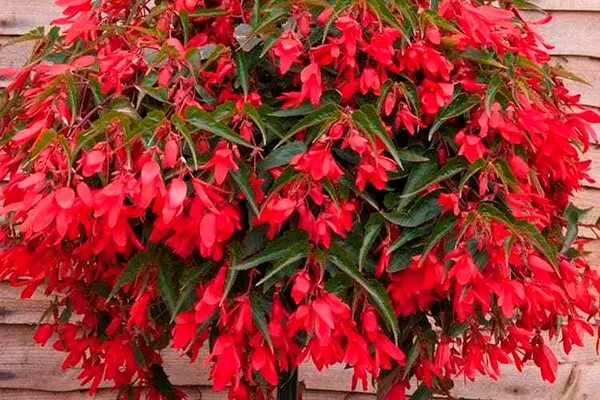
The vibrant orange-red flowers, in a classic star shape, consist of four segments and visually resemble sparkling lanterns. They are especially attractive against the green foliage.
Copacabana
This variety is easy to grow and boasts a colorful and striking appearance. Lush branches hang from the top of the bush, creating a striking visual impact. Numerous beautiful red flowers, unusually bell-shaped, point downwards and contrast beautifully with the rich green foliage.
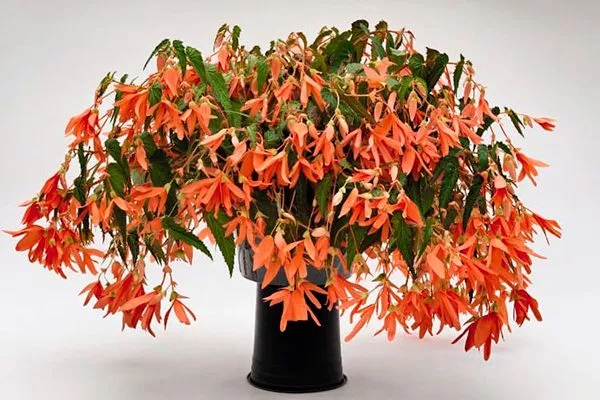
Bossa Nova
It is characterized by long, drooping stems that spread out over a distance of 1.5 meters. The foliage is a soft green. The fuchsia-shaped flowers come in a variety of shades: pink, red, orange, or white.
Where to buy and what climate is preferable?
Grown begonias are almost impossible to find for sale. The price of a mature plant, especially a rare one, starts at 690 rubles per specimen. Many stores offer begonia seeds in pellet form, usually in quantities of three, and their average price ranges from 60 to 150 rubles.
Begonia boliviana prefers a warm and temperate climate. It thrives in daytime temperatures of 18-25°C and at least 15°C at night. This plant is frost-intolerant, so it should be protected from low temperatures during cold periods.
Bolivian begonia prefers high humidity. It's important to provide it with adequate light, but avoid direct sunlight, especially during periods of extreme heat.
- ✓ Optimum temperature for growth: +18-25°C during the day, not lower than +15°C at night.
- ✓ High air humidity is required, but without direct spraying of leaves.
- ✓ Lighting should be bright, but diffused, without direct sunlight.
Care Features
Begonia care may seem unnecessary, as seedlings planted in the ground will thrive anyway. However, if your goal is to grow a truly impressive, beautifully formed flowering bush, care recommendations are essential.
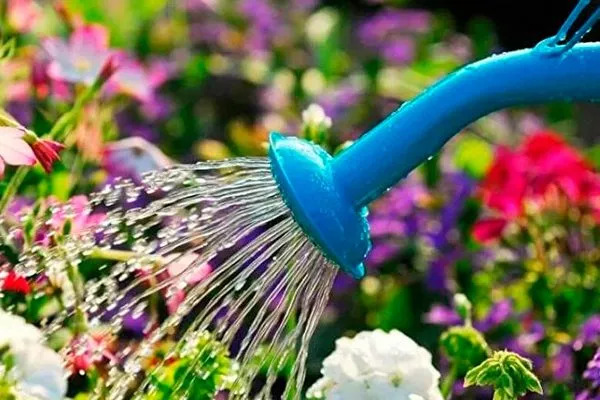
Moderate watering is the recommended care method for begonias, preventing both the soil from drying out and from becoming overwatered. Given the plant's moisture-loving nature, periodically mist the area around it, but avoid getting the leaves wet.
Regular fertilizing of mature plants is equally important. Use fertilizers rich in phosphorus and potassium. These minerals are essential for stimulating germination and maintaining a long flowering period. Fertilizer should be applied every ten days.
Trimming
To form beautiful drooping branches in the Bolivian begonia, proper pruning is essential. This method helps refresh the plant and improve the quality of its flowering.
Since the foliage expands rapidly, it's important to prune it promptly. If this is neglected, the plant's energy may be focused solely on foliage development, which can lead to a lack of flowering.
Prune to shape the bush when the stem reaches 8 cm in length. When it reaches 13 cm, trim the tops to encourage lateral growth. Repeat this procedure as lateral shoots emerge, removing the tops and directing growth toward the lateral shoots.
Reproduction
Begonia boliviana has three effective and productive propagation methods. Let's look at each:
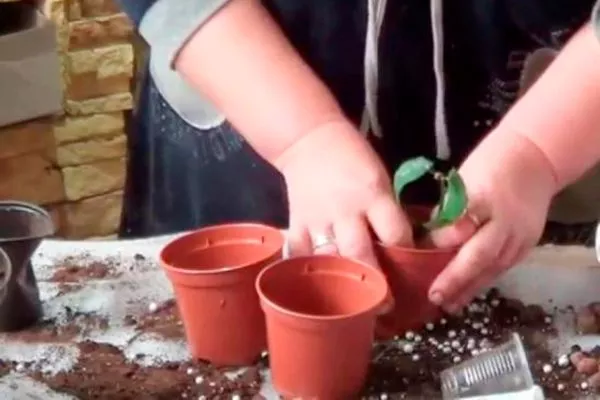
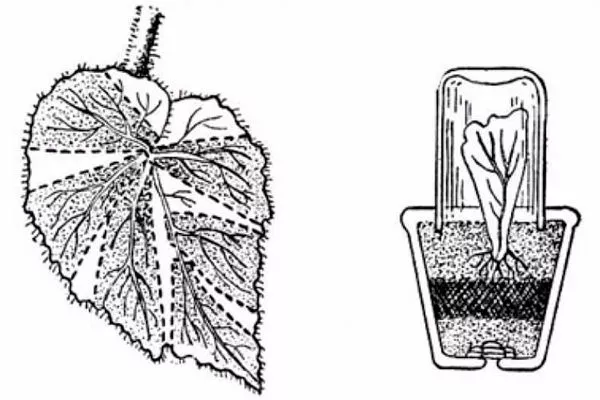
- Stem cuttings. Cut a piece of material suitable for germination and carefully place it in moist soil. Maintain constant soil moisture by adjusting watering, and to speed up the process, create a greenhouse effect by placing a plastic bag over the pot.

If conditions such as maintaining humidity and air temperature (+20°C) are met, the flower usually takes root and forms a sprout within 1-2 months. - Leaf cuttings. Select a healthy, succulent young leaf and plant it whole or cut it into pieces. Maintain the soil moisture, ensuring it doesn't dry out or become waterlogged. With this propagation method, sprouts emerge from the cut veins of the leaf.
- Seeds. This method requires patience, as the seeds of trailing begonias are very small and light. Sow in January-February, distributing the seeds evenly over moist soil and watering by spraying.
Cover the container with plastic film, creating a mini-greenhouse. After the sprouts emerge (after a few weeks), remove the film to allow oxygen to reach the plants. Pricking out is recommended when the seedlings have 2-3 true leaves.
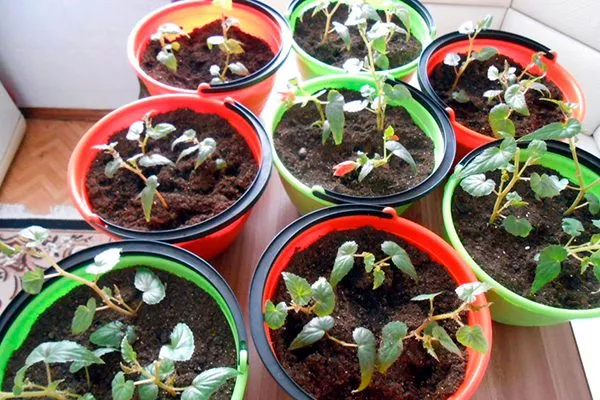
Provide begonias with 14 hours of daylight, especially in winter, using special fluorescent violet lamps for proper development and health of seedlings.
Diseases of Bolivian begonia
Begonias can be susceptible to a variety of diseases, with weaker plants most often at risk. The main diseases that can affect Bolivian begonias are:
- Gray rot. It manifests itself as initial, brownish, purulent spots on the plant's surface. These spots can spread and lead to the death of the begonia due to excess moisture.
Factors contributing to the worsening of the situation include frequent spraying, excessive fertilization, and overwatering. This disease is caused by a fungus that can remain active even after the plant's death, transported through the air or water.
In early stages, systemic fungicides can be used to save the plant, but in advanced cases, destruction may be necessary to prevent infection of other plants. - Powdery mildew. It manifests as white spots on the plant and can lead to rot. This fungal disease is airborne and is exacerbated by high humidity and temperatures. To prevent plant death, it is recommended to avoid overfertilizing and treat the plant with fungicides.
Proper organization of wintering in open ground
Overwintering outdoors requires maintaining certain conditions. Follow these recommendations:
- Flower bulbs require special storage conditions for winter. Place small tubers in plastic bags, fill with peat moss, and store in a cool place, such as the bottom shelf of the refrigerator. Check the bulbs periodically throughout the winter, removing any that have sprouted late.
- You can also store the plants in boxes in a cool, well-lit room during the winter. This method requires regular watering. When the weather warms up, transplant the plants into individual containers with fertile soil.
- Planting in open ground should be carried out after the weather has become consistently warm.
- If the tubers are small and fragile, store them in a cool cellar. They need periodic moistening to prevent them from drying out.
Keep in mind that although the growth of shoots in first-year plants slows down in winter, we can still talk about a dormant period, since the shoots do not disappear completely for the winter.
Winter care of indoor flowers
If you grow Bolivian begonia in a pot, its blooms will continue until late fall. The onset of autumn frosts marks the beginning of the dormant period. Avoid repotting during this time. Reduce watering, moistening the soil only when it begins to dry out.
Since indoor humidity decreases during the heating season, mist the plants with a spray bottle, avoiding contact with the leaves. Another method for maintaining humidity is placing the pots in containers filled with gravel, adding a small amount of water periodically.
How is it used in landscape design?
Bolivian begonia fits perfectly into landscape design, providing bright and colorful accents in a variety of settings. Here are some ways to use it:
- Ideal for creating colorful arrangements in flowerbeds and borders, their drooping branches and rich colors make a wonderful complement to other flowers and plant shapes.
- Begonia's trailing growth makes it an ideal choice for hanging baskets and containers. They effectively decorate verandas, balconies, and terraces, creating a picturesque floating effect.
- Thanks to their natural form, Bolivian begonias can be used in cascading and trailing arrangements. They look stunning cascading from above or framing arches and entryways.
- Planting begonias in containers and pots offers a unique opportunity to highlight these plants on patios, terraces, or along paths. Use different container sizes and shapes to create interesting arrangements.
- They can serve as an excellent frame for other plants or decorative landscape elements. Their bright color and compact shape will help highlight design features.
Interesting facts
Bolivian begonias were discovered and described by members of an expedition conducted in the city of Rochefort. In the 1980s, the city's residents created the largest collection of these plants in the world, which they called the "Begonia Greenhouse."
Other interesting facts about begonias:
- Florists identify 125 varieties of begonias as the best for landscape gardening, but in fact their diversity is much wider.
- Varieties created by Belgian florists have gained particular popularity.
- Astronomers named one of the asteroids discovered in 1920 in honor of this plant.
- Many species of begonias are native to tropical and subtropical regions of Africa, Asia, and Central and South America.
- The genus Begonia was named after the French governor of Saint-Domingue and botanist Michel Begon.
- Two asteroids were named after the genus Begonia: (2340) Begonia and (2724) Ancaishan.
- Some species of begonias have tasty leaves and are used in cooking in various countries.
- In the language of flowers, begonia is often associated with joy, fun and long-lasting beauty.
Begonias are often a favorite decoration on windowsills and balconies. The Begoniaceae family includes over 1,500 diverse species. Begonia boliviana stands out as a fascinating and noteworthy member of this family.
I really like Bolivian begonias, but honestly, I didn't know how to properly train them. Thank you so much for the detailed and clear description. I'll definitely be using it.