
Begonia Belleconia is a trailing plant widely used for indoor growing. It is typically placed in hanging pots, vases, and planters. This flower is quite popular among gardeners, but those growing it for the first time may have questions, the answers to which are best learned in advance.
General information
Begonia Belleconia is a perennial plant that encompasses a large group of trailing flowers from the Begoniaceae family. This flower is native to the tropical forests of South America. Similar begonias were later discovered in Asia and Africa. Begonia Belleconia was named after the French colonial official and amateur naturalist M. Begon.
Botanical description
Ampelous begonia, regardless of variety, has a number of common characteristics by which it can be unmistakably identified.
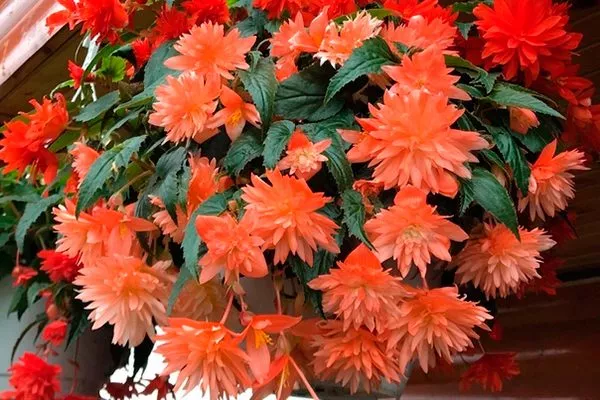
Brief botanical description:
- Leaves. They are asymmetrical, large, dark green.
- Stems. Juicy, quite thick, reaching (depending on the variety) 20-60 cm.
- Flowers. Terry, lush, scarlet, orange or soft cream color.
- Roots. Small, strong, well developed.
- Seeds. Gray or brown, small.
The Belleconia begonia begins blooming in late May or early June. Flower color varies depending on the variety. Each flower lasts about 10 days.
Characteristics
When purchasing a begonia, it's important to be aware of a number of nuances that should be explored in advance. This will help you determine whether the plant is truly suitable for your intended purpose.
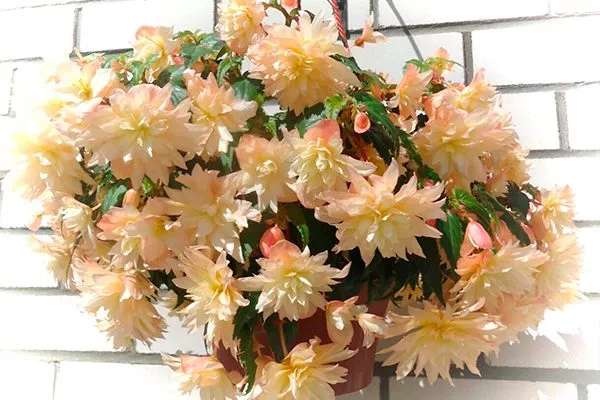
What to look out for:
- Size. The shoots of the trailing plant usually reach 40-45 cm in length. The begonia can reach 1 m in diameter.
- Life expectancy. Ampelous begonia lives for about 4-5 years.
- Aroma. Very gentle and pleasant.
- Bloom. It's quite long-lasting, beginning in spring and summer and lasting until frost. The flowers reach 10 cm in diameter.
- Safety. The plant is not poisonous.
- Care. The plant requires attention and regular care.
Varieties
Begonia Belleconia is represented by a fairly large number of varieties, each of which has a unique appearance and certain flowering characteristics.
| Name | Flower color | Length of shoots (cm) | Flowering period |
|---|---|---|---|
| Chardonnay | soft cream or slightly yellowish | 50 | July - mid-October |
| Salmon | salmon | not specified | not specified |
| Cream | creamy yellow | 20 | not specified |
| Citrus | soft lemon shade | not specified | not specified |
| Mango | soft yellow | 20-30 | mid-July - cold weather |
| Soft Orange | creamy coral or soft orange | not specified | June-July - mid-October |
| Sun Dancer | hot pink | not specified | not specified |
| Illumination | reddish | not specified | not specified |
| Carmen | deep red | 40 | not specified |
| Alcor | pink center, soft salmon edges | 40-45 | May - October |
| Venus F1 | white and pink | not specified | the end of spring - cold weather |
Chardonnay
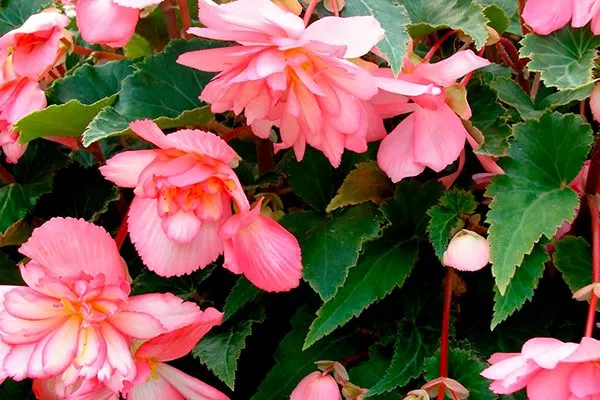
A double begonia with delicate cream or slightly yellowish flowers. The stems reach 50 cm in length. The leaves are dark green and asymmetrical. Flowering begins in July and lasts until mid-October, with the duration largely determined by growing conditions.
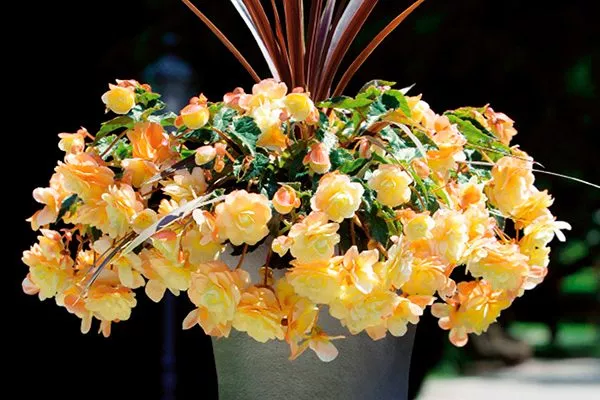
Salmon
An exotic variety, bright and striking, ideal for decorating and zoning spaces. It features fairly large, salmon-colored, double flowers and large, green leaves.
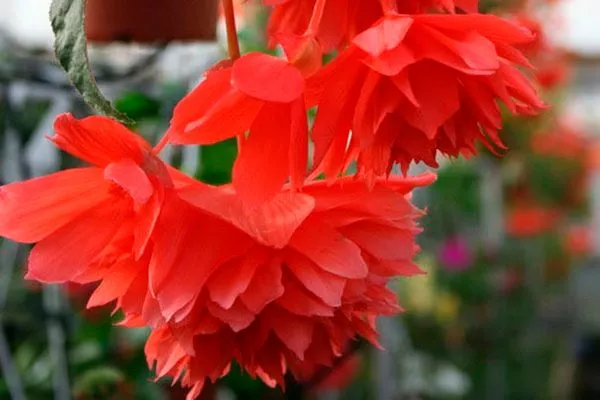
Cream
This plant grows up to 20 cm tall, features serrated, oblong leaves, and creamy-yellow, double flowers. It thrives best in partial shade.
Citrus
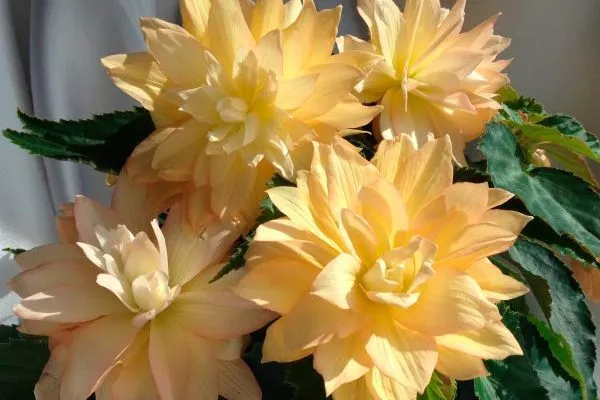
This variety is distinguished by its particularly lush and long-lasting blooms. The leaves are large and oblong. The flowers are large and a delicate lemon hue.
Mango
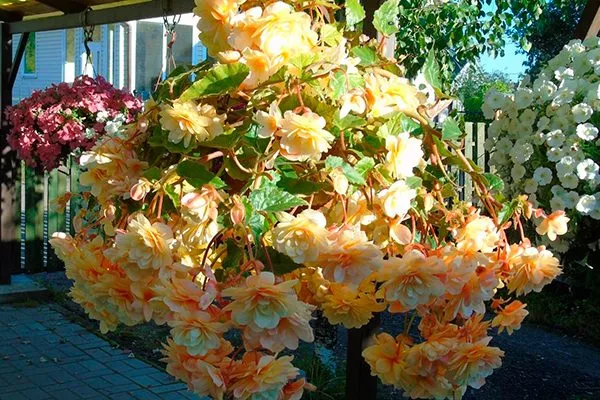
This variety has double flowers of a soft yellow hue. It is very resistant to diseases and pests. The shoots reach 20-30 cm in length. The leaves are bright green, oblong, and serrated. Flowering lasts from mid-July until frost sets in.
Soft Orange
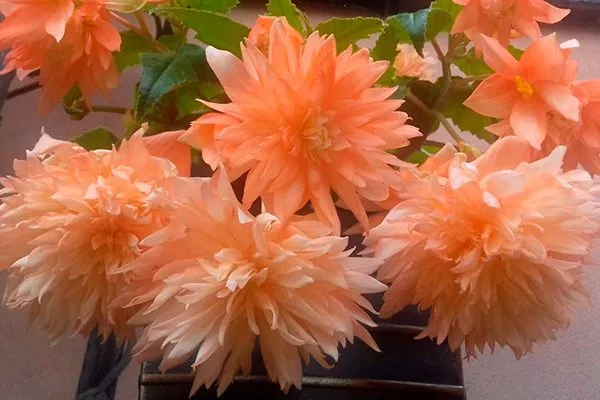
A very beautiful variety, rare and expensive. It has creamy-coral or soft orange flowers, and dark green, oblong, and serrated leaves. This begonia begins blooming in June-July and continues until mid-October.
Sun Dancer
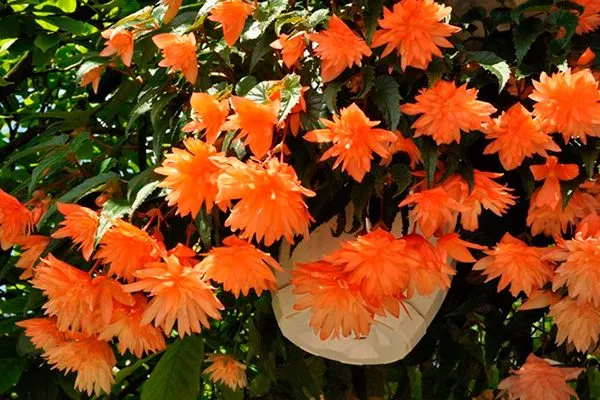
This tuberous begonia has bright pink flowers that reach 10 cm in diameter. It grows quickly and fills its pot. The male flowers of this plant are larger than the female ones.
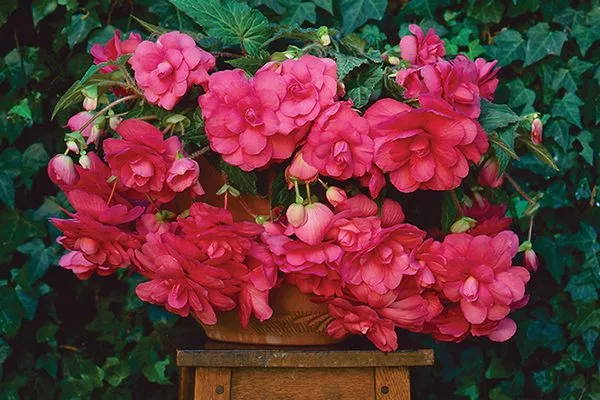
Illumination
This begonia has large reddish flowers. The plant reaches 1 m in diameter. It doesn't require bright light and grows well in shade and partial shade.
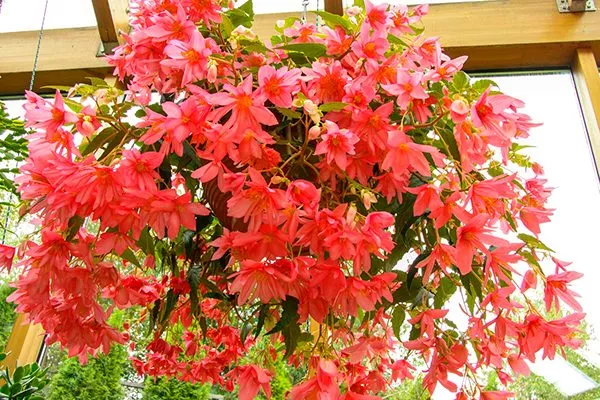
Carmen
The plant's shoots reach 40 cm. This variety blooms profusely and for a long time. It has deep red flowers and serrated dark green leaves.
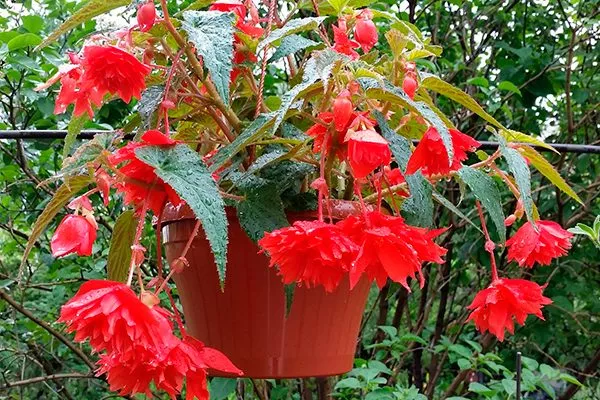
Alcor
A trailing variety with shoots reaching 40-45 cm. The leaves are rich green. Flowering lasts from May to October. The buds are up to 8 cm in diameter. The flowers resemble camellias, with a pink center and soft salmon-colored edges.
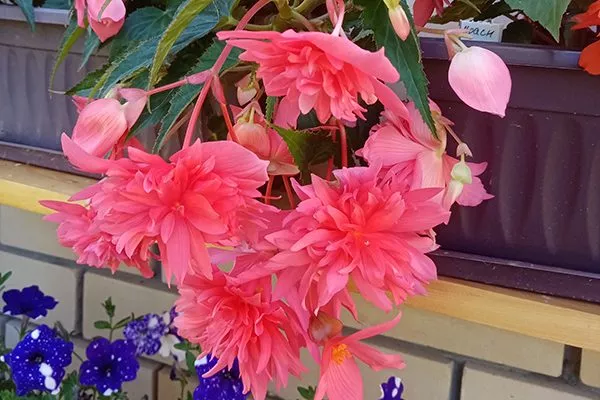
Venus F1
A variety with white and pink double flowers reaching 6 cm in diameter. The plant blooms from late spring until the onset of cold weather.
Advantages and disadvantages
It is no coincidence that Belleconia enjoys increased interest among gardeners and flower lovers – this plant has many advantages and looks regal.
Landing
Begonia Belleconia is a rather demanding plant. It takes some effort to achieve beautiful and lush blooms. The plant is characterized by fragile shoots and requires specific conditions.
Priming
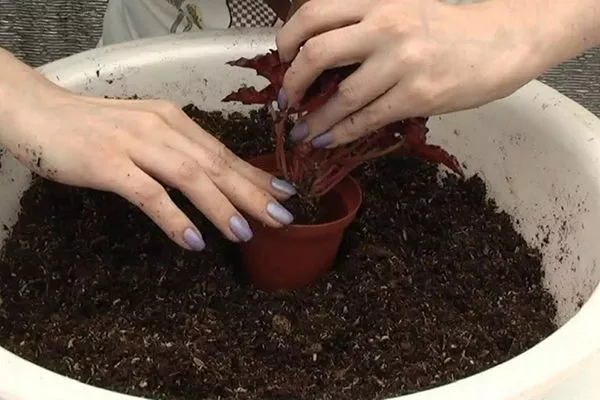
It's best to buy special garden soil—it's treated and free of harmful bacteria and microbes. However, you can, in principle, prepare the substrate yourself, but you'll need to treat it with an effective fungicide.
Example of garden soil mixture:
- sand - 1 part;
- leaf soil - 4 parts;
- turf - 1 part.
Capacity
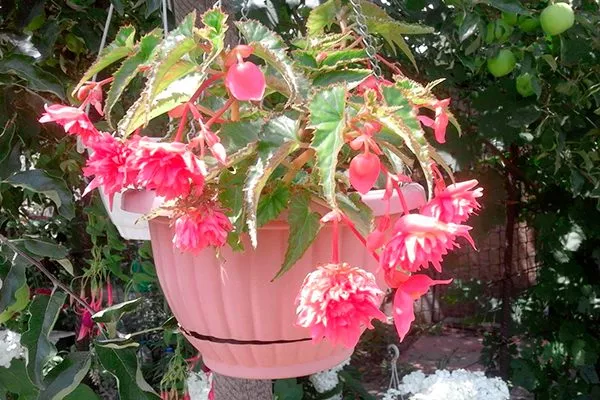
There are no special container requirements for trailing begonias. Initially, they can be planted in regular plastic cups. Over time, the plant can be transplanted into a larger pot. The planting containers must have drainage holes.
Lighting, humidity and temperature
Belleconia is a tropical plant and requires high humidity. Mist the plant regularly with a spray bottle. It doesn't tolerate dry air well, so keep it away from radiators and heating devices.
- ✓ The optimal air humidity for Belleconia should be 60-70%, which is higher than the average room humidity.
- ✓ The temperature regime must be strictly observed: not lower than +17°C and not higher than +25°C, to avoid stress on the plant.
The plant loves light but does not tolerate excess. Direct sunlight can be harmful to Belleconia. If necessary, provide shade. It prefers indirect light, so it is recommended to place it near north-facing windows.
During the warm season, begonias can be grown outdoors, in the garden, or on a veranda, as long as they aren't exposed to drafts. The plant prefers temperatures between 17°C and 25°C.
How to plant?
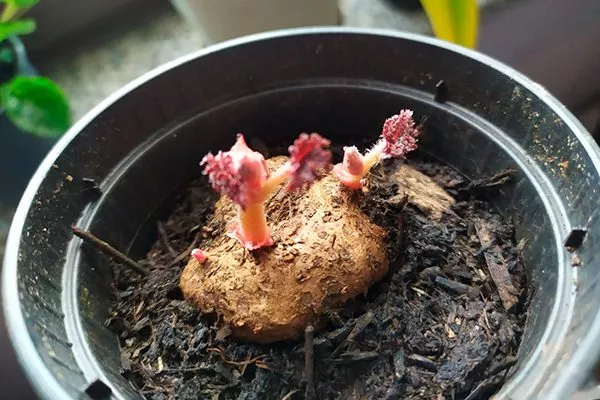
Belleconia is rarely planted from seeds; tubers are usually used for planting.
Planting order:
- Wrap the tubers in a damp cloth or place them in damp sand. Keep the planting material there until the first roots appear.
- Place a layer of drainage material in the container and top it with the prepared substrate. Moisten it, but not too much—in soggy soil, the tubers will rot and die.
- Make a hole in the soil and plant the tuber halfway in it.
- As soon as the first sprouts appear, add soil up to the root collar.
When the plant needs to be replanted, remove it from the soil and carefully, without making any sudden movements, remove it and replant it in a new container.
Care
Trailing flowers are steadily gaining popularity; they've long ceased to be something unusual. Growing them isn't particularly difficult, but regular care is essential.
To keep your begonia healthy and beautiful, you need to water it regularly, feed it, and monitor the condition of its leaves and shoots so you can take timely action if it becomes diseased.
Watering
Begonias thrive on moisture, but they don't tolerate dry soil, so it's important to water regularly. Otherwise, the plant will wilt.
The frequency of watering depends on the season. In summer, begonias need to be watered much more frequently than in winter. Use settled, not cold, water. Water should be applied closer to the edge of the pot, not at the roots.
Top dressing
The plant needs to be fertilized periodically, as it requires a lot of energy to grow and bloom. Liquid or complex flower fertilizers can be used. Fertilize only in the spring and summer. The optimal frequency is once a month.
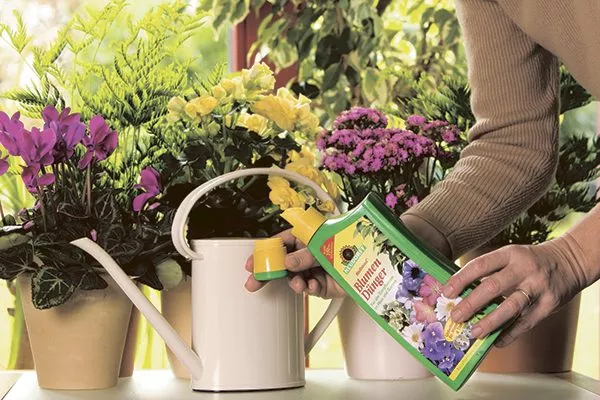
Nitrogen fertilizers are not recommended, as they stimulate leaf growth. Consequently, the plant lacks the energy for full bloom. The trailing begonia's dormant period is approximately three months. Fertilizing is not recommended during this stage; it only requires watering.
Trimming
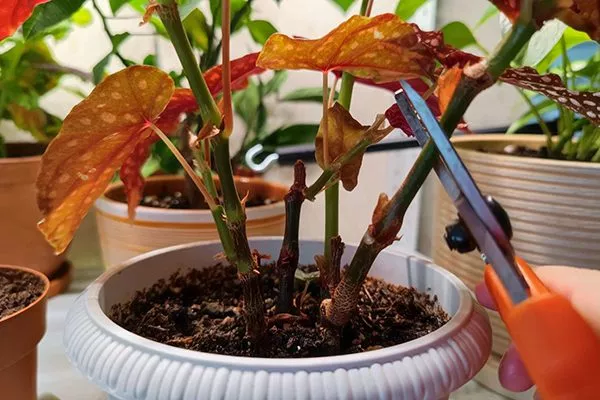
Trailing begonias are pruned periodically. There are two types of pruning: formative and sanitary. The former is aimed at shaping the plant, while the latter maintains its health. This procedure is performed twice a year—in spring and fall.
What to do in winter?
During the winter, begonia stems can become elongated. To encourage vigorous growth in the spring, the shoots are pruned in February, leaving four internodes on each. During the winter, the soil is moistened occasionally, but not allowed to dry out.
Diseases and pests
To keep your Belleconia begonia looking its best, it's important to closely monitor its health. If any alarming symptoms appear, take appropriate measures. A strong immune system and proper care don't guarantee the plant won't get sick.
- ✓ The appearance of brown spots on the leaves may indicate a fungal disease.
- ✓ A white coating on leaves and shoots is a sign of powdery mildew.
Most often, Begonia Belleconia gets sick with:
- Gray rot. This fungal disease causes the leaves and stems to darken. They rot and curl, causing the plant to lose its appeal and eventually die. Gray mold is caused by excessive soil moisture and stagnant water.
- Powdery mildew. It causes the appearance of a white coating on the leaves and shoots of the plant.
To combat diseases, use effective fungicides, which are available at flower shops. For minor infestations, try treating with a soap solution.
Trailing begonias are most often attacked by aphids, whiteflies, and spider mites. If you notice insects on the leaves, treat the plant with a soap solution or a multi-action insecticide.
Reproduction
There are various ways to propagate hanging begonias, but flower lovers most often use vegetative methods.
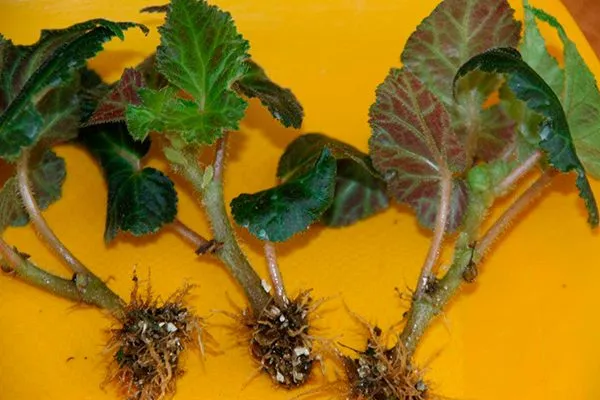
Begonia Belleconia propagation options:
- Cuttings. The procedure is carried out in the spring, after cuttings approximately 10 cm long from the parent plant. These are placed in a container of water and wait for roots to appear. The cuttings are then transplanted into nutrient-rich soil.
- Tubers. A small section with 2-3 buds is cut from a whole bulb. The cut section is sprinkled with crushed charcoal or colloidal sulfur. Once the cut tuber has dried, it is planted in a pot in the usual way.
- Seeds. They are placed in moistened planting substrate. The seeds are not buried, but simply scattered over the soil. They are covered with plastic wrap and placed in a room maintained at a temperature of 20–25°C, where they wait for germination.
The film can be replaced with clear glass. While the seeds are germinating, ensure the soil does not dry out. The sprouts can be moistened using a tray filled with warm, settled water. When the sprouts have 2-3 leaves, transplant them.
The Belleconia begonia is one of the most spectacular and unusual houseplants, its beauty appreciated by gardeners worldwide. Growing this flower requires certain knowledge and skills, but even a beginner can handle it. Mature begonias in pots make a wonderful home decoration.