
Exotic anthurium flowerAlthough it appears to be a strong and vigorous plant, anthurium is very sensitive to growing conditions and care. Any imperfections in its cultivation can lead to various diseases. If these are identified and treated promptly, anthurium can, in most cases, be fully restored.
Anthurium diseases
Anthurium is susceptible to diseases of various origins - bacterial, fungal, viral.
| Type of disease | Main symptoms | Speed of propagation |
|---|---|---|
| Fungal | Stains with plaque, wilting | Fast (3-7 days) |
| Bacterial | Weeping ulcers, rot | Average (1-2 weeks) |
| Viral | Deformation, chlorosis | Slow (2-4 weeks) |
| Non-infectious | Color change | Not transmitted |
If this tropical flower gets sick, don't waste time on folk remedies—they can't cure anthurium; effective industrial preparations are needed.
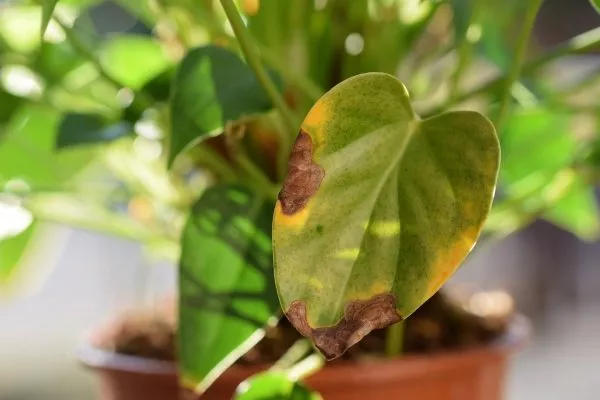
Late blight
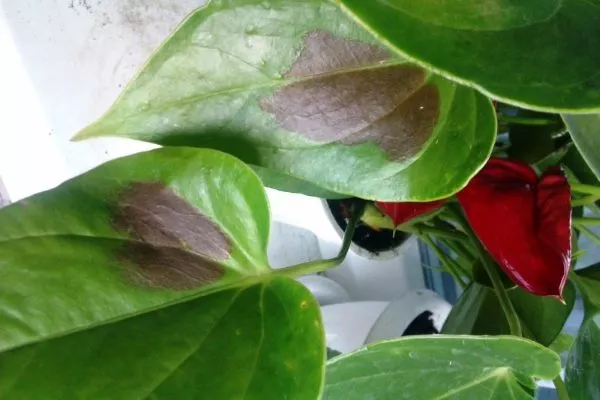
A fungal disease that causes purple-brown spots to appear on leaves. Late blight develops rapidly and, in addition to the above-ground parts, also attacks the roots.
Reasons:
- heat and high humidity;
- airborne infection - by transfer of spores.
How to fight:
- buy healthy plants from trusted suppliers;
- ensure high-quality ventilation and maintain the required soil moisture;
- replant the plant by completely replacing the soil, washing the roots and heat treating the pot;
- treating the roots with a weak pink solution of potassium permanganate
- spray with systemic fungicides - Fundazol, Fitosporin-M, Previkur or their analogues.
Septoria
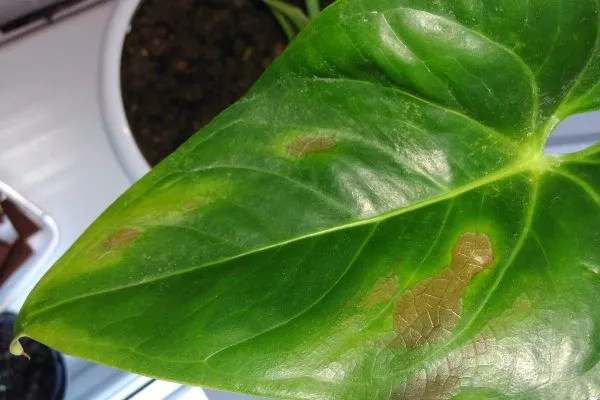
A common fungal disease that causes brown spots with a yellow or brown border to appear on the leaves. If you look at the spots through a magnifying glass, you'll see tiny black dots. The leaves then wilt, and the plant dies.
Reasons:
- high air humidity;
- spraying with water.
How to fight:
- pick off and destroy affected leaves;
- eliminate the causes of the disease by reducing the humidity in the room and stopping spraying the plant;
- apply fertilizer to flowering plants;
- inspect the plant to see if there are any insect pests; if there aren't any, spray the plants with copper-containing fungicides - Fitosporin-M, Kuproksat, copper sulfate, or Bordeaux mixture.
Rust
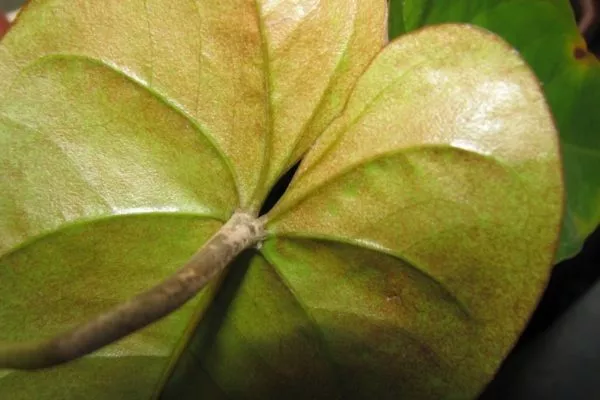
A contagious fungal disease characterized by the appearance of rusty-brown spots. The plant loses its decorative appearance, the leaves dry out, and eventually fall off. If left untreated, the plant dies.
Reasons:
- increased soil moisture;
- low room temperature.
How to fight:
- every 3-4 days wipe the leaves with chemical and alcohol fungicides for 2 weeks;
- Treatment with Fitosporin-M is recommended.
| Preparation | Concentration | Processing frequency |
|---|---|---|
| Fitosporin-M | 5 g/10 l | Once every 10 days |
| Bordeaux mixture | 1% | Once every 14 days |
| Copper sulfate | 0.5% | Once every 7 days |
Anthracnose
This is a fungal disease that can manifest itself differently on different anthurium species. The lesions can appear on leaves, shoots, and flowers, where they become covered with small brown or reddish spots. The plant's leaf tips may also turn black.
Reasons:
- high humidity;
- lack of light;
- poor air circulation.
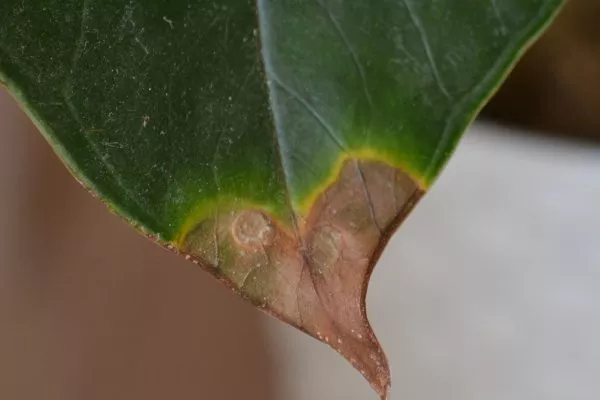
The infection most often spreads in the spring, when the anthurium begins to actively develop. The fungus first attacks the buds and shoots, causing them to turn brown or black. Smaller plants and those less resilient begin to dry out immediately.
The fungus that causes anthracnose is highly contagious. If the disease appears on one plant, it will inevitably spread to neighboring flowers.
How to fight:
- provide favorable growing conditions;
- spray the plant with fungicides in the spring for preventative purposes;
- For infected anthuriums, cut off and destroy damaged parts;
- reduce the frequency and volume of watering;
- Diseased plants are sprayed with copper-containing preparations, such as Bordeaux mixture or copper sulfate - it is copper that helps quickly cope with the fungus that causes anthracnose;
- bactericidal treatment of the soil, for example, with Abiga-Peak.
- ✓ Isolate the diseased plant for 30 days
- ✓ Disinfection of the window sill with 70% alcohol
- ✓ Temperature control no higher than +23°C
- ✓ Removing plant debris from the pot
- ✓ Use of sterile substrate
Fusarium wilt
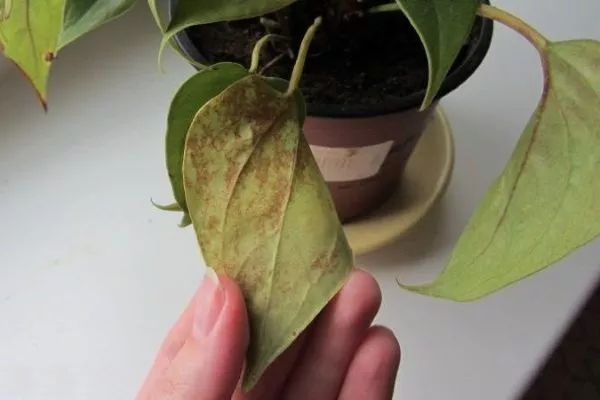
A common disease caused by various forms of soil-borne fungi. These fungi penetrate plant tissue, clogging vital vessels. Affected plants become stunted and turn yellow, then—if left untreated—wilt and die.
Reasons:
- temperature above +24°C;
- use of contaminated garden soil.
How to fight:
- planting varieties resistant to fusarium;
- removal of infected tissue;
- isolate the diseased flower;
- add mineral fertilizers that increase the plant’s immunity;
- If fusarium has affected the roots, it is recommended to remove the flower from the pot and soak the roots in a weak solution of Fundazol, cut off the rotten parts, and transplant into a new pot.
- Remove all affected roots.
- Soak in Fundazole (1 g/l) for 1 hour
- Plant in a new disinfected pot
- Water with a solution of Zircon (4 drops/l)
- Do not fertilize for 2 months
Resuscitation plan
Fungicides for treatment are selected based on the fungal species. However, some fungi develop resistance to the treatments used.
Powdery mildew
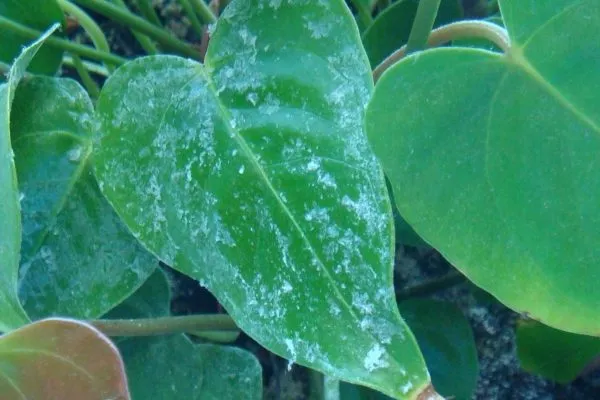
This fungal disease affects a wide range of plants, including houseplants. Powdery mildew is considered one of the mildest and most common diseases, easily recognized by its characteristic symptoms—whitish, powdery spots on leaves and stems.
Reasons:
- a combination of low temperatures and high humidity;
- spraying the plant in cold weather.
How to fight:
- if the cause is overwatering and stagnant water, replanting is necessary;
- moving the pot to a warmer place;
- treatment with Topaz, Acrobat or their analogues.
Downy mildew (peronosporosis)
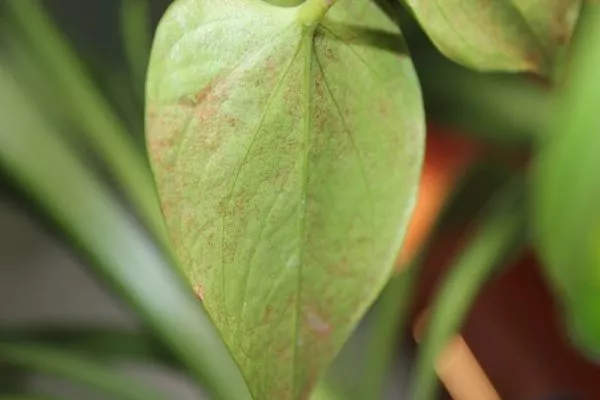
The disease is caused by a microscopic fungus sensitive to atmospheric humidity. When this fungal infection appears, yellow or discolored spots appear on the leaves. Gray spores are observed on the undersides of the leaves.
Reasons:
- cool and damp weather;
- infection from diseased plants.
How to fight:
- reduce air humidity;
- treat the flower with contact preparations Topaz and Acrobat.
Gray mold
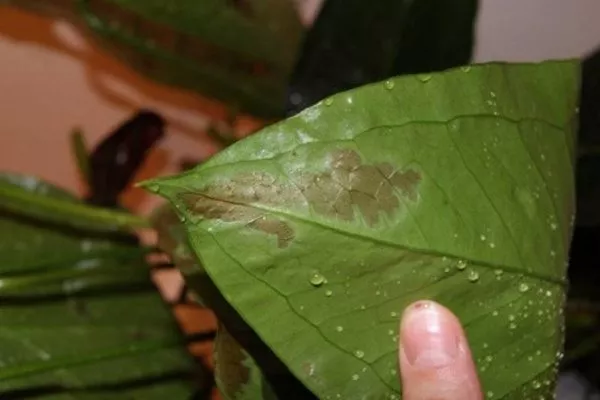
This fungal disease first attacks the anthurium's trunk, then the shoots, and only then the leaves, where gray spots appear. Over time, a fluffy coating may develop on them. The disease spreads quickly, and the affected parts of the plant die.
Reasons:
- moisture accumulating on the plant;
- a combination of high humidity and low temperature.
How to fight:
- remove rotten parts immediately;
- Treat the flower with strong preparations - a paste based on fungicides, at least 3 times, at intervals of several days.
Root rot
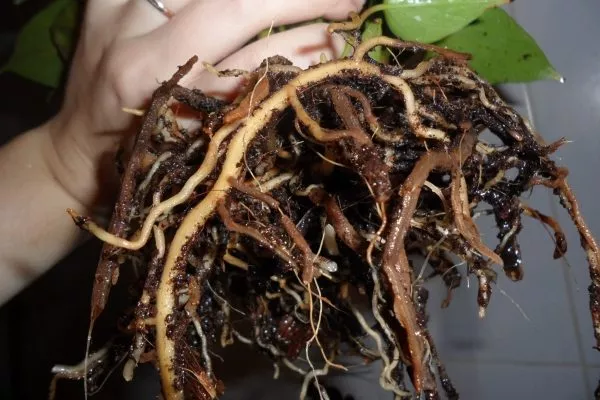
This fungal disease causes root rot and pale leaves, which eventually turn yellow and wilt. The plant's roots soften and rot.
Reasons:
- frequent watering;
- low temperatures;
- poor drainage.
How to fight:
- if the case is not severe, reduce watering and lower air humidity;
- cut off the wilted leaves and transplant the flower into a pot with fresh soil, after removing all rotting roots;
- water the soil with Fitosporin-M; treat the roots with the same preparation when replanting.
Gray mold
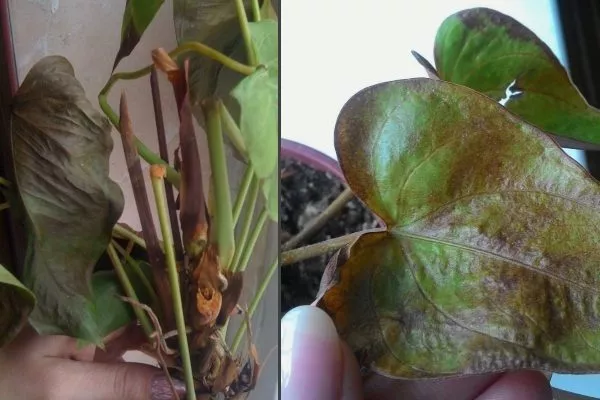
The disease is fungal in nature and primarily affects young, immature anthuriums. The infection begins at the stem, gradually spreading to the shoots and then to the leaves, where a gray coating appears. The disease quickly spreads and affects the entire plant.
Reasons:
- overwatering;
- poor drainage;
- poor ventilation in the room;
- untimely removal of dry leaves/shoots.
How to fight:
- pluck off the affected leaves;
- isolate from healthy plants;
- treat with fungicides - Fitosporin-M or Rovral.
Sooty mold
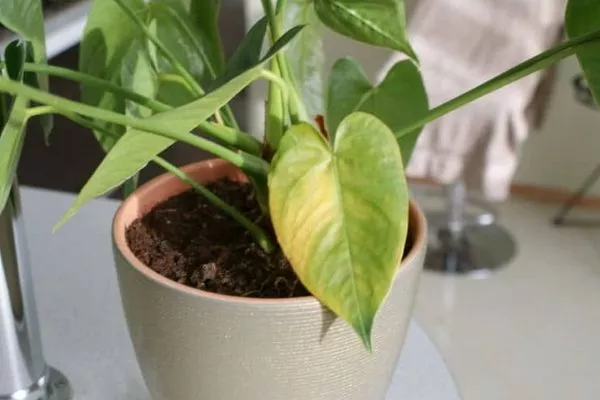
A fungal infection caused by nutrient deficiency. Affected leaves turn yellowish-white. The fungus primarily attacks the stem and young shoots. The diseased plant is unable to reproduce.
Reasons:
- spread by insect pests - thrips, aphids, which develop on honeydew;
- weakened immunity.
How to fight:
- place the plant in a separate room;
- cut off affected leaves;
- at the initial stage - treat with potassium hydroxide;
- in more serious cases - Fitoverm, Molniya, Intavir.
Non-infectious diseases of anthurium
Along with bacterial, fungal and viral diseases transmitted from plant to plant, anthuriums can also suffer from non-contagious ailments.
Non-communicable diseases:
- Chlorosis — a non-infectious disease caused by iron and magnesium deficiency. When the disease occurs, the plant's leaves become covered with yellowish spots. Fertilizing with iron and/or magnesium fertilizers can help resolve the problem. It is recommended to use formulas specifically designed for indoor plants.
- SmallpoxThe disease causes leaf deformation and the development of growths. Over time, the plant dries out. The exact nature of enation is still unclear. However, it has been observed that it usually occurs after sudden temperature changes. To save the plant, it is necessary to improve its growing conditions—avoid temperature fluctuations.
- EnacyThis non-contagious disease is associated with a disorder care rules and poor flower maintenance. The cause of smallpox is low temperatures and high humidity. Ugly, convex growths appear on the leaves of a diseased anthurium. It is recommended to move the pot containing the diseased anthurium to a warm location, protected from drafts and direct sunlight.
| Element | Deficiency symptom | Corrective drug |
|---|---|---|
| Iron | Interveinal chlorosis | Ferovit |
| Magnesium | Yellowing of leaf edges | Magnesium sulfate |
| Calcium | Deformation of young leaves | Calcium nitrate |
Bronze virus
This is the most common viral disease among anthuriums. It causes leaf discoloration, wrinkles, and small holes appearing on the leaf surface.
Reasons:
- the virus is spread by thrips and other insects;
- infection from diseased plants.
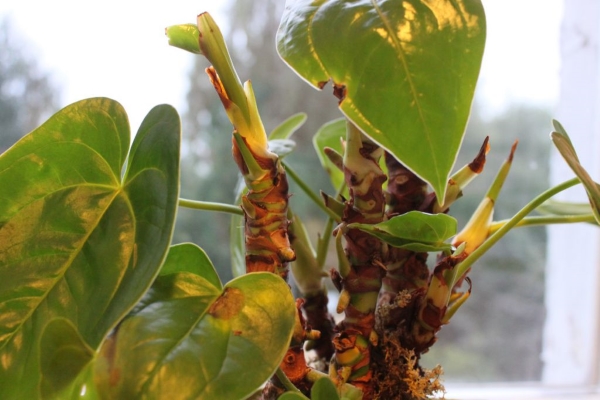
The disease is incurable. The affected plant must be destroyed, and all other plants must be inspected for pests capable of spreading the rot virus. If any are detected, treat the plants with insecticides such as Aktara or Actellic.
Problems and solutions
- ✓ Temperature: +22…+25°C during the day, +18°C at night
- ✓ Air humidity: 70-80%
- ✓ Soil pH: 5.5-6.5
- ✓ Lighting: 8000-10000 lux
- ✓ Watering: when the top 2 cm layer dries out
Most anthurium diseases are associated with poor agricultural practices, but many gardeners, especially beginners, find it difficult to diagnose the condition. In this case, it's recommended to act based on the symptoms, taking measures based on the external characteristics of the condition.
Yellow leaves
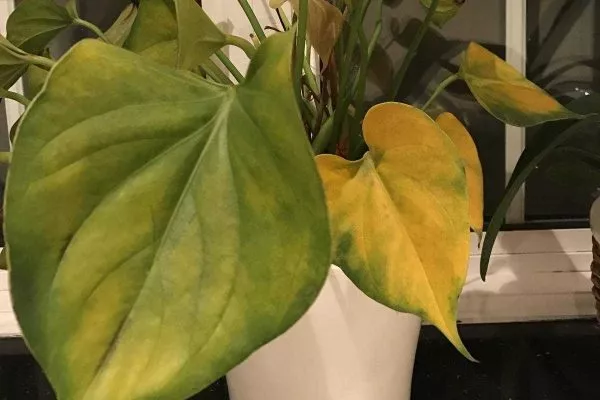
Yellowing leaves are one of the most common reactions to a variety of unfavorable factors. Yellowing can be caused by both diseases and cultivation errors.
Causes of yellowing leaves:
- violation of the feeding schedule;
- lack of proper watering regime;
- use of cold, unsettled and/or hard water;
- lack of light;
- low air humidity (the problem appears in winter when the central heating is turned on);
- watering in direct sunlight;
- lack of nitrogen in the soil;
- tight pot.
Regardless of the cause of the problem, all yellowed leaves must be removed. Pruning should be done with disinfected tools, and the cut surfaces should be sprinkled with crushed charcoal.
Lack of flowering
Most often, anthurium does not bloom due to poor maintenance conditions, less often due to infectious diseases.
Reasons for lack of flowering:
- drafts;
- direct sunlight;
- stagnation of water;
- low temperatures - less than +18°C.
The most common reason anthuriums fail to bloom is because the soil is too waterlogged. The plant's roots are extremely sensitive to moisture and react sharply, even leading to the plant ceasing to bloom.
Spots on leaves
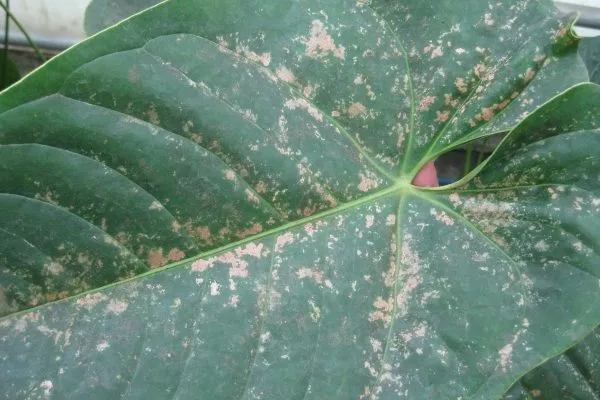
The appearance of spots on anthurium leaves and stems can be due not only to disease but also to improper care. If you look closely at the plant, you can determine the cause by the nature of the spots.
Reasons for spots to appear on anthurium:
- dark spots on the leaves are expanding - the flower has frozen or received sunburn, similar spots appear due to hard water with a high content of minerals and salts;
- dark spots with simultaneous drying of leaves - the flower is in a draft;
- pale or yellowish spots - lack of light, nutrition or root disease;
- dark spots on wilted leaves - overwatering.
Leaf spotting can also be caused by root deformation, septoria, unsuitable substrate, or damage by aphids or scale insects.
Leaves and flowers turn black and dry out
If your anthurium's leaves have turned black and dried out, the problem has become more serious and the plant is at risk of dying. There are several possible causes. It's important to eliminate all unfavorable factors to avoid the problem.
Reasons for blackening and drying of leaves:
- Cold water. The flower should be watered with water heated to +22…+26°С.
- Root rot. The watering regime is violated; most likely, the flower is receiving too much water.
- Fungus on the roots. This problem occurs when drainage is inadequate. The plant begins to suffocate and gradually dries out. It's necessary to loosen the soil and make a few extra holes in the bottom of the pot.
- Hard water. High calcium concentrations in water negatively impact potassium and magnesium levels, and reduce manganese, zinc, iron, and boron levels. A lack of nutrients causes the plant to dry out.
- Excess of fertilizers. Fertilizer dosages should be reduced by half, or even stopped altogether.
- Lack of moisture. The leaves are curling, darkening, and becoming deformed. You need to mist the plant or place a tray of water near it.
Sticky leaves
If a sticky coating first appears on the leaves, followed by raised brown spots, the plant may be infested with scale insects. To cure the plant, the pests must first be eliminated.
The tips of the leaves are drying out
Leaves may turn yellow and dry out due to low humidity. In summer, it's recommended to mist the plant with warm, settled water. In winter, move the pot away from central heating radiators and use a humidifier.
Leaf problems can also arise from a lack of oxygen reaching the roots. In this case, repot the plant, adding coarse charcoal, pine cones, or brick fragments to the soil.
General treatment recommendations
Regardless of the cause of the disease and its consequences, anthurium requires specific treatment, which includes adjusting its growing conditions. Providing a favorable environment is the first and most important step in treating the plant.
Air temperature
Anthurium thrives on heat, so it shouldn't be kept indoors where the temperature drops below 18°C in summer and below 16°C in winter. The ideal temperature for May through September is 25°C to 28°C. Drafts and cool winds are undesirable.
Drafts can cause anthurium roots to rot and flowers and leaves to freeze. And spraying with water in the winter with the window open for ventilation is the surest way to kill this tropical plant.
Air humidity level
Anthuriums require high humidity—70-80%—to survive. They can tolerate drier air, but only for short periods. Otherwise, they become ill.
How to ensure the required level of humidity:
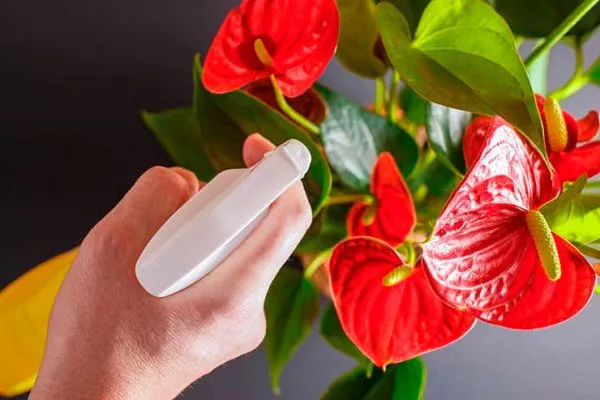
- spraying with water from a spray bottle;
- turning on a special device - a humidifier;
- placing a tray with moistened expanded clay near the flower.
The best option is wet expanded clay; spraying is not the best solution, as water leaves whitish spots on the leaves.
When kept in a dry room, anthuriums are not only at risk of disease but also of spider mites. Dry air causes leaves to turn yellow and dry out, then curl and turn black, while flower buds dry up and fail to open.
Lighting
Anthurium requires plenty of light to bloom profusely and for a long time. However, direct sunlight (especially midday) is undesirable. In its natural habitat, it grows in the understory of tropical forests, shaded by trees.
At home, anthuriums should be kept in a well-lit but shaded location. In winter, the plant requires artificially increased daylight hours, including phytolamps.
Watering and substrate characteristics
Anthuriums should be grown in a moist and well-drained substrate. For watering, use only soft, settled water, free of chlorine and other additives. If the room has high humidity, frequent watering is not necessary.
Basic mistakes when caring for yourself
To ensure your anthurium gets sick less often, and ideally, never gets sick at all, it's important to avoid mistakes when growing it. It's essential to thoroughly understand the plant's needs and make every effort to meet them.
Mistakes made by gardeners that lead to diseases:
- Cold room. If the plant is kept in a cold place, irregularly shaped spots or black dots will appear on its leaves. Moving the plant to a warmer room can solve the problem.
- Direct sunlight. If the plant is placed on a south-facing windowsill, its leaves will inevitably get burned. This will cause the plant to lose its decorative appeal. The solution is to move the plant to a location with indirect light.
- Excess of fertilizers. If too much fertilizer, especially calcium, is added to the soil, the tips of the anthurium leaves will turn black. The solution is to repot the anthurium in fresh soil.
- Not enough light. If the plant is placed in a poorly lit area, the anthurium may refuse to bloom. A similar phenomenon occurs with low humidity.
- The lighting is too bright. This can cause anthurium leaves to curl. This can be easily corrected by simply moving the plant away from direct sunlight.
- Watering with hard water. If tap water, cold or chlorinated, is used for watering, anthurium leaves will turn black. The solution is to let the water settle.
Anthurium rescue
Even if a flower has lost all its leaves, it's not a reason to get rid of it—it can still be revived. The main thing is to determine what caused the leaf drop—disease, improper care, or pests.
First, you need to destroy the contaminated soil—it may contain fungal spores and insect pest larvae. You should also disinfect the pot by boiling it in baking soda for 5 minutes.
- Soak the rhizome of a leafless plant for half an hour in light pink potassium permanganate. Then, place it in Kornevin for several hours—this solution stimulates root development. This procedure helps the anthurium adapt after repotting and gain strength for shoot formation and new leaf growth.
- Prepare a potting mix for the plant by mixing peat, vermiculite, charcoal, and bark into the soil. Alternatively, add a ready-made potting mix—ready-made mixes for aroids are available at flower shops.
- Plant the rhizome in a pot filled with potting soil or store-bought soil. Cover the roots with soil and tap the pot to compact the soil. Don't plant the anthurium too deeply—the root collar should remain above the surface.
- Until the anthurium begins to grow vigorously, don't water the soil; simply mist it with a spray bottle. Cover the pot with a plastic bag. Remove it once the first leaf appears. Then, care for the plant as usual.
Preventive measures
Prevention can help prevent many problems. It begins even before planting, with soil preparation and creating favorable growing conditions.
Preventive measures:
- carefully inspect the flower for pests;
- treatment with a solution of laundry soap;
- watering a plant from a watering can with a shower head;
- processing (disinfection) of soil, pot, tool;
- quarantine for new plants;
- creating favorable conditions for anthurium.
For an anthurium to fulfill its primary purpose—to be beautiful and enhance your home's interior—it must, above all, be healthy. Proper care and creating favorable conditions are the best defense against disease for this tropical plant.
For a long time, I couldn't figure out what kind of problem my anthurium had. You described each problem in great detail and included helpful photos, for which I'm especially grateful.