
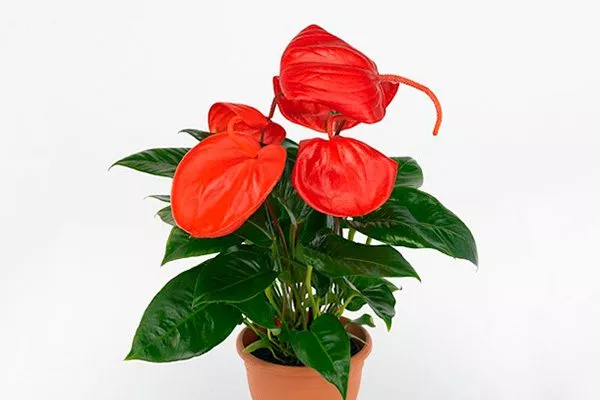
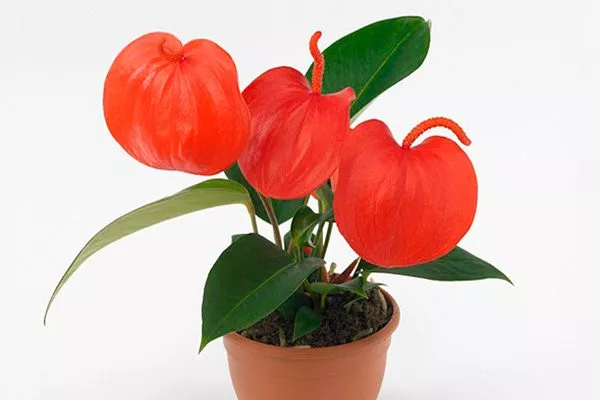
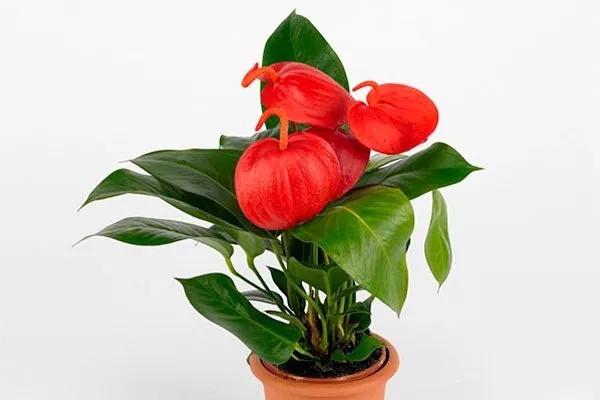
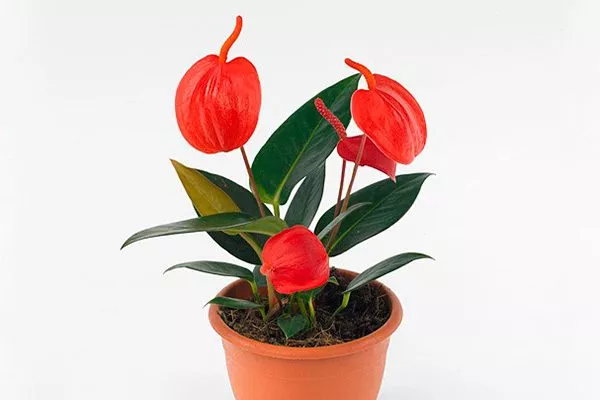
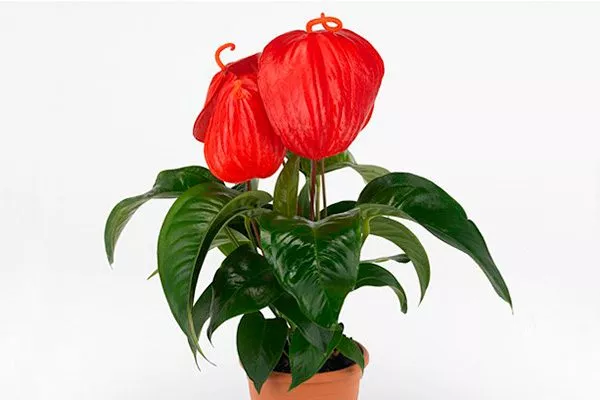
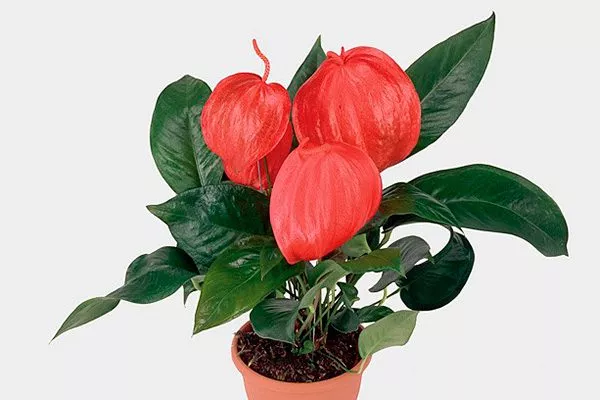
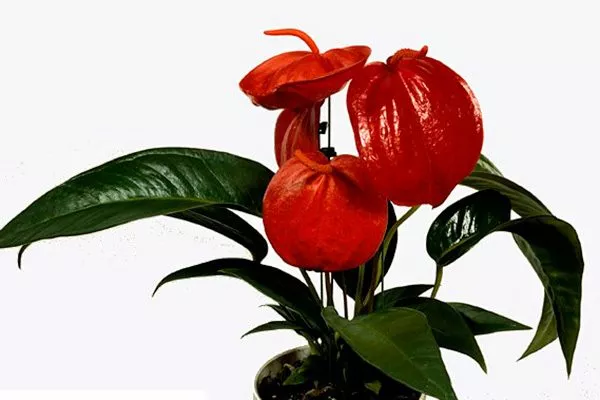
Anthurium scherzeriana is a houseplant with large, dark green leaves and large, often bright orange, flowers of a distinctive shape. It is a herbaceous evergreen perennial that blooms in spring or year-round. Unlike other anthurium species, scherzeriana is quite compact and easy to grow.
Description of the plant
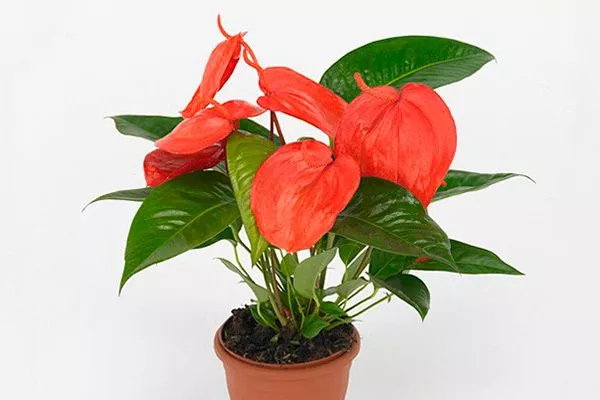
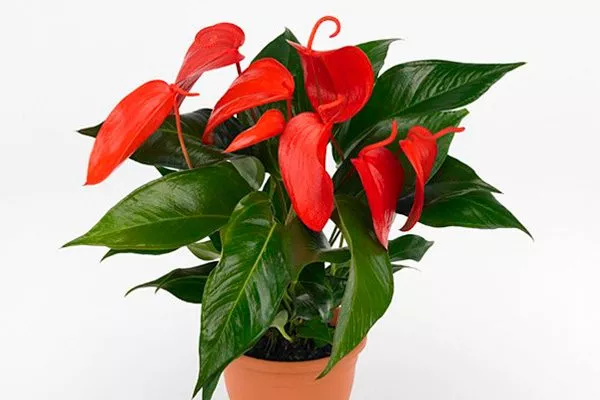
Scherzer's lily is not only compact but also graceful, with elegantly arching leaf petioles. Native to South and Central America, this perennial prefers tropical climates.
Characteristic features:
- Bush. It reaches a height of up to 35 cm, but is more commonly 30-32 cm. The shoots are quite thin, with a short, barely noticeable stem below ground. However, the roots are very strong. The petioles are cylindrical and 3 mm in diameter, slightly shorter than the foliage and more vibrant in color.
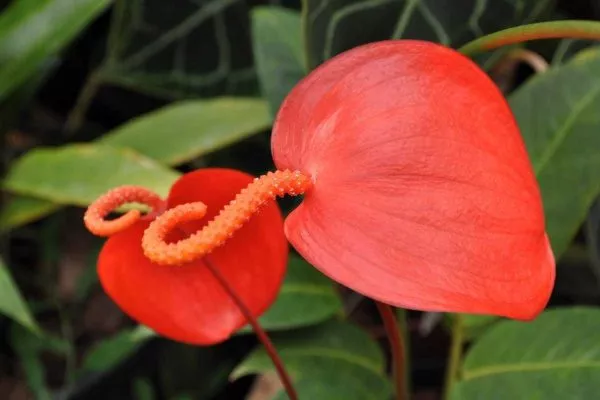
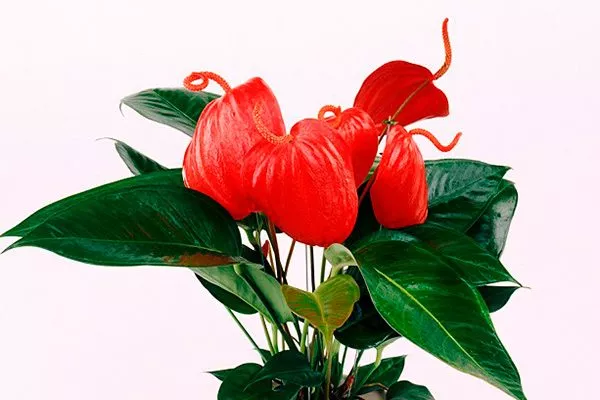
The leaf blades are always dark green, regardless of variety. Their length varies from 5 to 15-25 cm, but they have a very neat appearance. The leaf structure is leathery, with a semi-matte surface on the outer side and a completely matte surface on the inner side. The leaf shape is oval-pointed. The veins are slightly darker than the base color and are barely visible. - Inflorescence. It consists of a curved orange spadix, surrounded by a medullary spathe measuring 10 to 12 cm. The peduncle is elongated. The flower has a unique configuration—a spiral or graceful curve that tapers to a point near the spadix.
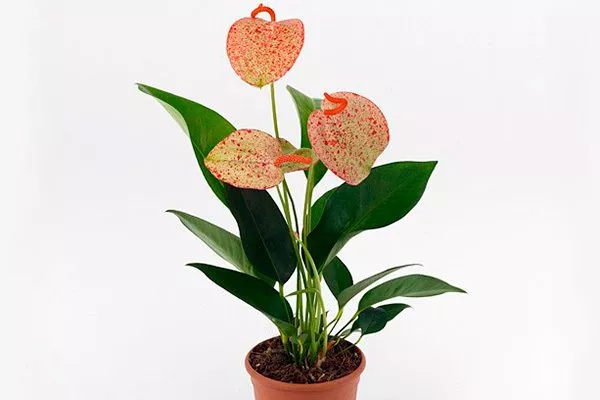
Because of this, many gardeners call Scherzer's Anthurium "flamingo neck," "pig tail," or "corkscrew." The spathe is brighter than the spadix, with orange-red hues. Specimens with lighter blotches are also found.
Anthurium scherzeriana blooms in different ways, depending on the specific variety, lighting, and other growing conditions. Most often, it blooms for 4-6 months during spring and summer. If the right conditions are created in autumn and winter, the plant will also bloom during these periods. After a particular bud finishes blooming, it leaves behind spherical seeds.
The best varieties
| Name | Bush height (cm) | Flower diameter (cm) | Color of the bedspread |
|---|---|---|---|
| Christine | 20-30 | 10-11 | brick red |
| Lindsay | 35-40 | 10 | monochromatic |
| Graffiti | 25 | 13 | two-color |
| Limonetti | 20-30 | 7.5 | white |
| Amaretti | 10-20 | 5.5 | greenish-pinkish-yellow |
| Amarossi | 25 | 10 | pink |
| Debbie | 12-15 | 12-15 | orange |
| Fragetti/Fragetti | 10-20 | 8.5 | compact |
| Giovanni | 25 | 12 | orange |
| Belladotti | 10-15 | 8 | multi-colored |
| Fioretti | 7.5 | 4.5 | orange |
| Supernova | 50 | 20 | orange |
| Brazil | 20-25 | 14 | red-brick |
| Amazon | 14 | 14 | dark orange |
| Robizhn | 25 | 11 | light orange |
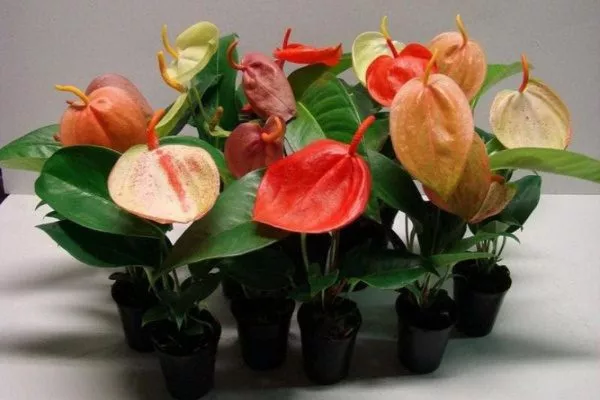
Anthurium scherzeriana is divided into more than 40 varieties, but only a few are considered the most popular among domestic gardeners. Each has its own characteristics:
- Anthurium scherzeriana Christine. This is a single-colored specimen with a brick-reddish hue. The inflorescence is corkscrew-shaped, the leaves range from 20 to 25 cm, the bush height ranges from 20 to 30 cm, and the bud diameter averages 10 to 11 cm.

- Lindsay. The flower is solid-colored, with a maximum diameter of 10 cm. It reaches a height of 35-40 cm. A distinctive feature is that the leaves are more elongated than those of other Anthurium scherzeriana.
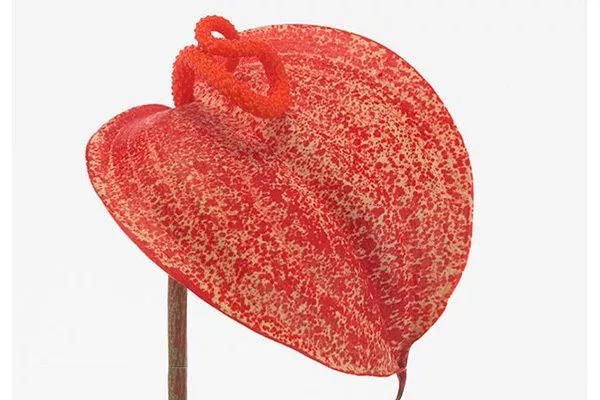
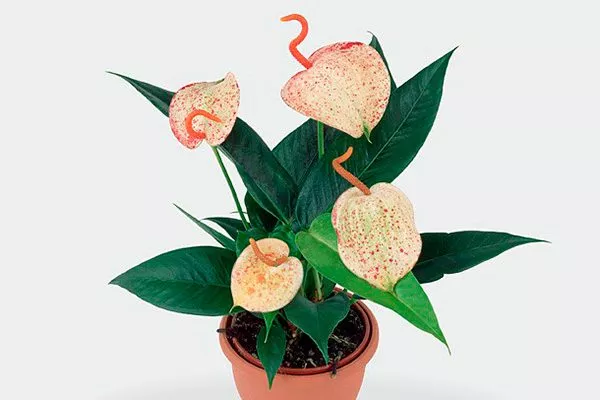
- Graffiti. It has an unusual two-tone coloring—small light spots appear against a brick-colored background. The bud is large—about 13 cm in diameter—and the leaves reach 25 cm. A distinctive feature is the very wide spathe.
There is also a second type of Graffiti - brick inclusions on a white background.
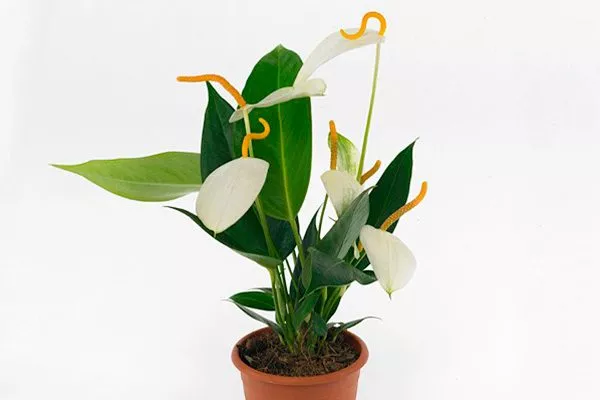
- Limonetti. This flower has a spathe coloration unusual for Scherzer's—pure white. The buds are small, reaching a maximum of 7.5 cm, the leaves range from 15 to 20 cm, and the height ranges from 2 to 30 cm.
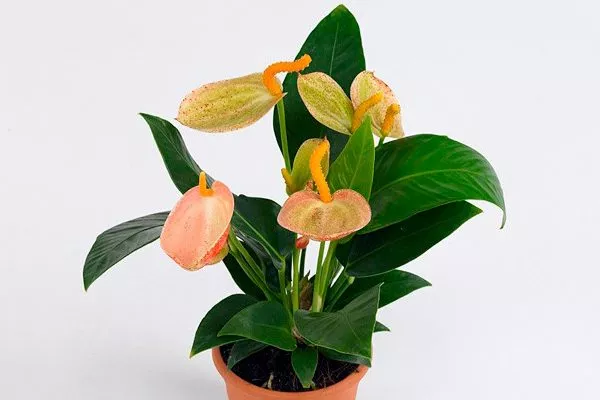
- Amaretti. Another unusual specimen with a dotted pattern, the spathe color combines greenish, pinkish, and yellow tones, and the spadix is light orange. The buds are small—up to 5.5 cm in diameter—and the leaves range from 10 to 15 cm. The plant reaches a maximum height of 20 cm, but more commonly ranges from 10 to 15 cm.
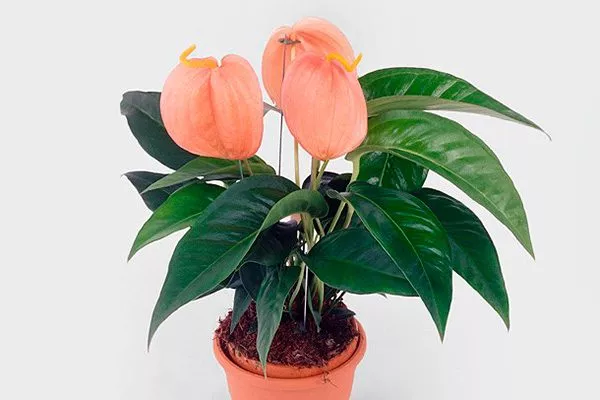
- Amarossi. Characterized by a single-colored pink spathe and a yellow spadix, the buds are approximately 10 cm in diameter, and the leaves are a maximum of 25 cm long. It is completely odorless.
- Debbie. A vibrant orange specimen with a solid color. The flowers are large—ranging from 12 to 15 cm in diameter—and the leaves are ovoid.
- Fragetti/Fragetti. This compact variety has flowers about 8.5 cm in diameter and leaves ranging from 10 to 15 cm, distinguished by a very pointed tip. Height ranges from 10 to 20 cm.
- Giovanni. A single orange flower with a diameter of about 12 cm and foliage up to 25 cm long.
- Belladotti. It has a multicolored spathe with a dotted pattern—orange flecks are scattered across a light, green-hued surface. The spadix is uniform in color. The flower reaches up to 8 cm in diameter, and the leaves range from 10 to 15 cm in length.
- Fioretti. A very compact flower with a diameter of 4.5 cm, foliage length of 7.5 cm. The spathe and spadix are a uniform bright orange.
- Supernova. The plant produces very large flowers, reaching up to 20 cm in diameter. The bush also reaches an impressive height of 50 cm. The color is a standard, uniform orange.
- Brazil. Characterized by a uniform brick-red coloration, the flowers are approximately 14 cm in diameter, and the leaves range from 20 to 25 cm in length.
- Amazon. It is distinguished by its dark orange hue and flowers with a diameter of about 14 cm. The leaves are very elongated.
- Robizhn. It has a light orange hue, a flower diameter of 11 cm and foliage size of up to 25 cm. The leaves are more ovoid.
Growing conditions for Anthurium scherzeriana
Anthurium scherzerii is considered an exotic plant, but growing it isn't as difficult as it might seem at first glance. The key is to initially provide the flower with the necessary conditions. conditions of detentionso that the culture feels comfortable.
- ✓ Optimum temperature for growth and flowering: +22 to +26 degrees in spring and summer, +18-20 degrees in autumn, not lower than +15 degrees in winter.
- ✓ The air humidity level should be maintained within 80-90%, which requires additional humidification measures.
Lighting and placement
All anthurium species thrive on plenty of light, so they need at least 12 hours of sunlight. It's important to ensure that the light is diffused, not direct. Therefore, if the plant is located on a windowsill exposed to prolonged sunlight, it's best to shade it. For example, with lightweight curtains or open blinds.
Temperature and ventilation conditions
Temperature conditions are directly affected by the season, meaning the plant's active and dormant periods. Follow these guidelines:
- in spring and summer, from the moment budding begins, set the temperature in the range from +22 to +26 degrees;
- gradually reduce it towards autumn so that the average parameters are equal to +18-20 degrees;
- With the arrival of winter, when the crop must go into hibernation (and it needs this to restore its strength), the minimum temperature limit should be +15 degrees.
It's important to periodically ventilate the room to ensure there's enough fresh air and, consequently, oxygen, which is essential for plant growth. Just be sure there are no drafts.
Air humidity and soil
Due to its tropical origins, Anthurium scherzerii thrives in high humidity—80 to 90%. Achieving these levels under normal indoor conditions is impossible, so gardeners artificially increase the humidity. There are several ways to do this:
- You can place a stationary humidifier or just a container filled with water next to the pot;
- place the pot in a tray with pebbles, which should be moistened two or three times a day;
- spray the air near the flower;
- wipe the leaves and stems with a damp cloth.
To ensure the rapid and successful development of Scherzer's Anthurium, it's important to prepare the right substrate. The easiest way is to purchase a special substrate for anthuriums at a flower shop, but it's rare, so gardeners often purchase mixtures for orchids, azaleas, or aroids. A small amount of sphagnum moss is always added to this substrate.
But sometimes this isn't possible. In that case, you have to prepare the soil mixture yourself. Soil requirements – what should it be like?
- loose;
- fertile;
- breathable;
- slightly acidic (from 5.0 to 6.0 pH).
To prepare, take the following ingredients in equal proportions:
- peat;
- sphagnum (moss);
- leaf soil;
- turf soil.
Hydroponics is acceptable, as is the use of crushed coniferous bark. It's also recommended to add these same components to the prepared substrate.
Home care
Caring for the Scherzerian Anthurium is also easy. Simply plant and repot it correctly, water and feed it regularly, and monitor it for pests and diseases. Don't forget about the growing conditions—maintain optimal humidity and temperature according to the season.
Planting, containers
To ensure profuse and long-lasting blooms for the Scherzerian Anthurium, choose a pot that's not too spacious, but rather tight. It should be the same size as the root system. Other considerations:
- the pot material is clay or plastic, metal and glass are prohibited;
- drainage holes at the bottom of the container are required;
- The pot should be shallow but wide.
Planting the crop is easy and simple – follow the instructions:
- Make holes in the bottom of the pot if there are none.
- Lay the first layer of drainage material. Clay shards or expanded clay are acceptable. The layer should be 3-4 cm thick.
- Pour the substrate in a layer up to 5 cm.
- Insert the seedling, but do it carefully, since the root system, although powerful, is very fragile (brittle).
- Fill with the remaining soil mixture and compact lightly.
- Water with a small amount of water (to avoid a “swamp” forming).
- Cover with mulch. A thin layer of sphagnum moss is best for anthurium scherzerii. It will maintain normal moisture levels and provide nutrients.
Watering
Since Scherzer's anthurium thrives in high humidity, it has similar soil requirements. Therefore, it will need frequent and generous watering, but be aware that overwatering can be detrimental to the plant.
Watering rules:
- It is important to place the pot in a deep tray so that excess water can drain into it;
- when it all flows out, be sure to drain it from the pan;
- the water should be left to settle for 2-4 days and must be at room temperature;
- Determining the need for watering is quite simple - inspect the top layer of the substrate, if it begins to dry out, feel free to moisten the plant;
- liquid stagnation is excluded, therefore drainage holes should not be too small;
- During the growing season, watering should be twice as abundant as during the dormant period.
Transfer
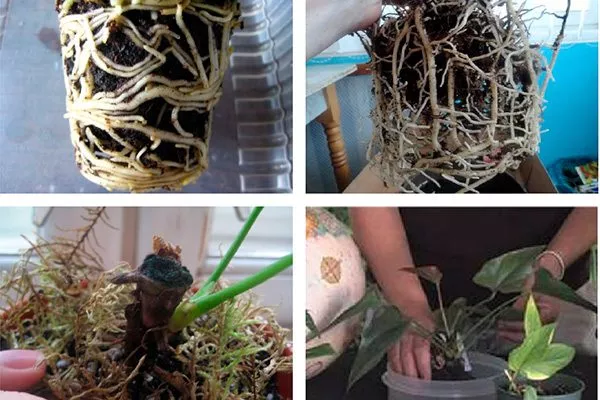
Anthurium scherzerii thrives on stability and does not tolerate repotting well. Therefore, this procedure is only performed when absolutely necessary. This could involve moving the plant to a larger pot due to root overgrowth, changing the substrate, or a plant disease. It's best to repot anthuriums in early spring.
How to do it correctly – step-by-step instructions:
- Pour settled warm water into a large basin.
- Place a pot in it.
- Leave it like this for about a day or less, depending on the size of the plant, its roots, and the container itself. This is necessary to soften the roots so they become more flexible and prevent them from breaking during transfer.
- Using careful movements, remove the flower from the pot, holding it by the base of the stem.
- Shake off any remaining substrate from the root system and rinse if necessary.
- Carefully inspect and remove any unsuitable roots (dried, rotted, diseased, etc.). Cut with a sharp knife or pruning shears, disinfecting them beforehand. Treat the cut areas, for example, with a pink solution of potassium permanganate.
- For preventative purposes, treat the plant and especially the root system with Cytovit or Fitosporin.
- Place drainage material in the new pot and proceed as before, just as you did when planting.
Initially, the flower should be kept in partial shade. Be sure to repot the anthurium after purchase, as stores often use chemicals to maintain its normal condition.
Top dressing and fertilizers
Anthurium scherzerii requires a fertile substrate, requiring a wide variety of nutrients. Therefore, it's best to purchase mineral supplements designed for the Araceae or orchid families.
Feeding rules:
- Apply fertilizer twice a week in spring and summer;
- in autumn – once a month;
- in winter - the same as in spring, or skip the procedure altogether.
Diseases, pests and control methods
Regardless of the quality of care provided, diseases and pest infestations No one is immune. Most often, this problem arises from excessively high humidity, contamination from nearby flowers, or soil that isn't disinfected before planting (the same applies to tools).
- Treat the root system with Fitosporin when replanting.
- Spray the leaves with a solution of potassium permanganate once a month to prevent diseases.
- Use insecticides at the first sign of pests.
What is most common:
- Anthurium scherzeriana is susceptible to pests such as aphids, whiteflies, spider mites, scale insects, root knot nematodes, and mealybugs. Insecticides such as Iskra, Fitoverm, Inta-Vir, and similar products are used to control these pests.
- The most common diseases include root or stem rot, anthracnose, downy mildew, and rust. Fungicides are used for treatment, but there's a high risk of rapid spread, which can lead to the death of the anthurium. Therefore, periodically carry out preventative treatments with potassium permanganate solutions, Fitosporin, etc.
Reproduction
Anthurium scherzerii is so versatile that it can be propagated in a variety of ways. Each method has its own advantages, disadvantages, and characteristics.
Dividing the bush
This is the fastest and easiest option. Propagation is a continuation of another process – transplantation. Here's how:
- After removing the flower from the old pot, rinse the roots with warm water.
- Place the plant on the table and determine the division points so that each part has mature root shoots.
- Cut the plant with a sharp knife (disinfected).
- Treat the cut areas with crushed activated carbon or wood ash.
- Plant in the standard way.
Lateral shoots or babies
This procedure is also performed during repotting, but in this case, simply use a thin knife to separate the offshoots (side shoots) from the mother plant. Next, place them upside down in a rooting agent (Kornevin, Heteroauxin, etc.) for 2-4 hours, then transfer them to a substrate until rooting occurs. For the soil mixture, use equal parts sand and peat, moisten thoroughly. Transplant into a permanent pot once the roots are fully formed.
Cuttings
This method is also considered successful, as the cuttings root fairly quickly. What to do:
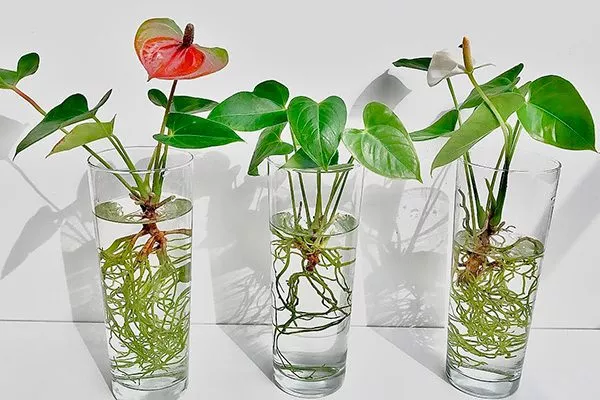
- Select strong, healthy shoots that have aerial roots and at least 2 internodes.
- Cut at a 45 degree angle with a very sharp, thin knife.
- Place the plant upside down in a growth stimulator.
- Prepare a container with vermiculite. This is where cuttings root most quickly.
- Moisturize it.
- Insert the cuttings so that they are buried a maximum of 5 cm deep.
- Cover them with a cut plastic bottle.
- After the root shoots have formed to a size of 5 cm, transplant them into a permanent pot.
Propagation by leaf
It's commonly believed that all Araceae can easily be propagated by leaves, but this isn't true. This isn't the case with anthuriums. However, leaves can also be used, but they must have a stem attached. Therefore, the procedure is identical to propagation by cuttings.
Propagation by seeds
This method is used extremely rarely, and there are significant reasons for this. Firstly, it's impossible to preserve the parent plant's characteristics, and secondly, the process of obtaining the plant is very lengthy and laborious. However, if you want to grow a completely new and unusual Anthurium scherzeriana, follow these instructions:
- Pollinate during active flowering.
- After about a year, collect the seeds from the seed pod.
- Place them in water and discard any that float to the surface.
- Place the remaining seeds in a light pink solution of potassium permanganate to etch. Leave for about half an hour.
- Fill the container with lightweight store-bought potting soil.
- Moisturize it.
- Place the seeds on the surface. There's no need to cover them with soil mixture.
- Cover with plastic wrap.
- Move to a warm location. Water periodically using a spray bottle and ventilate.
- When the first shoots appear, remove the covering.
- Carry out the first picking after one true leaf has formed.
Anthurium scherzeriana is a species consisting of numerous cultivars that share common characteristics. The plant is considered to be easy to grow, but it does require specific growing conditions, particularly in terms of humidity and substrate.